
Did you know that xeriscaping can reduce a project’s water usage by up to 75%? It’s a common worry that “value engineering” is just a polite way to say you’re cutting corners, but we see it as a creative way to help your garden thrive without the sting of budget overruns. In the wake of Dubai Law No. (7) of 2025, which mandates higher technical standards for all contractors starting January 2026, understanding value engineering in landscape construction projects has never been more vital. It’s about making thoughtful choices that pair a plant’s aesthetic beauty with its practical requirements, ensuring your outdoor space remains architectural and lush.
You’ve likely felt the frustration of watching life-cycle costs climb because of poor material choices or inefficient irrigation. We’re here to help you move from the “why” to the “how.” You will learn how to optimize your project costs while maintaining environmental integrity through sustainable, peat-free solutions. We’ll walk through the latest 2026 regulatory updates and smart technology trends that ensure your landscape hits budget targets and survives the local climate for years to come.
Key Takeaways
- Learn how to apply the core formula of Value = Function / Cost to ensure every architectural element of your garden serves a distinct, practical purpose.
- Discover how value engineering in landscape construction projects utilizes native, drought-tolerant species to create a lush sanctuary that thrives in the local climate.
- Identify the critical differences between simple cost-cutting and true value engineering to avoid “false economies” that lead to high long-term expenses.
- Find out the ideal window for reviewing a proposal to maximize your savings and project efficiency before the first shovel hits the ground.
- Explore how choosing sustainable materials and smart technology can lower life-cycle costs while maintaining a vibrant, high-quality aesthetic.
What is Value Engineering in Landscape Construction?
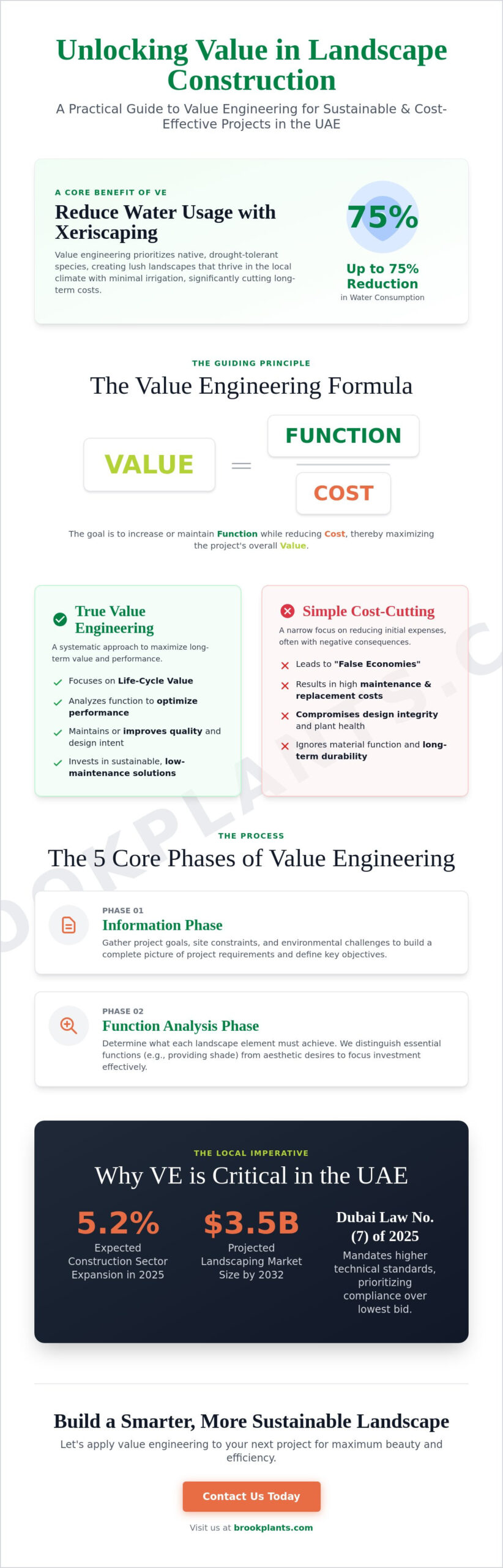
Think of your garden as a living, breathing investment rather than just a line item on a balance sheet. While many see construction as a series of cold transactions, we view it as a craft where every choice impacts the health of the planet. What is Value Engineering in Landscape Construction? At its heart, it’s a systematic method to improve the “value” of a project by examining the relationship between function and cost. The core formula is simple: Value equals Function divided by Cost. If we can maintain or improve the function of a garden element while reducing the cost, the value for you increases. In the context of value engineering in landscape construction projects, this doesn’t mean choosing the cheapest shrubs; it means choosing the right ones that will flourish in our local climate without constant, expensive interventions.
To better understand how this discipline works within the building industry, watch this helpful video:
With the UAE’s construction sector expected to expand by 5.2% in 2025, and the landscaping market projected to reach USD 3.5 billion by 2032, the demand for efficiency is higher than ever. New regulations like Dubai Law No. (7) of 2025 mean that project awards now prioritize technical capacity and compliance over just the lowest bid. This shift makes value engineering (VE) a vital tool for the modern developer. It helps distinguish between initial construction savings, which might look good on paper today, and long-term life-cycle value, which keeps a property vibrant and manageable for decades.
The Philosophical Shift: Function Over Form?
Value engineering isn’t about stripping away the beauty of a lush, architectural garden. Instead, it’s about identifying “gold-plating,” which refers to unnecessary expenses that don’t actually improve the user experience or the health of the plants. While a landscape architect dreams of the aesthetic vision, a value engineer asks what each element must achieve. Do we need imported marble that costs AED 400 per square meter, or will a premium local stone provide the same durability and charm for less? By focusing on function, we ensure that every dirham spent contributes to a sustainable, thriving environment.
Why Landscaping Requires a Unique VE Approach
Unlike steel or concrete, plants are living assets that grow, change, and eventually die if not cared for properly. You can’t simply swap a hardy Ghaf tree for a delicate exotic species just because the initial price is lower; the exotic plant will likely fail in the heat, leading to replacement costs that far outweigh any initial savings. We take pride in our 100% peat-free methods because we know that soil health is the foundation of long-term value. Landscape value engineering is the strategic optimization of living biological systems and structural elements to ensure maximum environmental and aesthetic performance at the lowest total cost of ownership.
The 5 Core Phases of the Landscape Value Engineering Process
Applying The 5 Core Phases of the Landscape Value Engineering Process is much like preparing a flower bed; if you get the foundation right, everything else blooms naturally. This structured approach to value engineering in landscape construction projects ensures your garden isn’t just a collection of plants, but a high-performing ecosystem. It’s a journey we take together, moving from initial ideas to a thriving, sustainable reality that respects both your vision and your investment.
- The Information Phase: We gather your project goals and site constraints to understand the unique personality of your land and any environmental challenges.
- The Function Analysis Phase: We determine what each element must achieve, whether it’s providing cooling shade or acting as a vibrant, architectural focal point.
- The Creative Phase: Our team brainstorms alternative materials and methods that maintain your aesthetic vision while respecting the project budget.
- The Evaluation Phase: We rank these alternatives based on their cost and how well they’ll perform in our specific local climate over time.
- The Development/Recommendation Phase: We present an optimized plan that balances your desires with practical, expert solutions for long-term health.
The Creative Phase is where our earthy passion for horticulture really shines. We brainstorm alternatives that don’t compromise on that lush feel you’re after. During the Evaluation Phase, we rank these ideas based on their performance in the heat and their impact on your long-term budget. Finally, the Development and Recommendation Phase provides a clear, expert roadmap that ensures your project is both beautiful and financially sound. It’s about moving from a simple design to a living, breathing space that works for you.
Analyzing Softscape Functions
Effective value engineering in landscape construction projects often involves choosing a smaller, vibrant specimen that has a higher growth rate. While it’s tempting to want an instant garden, a younger plant often establishes its root system more effectively in our local soil; it frequently overtakes a larger, root-bound alternative within two seasons. Our “gardener’s notes” always emphasize the importance of being 100% peat-free. This commitment ensures your plants are hardy and sustainable, reducing the risk of the “false economies” that lead to high replacement costs. When plants are grown by us, we know they have the strength to thrive in your garden from the moment they are planted.
Evaluating Hardscape and Irrigation Systems
Smart technology acts as a silent partner in your garden’s success. IoT-based irrigation platforms with soil moisture sensors have demonstrated water savings of as much as 26% over conventional systems. This is a prime example of value engineering where a slightly higher upfront investment in automatic irrigation dramatically lowers your monthly bills. We also look at the “bones” of the garden. Using high-performance geotextiles can reduce the necessary thickness of a sub-base, saving on material costs while providing architectural stability. Identifying these high-performance materials prevents sinking and keeps your garden level and beautiful for years to come.
Cost-Cutting vs. Value Engineering: Protecting Design Integrity
Cutting a budget shouldn’t mean cutting the soul out of your garden. While many people mistake cost-cutting for value engineering, they are fundamentally different practices. Cost-cutting is a subtractive process; it simply removes elements to lower the price, often leaving the design feeling hollow or unfinished. In contrast, value engineering in landscape construction projects is a creative optimization. It focuses on maintaining the “spirit” of the garden while finding smarter, more efficient ways to achieve the same architectural result. We use frameworks like Utah State University’s Value Landscape Engineering Model to ensure that every substitution actually strengthens the project’s long-term health and reduces the burden of future maintenance.
Think of it as a conversation over a garden fence. We’re here to guide you toward choices that provide a lush, vibrant aesthetic without unnecessary extravagance. For example, replacing an imported Italian marble that costs AED 400 per square meter with a premium local stone at AED 150 per square meter is a classic move. You keep the durability and the visual weight of the stone, but you ground the project in the local environment and save significantly on logistics. This isn’t about cheapening the design; it’s about making it smarter and more sustainable for the local climate.
Identifying False Economies
Skimping on the “unseen” elements of a garden is a recipe for future heartache. We call these “false economies.” Reducing soil depth to save on initial costs is a common trap. If a large tree requires 1.5 meters of soil to thrive and you only provide 0.8 meters, that tree will likely struggle and die within a few seasons, leading to expensive replacement costs. Similarly, using lower-grade components in automatic irrigation leads to leaks and uneven watering. We always recommend high-quality geotextiles and 100% peat-free soil because they are essential for the long-term lifecycle of your plants. In low-light indoor environments, opting for preserved palms is a brilliant strategy. They provide that architectural, tropical feel without the high replacement costs of living plants that often struggle in deep shade.
Collaborative VE: The Designer-Contractor Synergy
The best results happen when the designer and contractor work together from the very beginning. This Early Contractor Involvement allows us to spot potential budget overruns before they happen. We often use 3D modeling to show you exactly how a material substitution will look in your space. It’s much easier to visualize a change in a digital model than to regret it once the stone is laid. Transparent communication about your budget constraints helps us find creative ways to keep the architectural integrity of your outdoor landscaping intact. We don’t just want to build a garden; we want to grow a sanctuary that you can enjoy without the stress of unexpected costs. Our goal is to be a helpful companion in your gardening process, ensuring your project is both beautiful and financially sound.
Strategic Material Substitutions for the UAE Climate
Our UAE sun is a powerful force. It demands materials that aren’t just beautiful but resilient. Strategic material substitution is a cornerstone of value engineering in landscape construction projects, especially when you’re looking to balance a lush aesthetic with the reality of desert heat. While many look to imported solutions, we find that the most vibrant results often come from looking closer to home. Using native species can reduce water use by up to 75% compared to conventional methods; it’s a choice that respects both the planet and your long-term budget. In fact, approximately 35% of Abu Dhabi’s ornamental landscapes now successfully incorporate these native species, proving that sustainability and beauty go hand in hand.
Sustainable Softscape Choices
Ideal for adding a touch of green without the heavy water bill, hardy groundcovers or specific succulents offer a delicate, lush look that thrives in our climate. We take great pride in our “grown by us” selection. These plants are already acclimated to the local environment, making them far more reliable than specimens shipped from cooler climates that often struggle to survive their first summer. Our 100% peat-free growing media ensures that these plants have a robust, healthy root system from day one. Using a peat-free substrate significantly improves transplant success by encouraging the roots to reach out into the local soil immediately rather than staying confined to a root ball.
Hardscape and Infrastructure Optimization
Your hardscape serves as the architectural skeleton of the garden. While imported marble might look striking in a showroom, its high initial cost and maintenance requirements often make it a poor fit for value engineering in landscape construction projects. Local stone or high-quality pavers provide the same visual weight while being much better suited to the thermal expansion of our region. For driveways and paths, we often suggest Ecogrid. This permeable paving solution provides incredible durability and drainage, reducing the need for complex underground piping. It’s a smart way to keep your garden functional and architectural without overspending on hidden infrastructure.
If you’re working with a smaller footprint, vertical gardens are a brilliant VE solution. They maximize greenery without sacrificing floor space, creating a cooling microclimate for your patio. To ensure these structures last, we use high-performance geotextiles to prevent soil migration and reduce the need for future repairs. When you’re selecting elements like street furniture, we always recommend prioritizing durability over the lowest initial price to avoid the trap of constant replacements. If you’re ready to see how these sustainable choices can transform your space, explore our range of outdoor landscaping solutions designed for the modern UAE garden.
Integrating Value Engineering into Your Project Lifecycle
Integrating value engineering in landscape construction projects isn’t a one-off event. It’s a continuous commitment to the health and longevity of your outdoor space. Much like the seasonal cycles we observe in our nursery, the best results come from a steady, patient approach that starts long before the first stone is laid. When you weave value engineering (VE) into the entire project lifecycle, you move beyond simple cost-management and into the realm of true craft. This ensures that the architectural beauty of your garden is matched by its environmental performance and financial sustainability.
The Timing of Value
Timing is everything in horticulture, and the same applies to your budget. Engaging in the VE process during the design phase can save up to 10 times more than making changes mid-construction. By setting “value benchmarks” for different project zones early on, we can identify where to invest in high-impact features and where to find practical efficiencies. For instance, a vibrant focal point near a seating area deserves premium materials, while more functional zones can utilize cost-effective, local alternatives. Choosing a landscaping company in the UAE that understands these nuances is essential for navigating the professional certification requirements of Dubai Law No. (7) of 2025.
When you review a VE proposal from your contractor, look for solutions that protect the “spirit” of the design. A good proposal shouldn’t just list cheaper plants; it should explain how a substitution will thrive in our specific climate. Brook Plants & Landscaping LLC takes pride in our role as growers, which means we look at the long-term success of your garden. Our 100% peat-free soil is a perfect example. While it might seem like a small detail, it’s a strategic choice that ensures your plants are hardy and resilient, reducing the need for expensive replacements or intensive interventions after the project is handed over.
Conclusion: The Future of Landscape Value
The future of the UAE’s USD 3.5 billion landscaping market lies in “Net Zero” solutions that prioritize resource efficiency without sacrificing aesthetic appeal. A professionally value-engineered garden offers a significant long-term ROI by reducing water waste and maintenance burdens. By choosing “grown by us” specimens and smart, automated systems, you’re investing in a living asset that increases in value as it matures. It’s a modern approach rooted in traditional values of quality and care.
Brook Plants & Landscaping LLC acts as a trusted mentor through every phase of your project. Whether you’re looking to install a lush vertical garden or a comprehensive irrigation system, our team is dedicated to finding the perfect balance between your vision and your budget. If you’re ready to optimize your next project for long-term success, contact us for a comprehensive project assessment. Let’s grow something beautiful together.
Cultivate a Garden That Thrives for Decades
Building a vibrant sanctuary in the UAE requires a shift from simple cost-cutting to strategic optimization. As we’ve explored, value engineering in landscape construction projects is most effective when integrated during the design phase, allowing for thoughtful material substitutions that respect the local climate. By choosing local stone and drought-tolerant specimens, you protect the architectural integrity of your space while significantly lowering future utility and replacement costs. It’s about ensuring your garden remains a lush, functional retreat without the burden of hidden financial liabilities.
Since 2004, Brook Plants & Landscaping LLC has served as a dedicated craftsman in the region, bringing over two decades of horticultural expertise to every project. We specialize in a design-to-execution model that prioritizes 100% peat-free methods and sustainable growth. Ready to optimize your outdoor space for beauty and efficiency? Request a Professional Landscape Execution Quote from Brook Plants & Landscaping LLC today. Let’s work together to grow a resilient landscape that you and your family will cherish for years to come.
Frequently Asked Questions
Does value engineering always mean using cheaper materials?
No, it focuses on the relationship between function and cost rather than just the price tag. True value engineering in landscape construction projects involves finding materials that perform better for the same or lower cost. For example, choosing a high-quality local stone might be more durable and sustainable than an expensive imported option that requires constant sealing. It’s about ensuring your garden remains vibrant and architectural without unnecessary expenses.
At what stage of landscape construction should value engineering begin?
You should start the process as early as possible during the initial design or pre-construction phase. This is when you have the most flexibility to make changes that save significantly on long-term costs. Identifying value benchmarks before the first shovel hits the ground allows us to optimize the project without disrupting the construction schedule. It ensures every architectural element is planned for maximum efficiency from day one.
Can value engineering help in meeting UAE sustainability regulations?
Yes, it’s a vital tool for complying with new standards like Dubai Law No. (3) of 2026 regarding building quality and safety. By choosing sustainable, peat-free solutions and drought-tolerant species, you’re meeting the government’s push for resource efficiency. These choices help your project achieve higher ratings in the updated Dubai Municipality rating system launching in early 2026. It’s a modern way to align your garden with the nation’s environmental goals.
How does an automated irrigation system contribute to value engineering?
It lowers the total cost of ownership by reducing water waste and preventing plant loss through precise moisture control. While the initial investment in smart sensors might be slightly higher, the monthly savings on utility bills provide a clear return on investment. It’s a functional upgrade that protects your living assets. Our gardener’s notes often highlight how these systems ensure your lush, delicate plants get exactly what they need to thrive.
Is it possible to value engineer a project after the design is finalized?
It is definitely possible, though the potential for cost optimization is usually lower once construction begins. We can still review material choices or swap specific plant varieties for hardier, grown by us alternatives that offer better resilience. Even mid-construction adjustments to value engineering in landscape construction projects can help prevent late-stage budget overruns. However, early involvement always leads to the most seamless and architectural results for your sanctuary.
What is the difference between value engineering and scope stripping?
Scope stripping simply removes features to save money, while value engineering preserves the project’s original function and aesthetic. If you remove a pergola to save costs, that’s stripping. If you find a more efficient way to build that same shaded seating area using local materials or smart design, that’s engineering. We aim to keep the soul of your garden intact while making sure the budget remains grounded and realistic.
How do native plants improve the value engineering score of a project?
They offer superior resilience and require significantly fewer resources to maintain in our local climate. Since native species are already adapted to the heat, they don’t need the intensive irrigation or specialized fertilizers that exotic plants often demand. This reduces both the initial infrastructure costs and the long-term maintenance burden. It’s a beautiful, eco-conscious way to ensure your landscape remains lush and healthy for years without constant intervention.
Disclaimer
The content on this blog may be automatically generated and is provided “as is” without warranties of any kind, express or implied. No guarantee is made regarding the accuracy, completeness, or suitability of the information. The company expressly disclaims any liability for decisions or actions taken based on this content.
As this blog post was generated using automated content‑creation tools. While our team reviews posts for accuracy and relevance, the information provided may not always reflect the most current developments. The content is intended for general informational purposes only and should not be taken as professional advice. Our company is not liable for any actions taken based on this material.