
What if the secret to a thriving garden isn’t a more complex irrigation system, but simply working in harmony with our desert environment? We’ve all felt that pang of disappointment when a carefully planted sapling fails to survive its first 48-degree Celsius August heatwave, or when water bills for a standard villa plot exceed 1,200 AED during the peak of summer. It’s frustrating when botanical labels don’t tell the full story of what it takes for trees in UAE to truly flourish year after year.
You deserve a garden that feels like a cooling sanctuary rather than a constant chore. In this 2026 curated guide, we’ll share the most resilient and architectural species we’ve grown ourselves to withstand local conditions. You’ll discover how to select varieties that offer lush shade without draining your resources, along with our signature 100% peat-free planting techniques. We’re moving from the “why” to the “how,” providing the expert gardener’s notes you need to ensure your landscape remains vibrant and healthy through every season.
Key Takeaways
- Navigate the unique challenges of our desert climate by understanding the vital difference between heat-tolerant and drought-resistant species for a resilient landscape.
- Explore the beauty of indigenous trees in uae, which offer a sustainable, low-maintenance way to support the national Green Initiative while saving on water costs.
- Transform your outdoor space into a sensory sanctuary with architectural flowering varieties curated to provide vibrant, year-round colour and natural beauty.
- Learn how to utilize trees as functional ‘green infrastructure’ to naturally lower your villa’s cooling expenses and establish lush, living privacy screens.
- Gain expert insights into long-term tree health and the importance of selecting acclimated, locally grown specimens for lasting horticultural success.
Understanding the UAE Climate: Which Trees Truly Thrive?
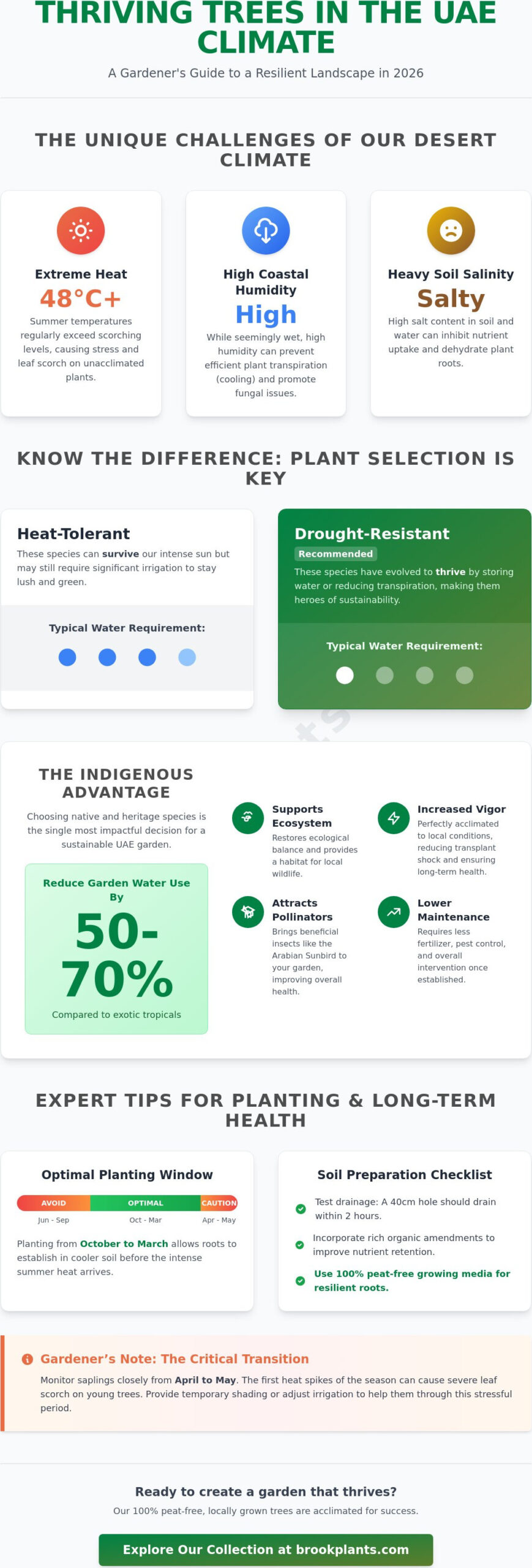
Gardening in the Emirates is a rewarding partnership with a landscape that demands respect. To ensure the successful cultivation of trees in uae, we must first acknowledge the environmental factors that shape our gardens. Our trees face summer temperatures that regularly exceed 48°C, high coastal humidity, and soil that often carries a heavy salt load. These conditions create a unique set of challenges that require more than just regular watering; they require a deep understanding of plant physiology and local adaptation.
There’s a critical distinction to make between heat-tolerant and drought-resistant species. A heat-tolerant tree can survive our intense sun but might still require significant irrigation to stay lush. In contrast, drought-resistant varieties have evolved internal mechanisms to store water or reduce transpiration, making them the true heroes of a sustainable landscape. Selecting the right trees in uae isn’t just about aesthetics; it’s the primary step in creating a garden that thrives without depleting our precious water resources. To understand the broader context of our local ecosystem, it’s helpful to explore the Wildlife and Flora of the UAE, which highlights how native species like the Ghaf have adapted to these exact conditions over millennia.
Xeriscaping serves as the foundational approach for modern UAE gardens, prioritizing water conservation through the strategic selection of native and desert-hardy species. To better understand this concept and the cultural significance of our native trees, watch this helpful video:
The Role of Soil Salinity and Drainage
The sandy soil found across most UAE residential developments often lacks the structure to hold onto vital nutrients. Because water moves through sand so quickly, it can wash away fertilizers before the roots can absorb them. We recommend incorporating rich organic amendments to create a “sponge” effect in the root zone. Before you plant, always test your drainage by digging a 40cm hole and filling it with water; if it doesn’t drain within two hours, you’ll need to address potential compaction. At Brook Plants, we take pride in using 100% peat-free growing media. This approach ensures your trees develop resilient, architectural root systems while protecting global peatlands, resulting in a plant that’s grown by us to be naturally tougher.
Seasonal Cycles in the Desert
Timing is everything when introducing new life to your landscape. The optimal planting window in the UAE runs from October through March, allowing the tree to establish its roots in cooler soil before the 50°C heat arrives. While we don’t see traditional autumn leaf-drop, many trees enter a form of “heat dormancy” during the peak of summer, where growth slows down to conserve energy. Gardener’s Note: Monitor your sapling health closely during the transition from April to May. This is when the first major heat spikes occur, and a young tree that hasn’t fully settled may need temporary shading or adjusted irrigation to prevent leaf scorch.
Heritage and Indigenous Species: The Heart of National Greenery
Planting native trees in uae is a return to the roots of the desert. These species don’t just survive the heat; they embrace it. As part of the national “Green Initiative,” choosing indigenous plants helps restore a delicate ecological balance that imported species often disrupt. We’ve found that native varieties support a vibrant ecosystem, attracting everything from the Arabian Sunbird to beneficial pollinators that keep your entire garden healthy. Data from local environmental studies suggests that using indigenous flora can reduce garden water consumption by 50% to 70% compared to exotic tropicals.
Our approach at Brookplants is rooted in sustainability. Every heritage tree we offer is 100% peat-free and grown by us to ensure it’s perfectly acclimated to local conditions. This makes the transition from our nursery to your soil much smoother, reducing transplant shock and ensuring long-term vigor. Citing the Environment Agency Abu Dhabi, these plants are essential for combating desertification and providing a natural cooling effect in urban spaces. They fit beautifully into modern, minimalist landscapes, where their rugged silhouettes create a striking contrast against clean architectural lines.
The Ghaf Tree (Prosopis cineraria): The National Legend
The Ghaf is the undisputed icon of the desert. It’s known for an incredible root system that can reach depths of 30 meters to tap into deep underground aquifers. In a landscape design, the Ghaf provides a soft, dappled shade that cools the ground by several degrees without the heavy water requirements of a lawn or leafy ornamental. Gardener’s note: Be aware that Ghaf trees are legally protected under UAE Federal Law. You cannot cut or relocate them without a specific permit from the municipality. If you’re looking to start your own sustainable oasis, our nursery collection features young Ghaf specimens that are ready to become a permanent legacy in your garden.
Sidr and Date Palms: Tradition Meets Utility
The Sidr tree is a lush, flowering evergreen that has been used for centuries for its medicinal honey and fruit. It’s remarkably salt-tolerant and thrives even when summer temperatures exceed 45°C. For those seeking architectural height, the Date Palm remains the classic choice for trees in uae. If you want a clean look without the maintenance of falling fruit, we recommend selecting “male” specimens or specific ornamental varieties. To keep palms healthy, it’s vital to perform a preventative check for the Red Palm Weevil every six months. This simple bit of maintenance ensures your palms maintain their structural beauty and deep green fronds for decades.
Vibrant Flowering Trees for Year-Round Colour
Adding architectural, flowering varieties to your garden does more than just please the eye; it creates a multi-sensory sanctuary that changes with the rhythm of the seasons. We believe that a thoughtful selection of trees provides a vital psychological anchor in our urban desert environments. Research suggests that viewing vibrant greenery and floral displays can lower stress levels by up to 15% in high-density areas like Dubai or Abu Dhabi. By choosing a mix of species that bloom at different times, you ensure your landscape remains a living canvas throughout the year.
As the early summer heat begins to settle across the Emirates, the Golden Shower tree transforms into a living chandelier, its branches heavy with pendulous clusters of bright yellow blossoms that seem to drip like molten sunlight toward the garden floor. These bursts of colour provide a necessary contrast to the neutral tones of desert architecture. Integrating these trees in uae gardens turns a simple backyard into an evocative escape that thrives despite the intense sun.
Showstoppers: Golden Shower and Trumpet Bush
The Cassia fistula, or Golden Shower, is a personal favourite at our nursery because of its stunning architectural form and resilience. It typically reaches its peak brilliance between May and July. If you’re looking for a reliable, drought-tolerant option for smaller spaces, the Tecoma smithii (Trumpet Bush) is an excellent choice. It produces bright orange, bell-shaped flowers that attract local pollinators. Every specimen we sell is grown by us to ensure it’s acclimated to the local soil conditions from day one.
- Prune your Tecoma and Cassia immediately after their main flowering cycle ends to encourage a second flush.
- Remove deadwood and “suckers” from the base to direct energy toward the canopy.
- Avoid heavy structural pruning during the peak heat of August to prevent sunscald on the inner branches.
Exotic Hardy Blooms: Delonix Regia and Plumeria
For a truly dramatic impact, the Delonix regia, known as the Flame Tree, is unmatched. It creates a massive, spreading canopy that provides deep shade, covered in fiery red blossoms during the transition into summer. If you prefer a more intimate, tropical feel near your patio, the Plumeria (Frangipani) is essential. Its iconic fragrance is most potent in the evenings, making it perfect for outdoor dining areas. Because we are 100% peat-free, our Plumeria are raised in sustainable mixes that promote strong, fibrous root systems capable of handling the UAE’s high summer temperatures.
Caring for these exotic beauties requires a consistent fertilizer schedule, focusing on high-phosphorus blends during the late winter to trigger bud production. In coastal areas, we recommend a fresh water rinse for the foliage every two weeks to prevent salt buildup from the sea breeze, which can scorch delicate petals. These small acts of care ensure your trees in uae remain healthy and vibrant for decades.
Functional Trees for Shade, Privacy, and Fruit
Trees in UAE serve as more than just decoration; they’re vital green infrastructure for your home. By positioning broad-canopy trees to block the western sun, you can lower your villa’s AC bills by approximately 15% to 25% during peak summer months. This natural cooling effect works best when you maintain a clear path for the shamal winds to circulate through the lower branches, preventing stagnant heat traps. Strategic placement isn’t just about shade; it’s about creating a microclimate that feels personal and cool even when the mercury hits 45°C.
Privacy Screens and Windbreaks
Creating a living wall offers a softer, more sustainable alternative to high concrete fences. The Damas tree (Conocarpus lancifolius) remains a popular choice for its rapid growth and dense, evergreen foliage. While it provides an almost instant shield, we always advise planting it at least 3 to 5 meters away from underground pipes due to its vigorous root system. For a more formal, manicured look, the Indian Laurel (Ficus nitida) is ideal. It responds beautifully to regular pruning, allowing you to shape it into sharp, architectural hedges. If you prefer a lighter, more tropical aesthetic, consider tall clumping bamboo or the slender forms of the Areca palm to provide privacy without making a small garden feel enclosed.
The Home Orchard: Mangoes, Guavas, and Figs
Growing your own food is a deeply rewarding part of gardening. Many people don’t realize how many fruit-bearing trees in uae actually thrive in our desert climate. Mango trees are a highlight, provided you select grafted varieties which are more resilient and produce fruit much sooner than those grown from seed. Guavas and figs are equally impressive, standing up well to the heat as long as they receive consistent, moderate irrigation.
Gardener’s note: Success in the orchard starts below the surface. Our desert sand lacks the nutrients these heavy feeders require. We recommend mixing your local soil with at least 40% high-quality organic compost to ensure a healthy harvest. At Brookplants, all our fruit trees are grown by us using 100% peat-free methods to ensure they’re strong and ready for your garden.
Expert Tips for Planting and Long-Term Tree Health
At Brook Plants, we view every sapling as the start of a decades-long story. Our philosophy shifts the focus from a quick sale to a lifetime of horticultural success. We take immense pride in our “grown by us” distinction. Because our trees are cultivated in local conditions rather than imported in refrigerated containers, they possess a cellular resilience that others lack. They’re already familiar with the intense UV levels and the specific salinity of the region. This significantly reduces transplant shock and ensures your investment thrives from the moment it’s settled into its new home.
Smart Irrigation and Water Management
The 2026 summer season is expected to see peak temperatures hitting 48°C, making water management your tree’s most vital lifeline. For established trees in uae, we often recommend bubblers over standard drip emitters. While drip systems are excellent for groundcover, bubblers provide the deep, localized saturation required to reach taproots two meters underground. A professional irrigation system installation ensures that water reaches the right depth without wasteful runoff. You should adjust your timers quarterly; a tree’s water demand can double between February and July. As the canopy expands, move your irrigation stakes further from the trunk to follow the “drip line” where the roots are most active.
Pruning and Maintenance for Longevity
Our “Gardener’s Note” for this season focuses on structural integrity. Pruning isn’t just about aesthetics; it’s about survival during the Shamal wind season. By thinning out the inner branches, you reduce wind resistance and prevent limbs from snapping during gusts that can reach 50 km/h. Timing is everything. Aim to prune during the dormant winter months, typically between December and February, to allow the tree to seal its wounds before the heat returns. Feeding should follow a similar seasonal rhythm. We suggest applying a slow-release, mineral-rich fertilizer in October and again in March to fuel growth spurts. If you’re looking to create a seamless transition from your garden to your living room, our guide to indoor plant wholesale uae offers insights into sourcing hardy interior varieties that mirror the lushness of your landscape.
Natural pest management is the final piece of the puzzle. We advocate for “soft” interventions that protect the local ecosystem. Consider these steps:
- Hydration: A strong blast of water from a hose can dislodge 90% of aphid infestations.
- Neem Oil: Apply this organic deterrent every 14 days during the spring to prevent borers.
- Soil Health: Use organic mulch to keep root temperatures 5°C cooler than the surface soil.
Healthy trees are their own best defense. When you focus on soil health and consistent hydration, you keep the tree’s natural immunity high, ensuring it remains a vibrant part of your landscape for years to come.
Cultivating Your Sustainable Desert Oasis
Transforming a sandy plot into a lush sanctuary requires more than just water; it demands the right selection of trees in uae that respect our unique climate. Since 2004, Brookplants has helped gardeners navigate these environmental challenges by focusing on hardy, indigenous species and vibrant flowering varieties that thrive in local conditions. We’ve spent over two decades refining our growing methods to ensure every sapling is resilient and ready for your soil. Choosing architectural shade or a private fruit grove is a long-term investment in your home’s beauty and the planet’s health.
Our approach is rooted in a deep respect for nature. Every plant we offer is 100% peat-free, grown by us to guarantee the highest quality and environmental integrity. We provide comprehensive support, from initial landscape design to ongoing maintenance, ensuring your garden flourishes throughout the seasons. It’s about more than just planting; it’s about building a legacy of greenery that lasts for generations. Explore our nursery-grown trees and professional landscaping services to begin your journey. We’re here to help your garden reach its full potential.
Frequently Asked Questions
What is the best tree for shade in a UAE garden?
The Neem tree is the best choice for shade in a UAE garden because of its dense canopy and rapid growth. It can reach heights of 15 meters and effectively lowers local temperatures by up to 10 degrees Celsius through natural transpiration. At Brookplants, we love its vibrant green foliage and natural pest-repellent properties, making it a sustainable, chemical-free addition to any outdoor space.
Can I grow fruit trees like Mango or Lemon in the UAE?
You can certainly grow Mango and Lemon trees in the UAE if you provide sheltered spots and consistent hydration. Mangoes thrive in the heat but need protection from harsh winds, while Citrus varieties like the Eureka Lemon produce lush harvests when grown in well-draining, 100% peat-free soil. Gardener’s note: ensure these trees receive at least 6 to 8 hours of direct sunlight to encourage healthy fruit production.
How often should I water my trees during the summer months?
During the peak summer months from June to September, you should water your trees daily, preferably in the early morning or late evening. Established trees in UAE landscapes typically require 40 to 60 liters of water per session to ensure moisture reaches deep root systems. Using a mulch layer can reduce surface evaporation by 30 percent, keeping the roots cool while conserving precious water resources. Pairing this routine with a well-designed irrigation system installation tailored for UAE conditions can help you automate and optimise your watering schedule while cutting water waste significantly.
Is the Damas tree safe to plant near my villa walls?
It’s not safe to plant a Damas tree near villa walls because its aggressive root system causes significant structural damage to foundations and underground pipes. These roots are known to extend 10 meters or more from the trunk as they search for moisture. We recommend replacing them with non-invasive, architectural alternatives like the Silver Buttonwood, which offers a similar look without the risk to your home’s integrity.
What are the most drought-tolerant indigenous trees in the UAE?
The Ghaf and the Sidr are the most drought-tolerant indigenous trees in the UAE. These hardy species survive on less than 100mm of annual rainfall by sending roots deep into the desert water table. Choosing these native varieties supports local biodiversity and reduces your garden’s water footprint, aligning perfectly with our commitment to eco-conscious and sustainable growing practices.
How do I prepare the soil before planting a new tree?
To prepare the soil, excavate a hole twice the width of the root ball and enrich the native sand with organic compost and a 100% peat-free potting mix. This improves water retention and provides essential nutrients for the young sapling. Gardener’s note: mixing in 20 percent sweet soil helps balance salinity, giving your new tree the best possible start in its new environment.
What is the best time of year to plant trees in the UAE?
The best time of year to plant trees in the UAE is during the cooler window between October and March. Temperatures during these months range from 18 to 30 degrees Celsius, allowing roots to establish before the extreme summer heat arrives. Planting during this season ensures a 90 percent higher success rate compared to summer planting, as the young trees aren’t immediately stressed by 45-degree peaks.
Are there any trees that are protected by law in the UAE?
The Ghaf tree is strictly protected by UAE Federal Law No. 24 of 1999, which prohibits cutting or uprooting them without an official government permit. Fines for damaging a Ghaf can reach 10,000 AED or more per tree depending on the specific municipality. We take great pride in offering “grown by us” saplings that help gardeners preserve this iconic national symbol for future generations.
Disclaimer
The content on this blog may be automatically generated and is provided “as is” without warranties of any kind, express or implied. No guarantee is made regarding the accuracy, completeness, or suitability of the information. The company expressly disclaims any liability for decisions or actions taken based on this content.
As this blog post was generated using automated content‑creation tools. While our team reviews posts for accuracy and relevance, the information provided may not always reflect the most current developments. The content is intended for general informational purposes only and should not be taken as professional advice. Our company is not liable for any actions taken based on this material.