
What if your sun-drenched balcony in Dubai could feel 5 degrees cooler without touching the AC dial? It’s a common frustration for many gardeners in the Emirates that the intense summer sun often turns a vibrant green space into a scorched landscape within days. We understand that the dream of lush vertical gardens often feels out of reach when you’re worried about plants wilting in 45°C heat or dealing with messy irrigation leaks that damage your masonry. According to recent urban studies, a well-placed living wall can reduce ambient wall temperatures by up to 10 degrees during a typical July afternoon.
You likely agree that a bit of cooling greenery shouldn’t come at the cost of excessive water waste or endless hours of maintenance. As growers who take pride in our sustainable, 100% peat-free methods, we want to help you cultivate a space that breathes. In this guide, you’ll discover how to design, plant, and maintain a thriving vertical garden tailored for the unique UAE climate. We’ll walk you through selecting heat-hardy species and setting up water-efficient systems that ensure your living wall remains a vibrant, architectural masterpiece year-round.
Key Takeaways
- Learn how living walls transform your space into a cooling sanctuary, naturally lowering temperatures and softening the harsh urban landscape of the Emirates.
- Compare the benefits of hydroponic felt and modular soil-filled systems to find the perfect weight-bearing match for your masonry or drywall surfaces.
- Identify the most resilient, sun-hardy plants for our climate and learn how to “zone” them strategically to ensure every leaf receives the right amount of moisture.
- Understand why a precision-engineered automated drip system is the secret to thriving vertical gardens, eliminating the common risks associated with manual watering in the desert heat.
- Navigate the professional design process, from initial lighting surveys to plant mapping, to avoid structural pitfalls and ensure your green wall remains vibrant for years to come.
Understanding Vertical Gardens: More Than Just a Green Wall
Vertical gardening is a specialized method of cultivating plants on vertically suspended panels, allowing life to flourish where traditional soil beds aren’t possible. This approach moves beyond the horizontal plane, utilizing hydroponic or substrate-based systems to support roots on a vertical surface. At Brookplants, we see these installations as more than just decoration; they’re functional ecosystems. The integration of green walls into modern architecture provides a vital layer of insulation, protecting structures from the intense Arabian sun.
In our bustling cities, the “heat island” effect can raise temperatures by 5 to 10 degrees Celsius compared to rural areas. These lush vertical gardens act as natural air conditioners. Through a process called evapotranspiration, plants release moisture into the air, which can cool a local environment by as much as 8 degrees Celsius. This cooling power makes them essential for sustainable urban development in the Middle East.
For residents in space-constrained villas or apartments, going vertical is the most efficient way to bring nature home. A blank balcony wall becomes a thriving tapestry of texture and color without sacrificing precious floor space. The benefits extend to our mental health too. A 2019 study published in the journal Scientific Reports demonstrated that viewing greenery for just five minutes can significantly lower cortisol levels and reduce stress. In a fast-paced environment like Dubai or Abu Dhabi, these green sanctuaries offer a much-needed psychological retreat.
The Aesthetic and Functional Power of Greenery
We treat our installations as living art that evolves with the seasons. Because our plants are grown by us, we select species that maintain their vibrant character throughout the year. Beyond beauty, these walls serve as high-performance sound barriers. Research indicates that a well-planted vertical surface can absorb up to 40% more ambient noise than a standard flat wall, making them ideal for privacy screens in dense residential areas. They also contribute to LEED certification; as of 2023, the UAE ranks among the top countries globally for LEED-certified projects, with green walls playing a key role in achieving these sustainable building standards.
Vertical Gardens in the UAE Landscape
Adapting the vertical concept to the UAE requires a deep respect for our local climate. We’ve seen a steady transition from traditional ground-level gardening to modern verticality, which allows for more precise water management in our arid environment. Our systems are designed to withstand ambient temperatures that frequently exceed 40 degrees Celsius during summer months. A UAE vertical garden is a marriage of horticulture and engineering. Through careful plant selection and automated irrigation, we ensure that even the most delicate ferns can thrive against a desert backdrop.
Choosing Your System: Living Walls vs. Vertical Planters
Selecting the right foundation for your vertical gardens determines how your green space will flourish in the unique UAE climate. You’re balancing the architectural beauty of the installation with the practical reality of daily care. Whether you’re looking to soften a concrete balcony in Dubai or create a focal point in an Abu Dhabi office, the choice between hydroponic and modular systems is your first big decision.
Hydroponic Living Walls: The Professional Choice
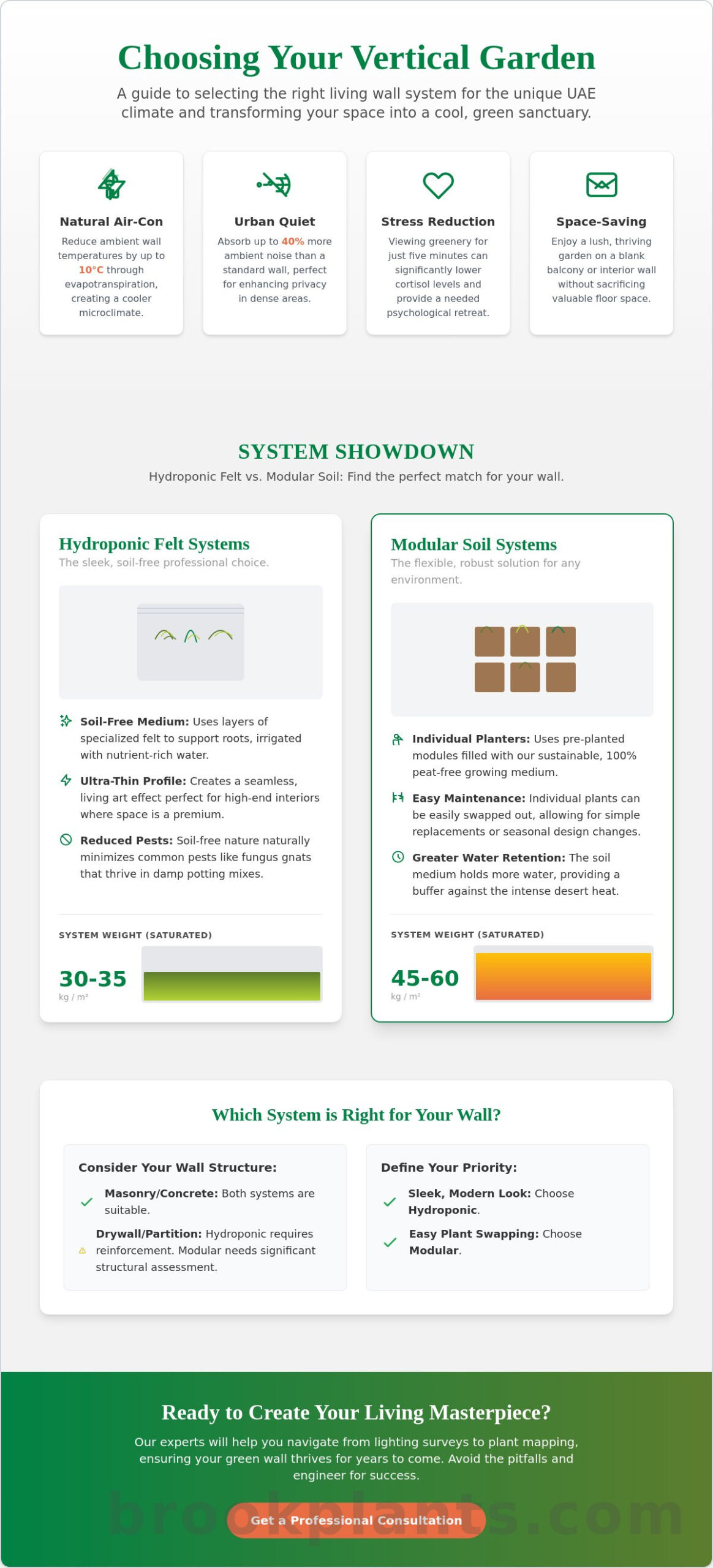
Hydroponic systems use layers of specialized felt or mineral wool to support plant roots instead of traditional soil. Because these systems are soil-free, they naturally reduce the risk of common pests like fungus gnats, which often thrive in damp potting mixes. Water enriched with precise nutrients circulates through the felt, mimicking the way plants grow on tropical cliff faces. This method creates a thin profile that’s perfect for high-end residential interiors where space is a premium.
Weight is a critical factor for any installation. A fully saturated hydroponic felt system typically weighs between 30 and 35 kg per square meter. Most masonry walls in UAE villas handle this easily. However, if you’re mounting a garden onto drywall partitions in a commercial office, you’ll need to ensure the internal studs are reinforced. While the initial investment for hydroponics is higher due to the need for automated pumps and timers, the long-term aesthetic is a seamless, “grown-in” carpet of green that’s hard to beat.
Modular Vertical Planters: Flexibility for the Home Gardener
Modular systems consist of individual pots or trays fixed to a frame. This setup is incredibly versatile because it allows you to use different soil blends for different plants. If one plant struggles, you can simply pop it out and replace it without disturbing the rest of the wall. We’ve found that modular systems are often the best starting point for those new to the hobby. They provide a familiar environment for the plants, especially when using our 100% peat-free growing media to ensure healthy root development.
These systems are excellent for following a vertical gardening guide to test which species thrive in your specific microclimate. Because each pot is independent, you can group plants with similar thirst levels together. Gardener’s Note: Modular systems can be heavier when wet, often reaching 60 kg per square meter, so always check your wall’s load-bearing capacity before you begin planting.
For areas with zero natural light, such as windowless corridors or basement gyms, you might consider a “preserved” moss wall. These aren’t technically living, so they don’t require irrigation or sunlight, yet they offer a vibrant, biophilic touch that lasts for years without maintenance. If you’re ready to start your journey, we can help you select the right sustainable planting solutions for your specific space.
Plant Selection: What Thrives in the UAE Climate?
Choosing the right greenery for your vertical gardens is a delicate balance between botanical art and environmental science. In the UAE, where summer temperatures frequently climb above 45°C, we look for specific traits: sun resilience, wind resistance, and humidity tolerance. Wind is often a silent struggle for balcony walls; it dries out foliage faster than the roots can drink. We also practice “zoning” within the structure. Because gravity pulls moisture downward, the bottom of the wall stays damp while the top dries out quickly. We place thirsty, moisture-loving species at the base and drought-tolerant survivors at the peak to ensure every plant gets exactly what it needs.
We take immense pride in our “grown by us” philosophy. Many retailers sell plants that spent their youth in climate-controlled European greenhouses, which often leads to shock when they meet the desert air. Our plants are raised locally and are 100% peat-free, ensuring they’re already acclimatized to the local light intensity and water conditions. Understanding the different types of green walls and their specific irrigation needs is the first step toward a thriving installation that lasts for years rather than months.
Top Indoor Plants for Vertical Lushness
Indoor spaces allow us to play with softer, more decorative foliage that would struggle in the direct sun. These plants create a cooling, tranquil atmosphere in any room:
- Pothos (Epipremnum aureum): The indestructible backbone of indoor vertical gardens. Its heart-shaped leaves trail elegantly, filling gaps with ease.
- Philodendrons and Scindapsus: We love these for their vibrant leaf patterns and varied textures. They offer a lush, jungle-like aesthetic that stays compact.
- Ferns and Aglaonemas: These are ideal for adding architectural depth. Aglaonemas provide sturdy, colorful foliage, while ferns thrive in the high-humidity microclimate created by the wall’s irrigation.
Outdoor Plants for the UAE Sun
Outdoor walls require “heat-hardy” survivors that can withstand the intense UV rays and occasional sandstorms. We select species that maintain their beauty even in the peak of August:
- Succulents and Sansevieria: These are the true champions of low-water gardening. They store moisture in their thick leaves, making them perfect for the sun-drenched top rows of a wall.
- Asparagus densiflorus: This plant provides a delicate, feathery trailing effect. It softens the hard lines of a building and creates a sense of movement in the breeze.
- Trachelospermum jasminoides: Also known as Star Jasmine, this climber adds a heavenly fragrance to your outdoor vertical oasis, especially during the cooler spring evenings.
Gardener’s note: Don’t forget to touch the leaves of your outdoor plants during the first few weeks. If they feel hot to the touch or look “crispy” at the edges, they might need a slight adjustment in their misting schedule or a bit of temporary shade during the 2:00 PM sun peak.
Engineering for Success: Irrigation and Substrates
A vertical garden in the UAE faces environmental challenges that a standard potted plant simply doesn’t encounter. With summer temperatures frequently soaring above 45°C in cities like Dubai and Abu Dhabi, the evaporation rate from a vertical surface is incredibly high. We’ve found that manual watering is the leading cause of failure for 85% of domestic living walls. It’s almost impossible to maintain the consistent moisture levels required when the sun is at its peak. Relying on a garden hose or a watering can leads to dry pockets and root stress, which quickly turns a lush feature into a brown one.
Designing a fail-safe system requires more than just a timer. We integrate robust drainage and water collection channels at the base of every installation. This prevents moisture from seeping into your masonry or interior drywall, protecting the structural integrity of your home. Proper drainage ensures that while the roots stay hydrated, they never sit in stagnant water, which is a common recipe for fungal issues in our humid coastal regions.
Automated Irrigation: The Lifeblood of the Wall
Smart controllers are the brain of your green wall. These devices allow us to schedule multiple short watering cycles throughout the day, which is far more effective than one long soak. During the intense heat of July, we often program the system to pulse water four or five times daily to keep the root zones cool. This precision prevents water wastage and ensures your vertical gardens remain vibrant even in the harshest conditions.
Pressure-compensating drippers are the secret to uniform growth. Without them, gravity would cause water to pool at the bottom of the wall while the top plants parched. These specialized components deliver the exact same amount of water to the highest fern and the lowest trailing ivy. To protect your indoor spaces, we also recommend moisture sensors and leak detection alarms. These small additions provide peace of mind, automatically shutting off the water supply if a drop in pressure is detected.
Sustainable Substrates and Growing Media
Our commitment to being 100% peat-free is a core part of our identity as growers. Peat extraction destroys ancient ecosystems and releases massive amounts of carbon into the atmosphere. In the UAE’s arid climate, peat is also a poor choice because it becomes hydrophobic when dry, making it nearly impossible to re-wet. Instead, we use a custom blend of coconut coir and perlite. This mixture offers exceptional capillary action and aeration, ensuring roots have plenty of oxygen to breathe.
Gardener’s Top Tip: Using “peat-free” substrates like coconut coir prevents soil compaction over time. While traditional composts often sink and harden after 12 months, our sustainable media maintains its structure for years. This keeps the root zone “fluffy” and allows water to penetrate deeply without creating runoff. It’s a small change in material that makes a massive difference in the long-term health of your plants.
Ready to bring a sustainable, self-sustaining green wall into your home? Explore our range of sustainable living wall solutions and let us help you grow.
Professional Execution: From Concept to Maintenance
Bringing vertical gardens to life in the UAE requires more than just a passion for greenery; it demands a precise blend of architectural engineering and horticultural expertise. At Brook Plants & Landscaping, we believe every living wall should be a thriving ecosystem rather than a temporary decoration. Our process begins with a detailed site analysis. We measure ambient light levels and humidity, as the intense Gulf sun can quickly scorch delicate foliage if the placement isn’t exactly right. Our team creates a plant map that considers growth rates and water needs, ensuring your wall remains a balanced, lush tapestry for years to come.
While the DIY route might seem tempting, the structural pitfalls are often underestimated. A fully saturated green wall can weigh over 50kg per square meter. Without professional structural assessments, you risk damaging your property’s integrity or facing a costly collapse. We bridge the gap between initial design and long-term growth by acting as both your architect and your nurseryman. We don’t just install; we nurture.
The Design and Installation Journey
Success starts with the bones of the garden. We customize planters and frames to complement your specific architectural style, whether it’s a sleek Dubai penthouse or a traditional villa courtyard. A critical component is the integration of automatic irrigation systems. These systems are the lifeblood of the garden, delivering precise moisture levels to every root zone. We ensure all frames are moisture-proofed to protect your walls from dampness, using high-grade materials built to withstand the UAE’s unique climate conditions.
Ongoing Care and Horticulture Support
A living wall is a dynamic entity that changes with the seasons. Regular pruning and specialized fertilization are essential to keep the growth compact and vibrant. We recommend recurring maintenance contracts because they allow our experts to spot nutrient deficiencies or pests before they spread. Our “gardener’s notes” for vertical displays often include:
- Monthly checks of irrigation emitters to prevent blockages from mineral buildup.
- Seasonal plant rotations to introduce fresh textures and colors.
- Precision pruning to maintain the intended aesthetic pattern.
By sourcing high-quality specimens through indoor plant wholesale UAE channels, we guarantee that every replacement or addition meets our rigorous standards for health and sustainability. Our commitment to being peat-free and eco-conscious means your garden supports the planet while it beautifies your home.
Bring Your Vision of a Living Sanctuary to Life
Bringing nature into our urban landscapes requires more than just a green thumb. It demands a deep understanding of the unique environmental challenges found across the Emirates. You’ve seen how successful vertical gardens depend on precise engineering, from choosing heat-tolerant species to implementing smart irrigation systems that conserve water. By prioritizing 100% peat-free substrates, you’re doing more than creating a beautiful focal point. You’re supporting a healthier, more sustainable planet through conscious gardening choices.
Since 2004, we’ve dedicated ourselves to the art of horticulture in the UAE. With over 20 years of local expertise, Brook Plants provides a full-service approach that covers everything from the initial design to ongoing maintenance. We don’t just supply plants; we nurture them. Our “grown by us” philosophy ensures every architectural leaf is prepared to thrive in your specific space. Whether you’re looking to cool a private balcony or transform a commercial lobby, we act as your trusted mentor in every season. This commitment to quality and the environment defines every project we touch.
Transform your space with a custom vertical garden from Brook Plants. It’s time to let your walls breathe with vibrant, healthy life.
Frequently Asked Questions About Vertical Gardens
Can vertical gardens survive the UAE summer heat outdoors?
Vertical gardens can thrive in the UAE summer if you choose heat-tolerant species and ensure consistent irrigation. We recommend using hardy plants like Conocarpus or Desert Rose for south-facing walls. Our “grown by us” selection focuses on varieties that withstand 45°C temperatures. Proper placement in dappled shade or using UV-resistant shade netting during July and August keeps the foliage vibrant and healthy.
How often do vertical gardens need to be watered?
Most outdoor vertical gardens in Dubai require watering twice daily during the peak summer months. An automated drip irrigation system is essential to ensure every plant receives moisture without wasting water. In the cooler winter season, you can reduce this to once every two days. We always suggest checking the soil moisture levels manually to ensure your lush green wall stays perfectly hydrated throughout the changing seasons.
Do vertical gardens cause dampness or mold on the walls?
Professional living walls don’t cause dampness because they include a waterproof barrier between the structure and your home. This protective layer, often made of high-density polyethylene, prevents moisture from seeping into the masonry. We also design our systems with a 20mm air gap to promote ventilation. This setup ensures that your vertical gardens remain a healthy addition to your space without risking any structural damage or fungal growth.
What are the best low-maintenance plants for a vertical garden?
Epipremnum aureum, commonly known as Pothos, and various Sansevieria species are the best low-maintenance choices for UAE vertical gardens. These architectural plants are incredibly resilient and adapt well to the local climate. Pothos offers a cascading, lush look that fills gaps quickly. If you’re looking for something structural, succulents like Aloe Vera provide a striking aesthetic while requiring very little pruning or specialized care to look their best.
How much does it cost to install a professional living wall?
Installation costs for professional living walls in the UAE typically range from AED 1,800 to AED 4,000 per square meter. This price usually covers the support structure, irrigation system, and the initial planting. The final investment depends on the plant density and the complexity of the automated controls. While the initial setup requires a budget, the long-term value of a cooling, peat-free green space adds significant beauty to any property.
Can I grow vegetables and herbs in a vertical garden in the UAE?
You can successfully grow a variety of edible plants in a vertical garden, especially during the growing season from October to April. Mint, basil, and cherry tomatoes thrive in vertical pockets where they get plenty of sunlight. It’s a wonderful way to harvest fresh, organic produce from your own balcony. Just ensure your edible wall gets at least 6 hours of light and use nutrient-rich, peat-free compost for the best flavor.
What is the difference between a living wall and a preserved moss wall?
A living wall consists of growing, breathing plants that require water and light, while a preserved moss wall uses real moss that’s been treated to stay soft without maintenance. Living walls are ideal for outdoor spaces or bright interiors where you want active growth. Preserved walls are strictly for indoor use and don’t need irrigation or sunlight. Both options bring a delicate, natural texture to your environment, but they serve different functional needs.
Do vertical gardens attract mosquitoes or other pests?
Vertical gardens don’t naturally attract mosquitoes as long as the irrigation system doesn’t allow water to stagnate. Mosquitoes need standing water to breed, so a well-drained system keeps them away. For common garden pests like aphids, we recommend using organic neem oil sprays. Keeping your plants healthy and pruning away dead leaves ensures your green wall remains a clean, vibrant sanctuary rather than a haven for unwanted visitors.
Disclaimer
The content on this blog may be automatically generated and is provided “as is” without warranties of any kind, express or implied. No guarantee is made regarding the accuracy, completeness, or suitability of the information. The company expressly disclaims any liability for decisions or actions taken based on this content.
As this blog post was generated using automated content‑creation tools. While our team reviews posts for accuracy and relevance, the information provided may not always reflect the most current developments. The content is intended for general informational purposes only and should not be taken as professional advice. Our company is not liable for any actions taken based on this material.