
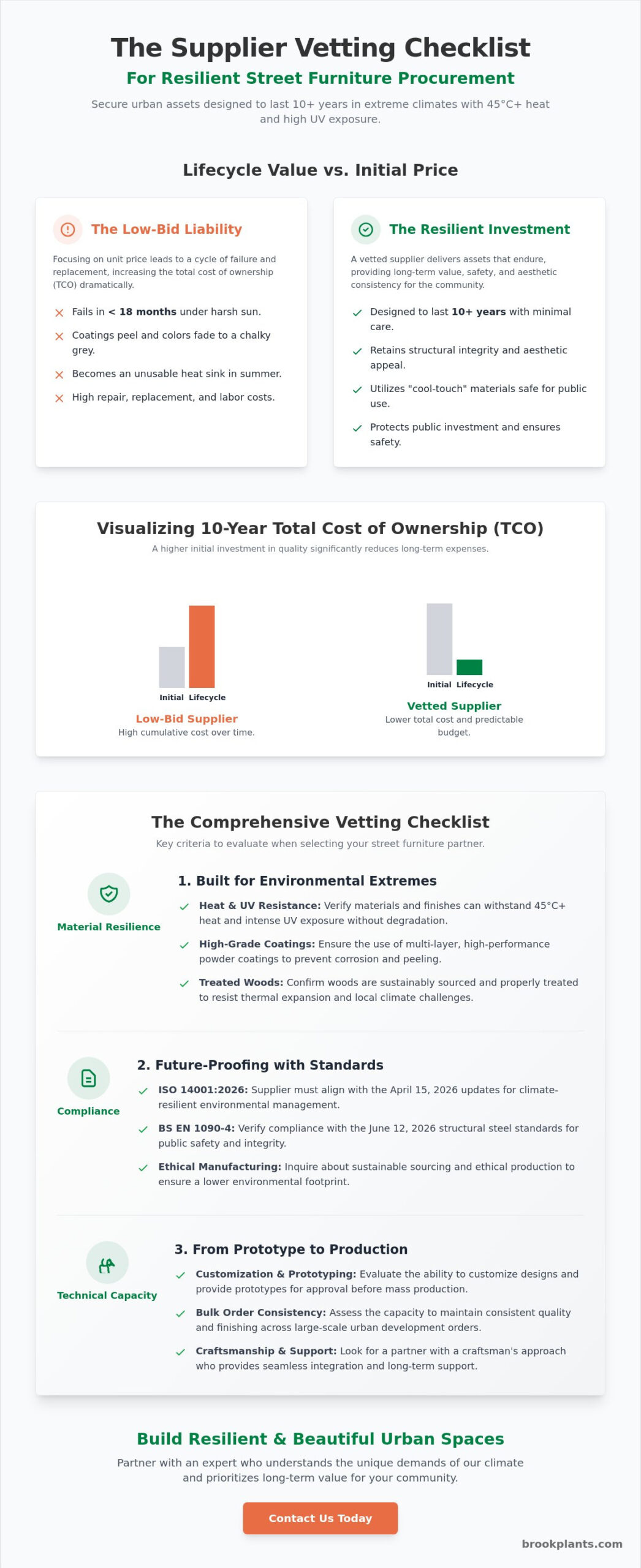
When temperatures soar to 45°C, a low-bid bench isn’t a bargain. It’s a liability that begins to fail the moment the UV index hits double digits. You’ve likely seen it happen; architectural seating that fades to a chalky grey or steel that radiates heat until it’s unusable. We believe urban assets should be as resilient as a deeply rooted, long-lasting tree, standing tall and functional for decades. To achieve this, you need a robust supplier vetting checklist for street furniture procurement that prioritizes lifecycle resilience over the initial price tag.
We agree that the constant cycle of repair and replacement is a drain on both your time and your budget. It’s why we’ve developed a professional framework to help you secure assets designed to last 10 years or more in our unique climate. You’ll learn how to navigate the latest April 15, 2026, ISO 14001 updates and ensure your vendors comply with the June 12, 2026, BS EN 1090-4 structural steel standards. We are going to explore the specific technical benchmarks and sustainability certifications that turn a simple purchase into a long-term investment for your community.
Key Takeaways
- Discover how to identify materials like high-grade powder coatings and treated woods that can withstand the intense 45°C heat and extreme UV levels of the UAE.
- Implement a comprehensive supplier vetting checklist for street furniture procurement to eliminate hidden costs and ensure urban assets last 10 years or more.
- Align your projects with the latest 2026 sustainability standards, including the updated ISO 14001:2026 guidelines for climate-resilient environmental management.
- Evaluate a supplier’s technical capacity for customization and prototyping to ensure consistent quality across large-scale bulk orders and urban developments.
- Learn how a craftsman’s approach to urban landscaping creates a seamless, resilient environment that honors both aesthetics and the local ecosystem.
The Strategic Importance of Supplier Vetting in Urban Procurement
Choosing the right street furniture is much like selecting the right sapling for a community park; it’s a commitment to the future. In the UAE, where the sun is relentless and urban spaces are constantly evolving, the procurement process for these assets must be handled with the care of a master craftsman. We don’t just see a bench or a planter as a line item on a budget. These are public investments that define how residents interact with their city, whether they’re seeking shade under a large umbrella or resting near a lush vertical garden. When these assets are chosen well, they enhance the urban microclimate and invite life back into our streets.
If you treat these purchases as simple transactions, you risk creating a ripple effect of hidden costs and safety hazards. A poorly vetted supplier might deliver products that look beautiful in a catalog but fail within 18 months under the 50°C heat of a July afternoon. By utilizing a comprehensive supplier vetting checklist for street furniture procurement, you move away from risky, one-off buys toward strategic partnerships that prioritize long-term urban resilience. This approach ensures that every piece of furniture serves as a sturdy, reliable companion to the people who use it every day.
To better understand the foundations of a successful selection, watch this helpful video on best practices:
Protecting Public Investment and Safety
In high-traffic areas like the Dubai Marina or Abu Dhabi’s Corniche, structural integrity is non-negotiable. If a bench fails or a shade structure becomes unstable, the liability rests on the procurement team’s shoulders. Rigorous vetting ensures that every piece of furniture meets specific safety certifications and national standards for public installations. We look for suppliers who understand that durability in our region isn’t just about strength; it’s about how materials like stainless steel or treated wood respond to thermal expansion. It’s about ensuring every bolt and weld is ready for the long haul, protecting both the public and your reputation.
The Cost of Poor Vetting: Lifecycle vs. Unit Price
It’s tempting to focus on the initial unit price, but the true total cost of ownership (TCO) tells a much more accurate story. In our experience, choosing a “cheap” option often leads to emergency replacement costs that far exceed the original savings. For instance, a low-quality powder coating might peel within two years, requiring a full replacement that costs thousands of AED in labor and logistics. By contrast, an expertly vetted asset is designed to last 10 years or more with minimal care. As the global street furniture market is projected to reach $3.29 billion in 2026, the scale of these investments is only growing. Don’t let your budget be drained by the hidden price of poor quality.
Material Resilience: Vetting for Environmental Extremes
In the UAE, the sun is a sculptor, but it isn’t always a kind one. Our 45°C summers and high UV levels can turn a standard park bench into an unusable heat sink or cause vibrant polymers to fade and crack within a single season. The desert air is a harsh teacher. It reminds us that durability isn’t just a marketing term; it’s a structural requirement. Your supplier vetting checklist for street furniture procurement must prioritize materials that can withstand these invisible stressors without losing their architectural integrity or aesthetic charm.
We’ve always believed that the best products are those that respect their environment. Just as we carefully select hardy plants for our nursery, we look for “cool-touch” materials in street furniture that remain safe for public use even during the midday heat. Adhering to the principles of Sustainable Public Procurement helps ensure these materials don’t just survive the elements, but do so with a lower environmental footprint over their entire lifecycle.
UV Stability and Thermal Performance
Polymers and composite materials are particularly vulnerable to photo-degradation. When vetting suppliers, you’ve got to look beyond the surface and ask for specific UV-inhibitor ratings. We recommend a minimum of 10,000 hours of accelerated UV testing for any plastic components. Thermal conductivity is equally vital. Metal seating can reach temperatures over 70°C in direct sunlight, making it a liability. Vetting for low-conductivity coatings or integrated timber slats ensures the furniture remains a welcoming place to rest. For modular installations, check that the supplier has engineered expansion joints to accommodate the significant thermal movement that occurs between our cool desert nights and scorching days.
Corrosion Resistance in Coastal and Arid Zones
Coastal areas like the Abu Dhabi Corniche or Jumeirah face the dual threat of salt-mist corrosion and sand abrasion. Sand acts like sandpaper, stripping away inferior finishes and exposing the core material to oxidation. Your checklist should mandate Grade 316 stainless steel for any project within five kilometers of the coast; Grade 304 simply won’t cut it in our saline environment. Look for specialized architectural powder coatings that offer high-impact resistance to prevent pitting from wind-blown sand. Designs should also be maintenance-friendly, featuring smooth profiles that don’t allow moisture or abrasive grit to accumulate in hidden crevices. If you’re looking for resilient street furniture that balances architectural beauty with local performance, we can guide you through the best material choices for your specific site.
Sustainability and Ethical Manufacturing Standards
Sustainability isn’t just a label we stick on a product; it’s the very soil in which our values grow. When you’re refining your supplier vetting checklist for street furniture procurement, you’re doing more than just buying benches or planters. You’re aligning your urban project with the UAE’s Net Zero 2050 Charter and ensuring that every asset respects the delicate balance of our planet. Just as we take pride in our “grown by us” philosophy at Brook Plants & Landscaping LLC, we believe the furniture in our streets should have a clear, ethical lineage that you can trace back to the source.
A truly sustainable piece of furniture is designed for a circular life. It isn’t enough for a material to be recyclable; it must be easy to repair. We look for modular designs where a single damaged slat can be replaced without discarding the entire unit. This approach mirrors the way we tend to a garden, where we prune a branch rather than uprooting the whole tree. By prioritizing modularity, you reduce waste and keep your maintenance budgets healthy over the long term.
Verifying Eco-Conscious Material Sourcing
Traceability is the bridge between a promise and a fact. For any wooden components, your checklist must require FSC or PEFC certification to ensure the timber hasn’t contributed to deforestation. This is particularly critical as the EU Deforestation Regulation (EUDR) begins enforcement for large operators on December 30, 2026. For metal and plastic parts, don’t settle for vague “recycled” claims. Look for hard data, such as the 100% recovered steel standards used in international green purchasing specifications. We also suggest evaluating the carbon footprint of logistics; choosing regional suppliers can significantly lower the environmental cost compared to shipping heavy assets across the globe.
Social Compliance and Labour Standards Audits
The beauty of an architectural installation is hollow if it wasn’t made with respect for the people who built it. Your vetting process should verify that suppliers hold the latest certifications, including the ISO 14001:2026 standard for Environmental Management, which was recently updated on April 15, 2026, to focus more on climate resilience. Additionally, ISO 45001 ensures high safety standards for workers. We find that the most reliable partners are those who welcome factory visits or provide third-party social audits. These steps ensure that fair labor practices are followed, creating a supply chain that is as healthy and vibrant as the gardens we love to cultivate.
The Comprehensive Supplier Vetting Checklist for Street Furniture
Moving from a vision to a finished urban space requires a steady hand and a clear roadmap. It’s one thing to admire a design; it’s quite another to ensure it survives the logistical journey and the test of time. A professional supplier vetting checklist for street furniture procurement serves as your shield against project delays and substandard materials. We treat this process with the same meticulous care we use when preparing a planting bed, ensuring the foundations are solid before anything is installed.
By following a structured supplier vetting checklist for street furniture procurement, you ensure that every bench and bollard meets the highest standards of safety and craftsmanship. This systematic approach filters out vendors who might compromise on quality, allowing you to focus on partners who share your commitment to long-term urban excellence.
Pre-Qualification and Documentation
Before you even look at a product catalog, you’ve got to vet the business behind it. We recommend starting with a strict documentation check. Verify that the supplier holds a valid UAE trade license and has active memberships in relevant industry bodies. Financial stability is crucial; you don’t want a partner to disappear midway through a multi-year development. Ask for at least three case studies of national projects completed within the last five years. These should demonstrate their ability to handle the scale and complexity of your specific site. Ensure they carry comprehensive insurance, including Public Liability and Professional Indemnity coverage, to protect your investment from unforeseen complications.
Quality Assurance and Sample Testing
Digital renders are beautiful, but they don’t tell the whole story. We always mandate a physical sample for every major item. This allows for a “touch-test” to evaluate how the finish feels under the sun and how the edges are crafted. Request third-party lab testing results that confirm load-bearing capacities and weather-fastness against our local humidity. If your project includes integrated planters or green walls, it’s vital to align the furniture specifications with your existing irrigation system requirements. This prevents water damage and ensures your greenery thrives alongside the hardware. If you’re ready to build a resilient urban landscape, our team can help you select high-performance street furniture that integrates perfectly with your site’s technical needs.
Logistics and After-Sales Support
The global street furniture market is expected to reach $3.29 billion in 2026, and with that growth comes increased pressure on supply chains. You need a partner who can provide realistic lead times and a detailed site-specific delivery plan. Vetting should also extend to the years after the ribbon-cutting ceremony. Clarify the warranty terms and ensure the supplier guarantees spare parts availability for at least 10 years. A bench is only a public asset as long as it’s functional; having a clear path for repairs ensures your urban space remains vibrant and welcoming for a decade or more.
Partnering with Brook Plants & Landscaping LLC for Seamless Urban Landscaping
We see the city as a living, breathing garden that requires a steady, expert hand to thrive. When you use a supplier vetting checklist for street furniture procurement, you’re looking for more than just a vendor; you’re looking for a steward of the public realm. At Brook Plants & Landscaping LLC, we bring the same earthy passion we have for our 100% peat-free nursery to the world of architectural seating and shade structures. Our “grown by us” philosophy isn’t just about plants. It’s about a commitment to quality that ensures every piece of street furniture feels like a natural extension of the landscape rather than a sterile afterthought. We take immense pride in being craftsmen who understand the lifecycle of an asset, from the first sketch to its tenth year in the sun.
Urban assets shouldn’t exist in isolation. A beautiful bench is far more inviting when it’s framed by vibrant greenery or nestled near one of our lush vertical gardens. We help you reduce procurement friction by integrating these elements from the start. By choosing a partner who understands both the hardware of street furniture and the delicate requirements of softscaping, you ensure a cohesive aesthetic that stands up to the UAE climate. We don’t believe in one-size-fits-all solutions. Every project has its own rhythm, and our role is to act as a helpful companion in bringing that rhythm to life through thoughtful, durable design.
From Design to Durability: Our Integrated Approach
We bridge the gap between the structural and the botanical. Our team ensures that your planters and seating are engineered to work in harmony with the surrounding environment, preventing common issues like drainage failure or material overheating. This includes leveraging our indoor plant wholesale UAE expertise to create seamless transitions for mixed-use developments and transit hubs. While many resellers simply ship a box, Brook Plants & Landscaping LLC focuses on the long-term success of the entire outdoor environment. We design with a craftsman’s eye, ensuring materials are selected for their “cool-touch” properties and resistance to the high heat we face every summer. This holistic view means your furniture stays beautiful and functional, even in the most demanding urban settings.
Expert Guidance for Your Next Project
Building a resilient city is a collaborative effort. Brook Plants & Landscaping LLC acts as a trusted mentor, helping you refine your vetting criteria to prioritize sustainability and lifecycle value. Whether you’re looking for large shade umbrellas or architectural planters, we ensure every choice aligns with your project’s unique aesthetic. Our stance on environmental issues is firm; we remain dedicated to 100% peat-free practices and materials that support a circular economy. We provide the technical precision needed for large-scale orders while maintaining the personal touch of a local grower. If you’re ready to transform your urban space into a lush, durable sanctuary, Speak to our urban landscaping experts today to begin your journey toward a more resilient and vibrant future.
Building Resilient Urban Landscapes for 2026 and Beyond
Creating a vibrant public space requires more than just placing a few benches; it’s about curating a landscape that thrives in the UAE’s unique environment. We’ve explored how prioritizing material resilience against 45°C heat and aligning with the latest April 2026 ISO standards protects your investment. By moving beyond the initial price tag to focus on lifecycle value, you ensure that every asset serves the community for a decade or more. A robust supplier vetting checklist for street furniture procurement is your most reliable tool for navigating these complexities with confidence.
Since 2004, we’ve provided national coverage across the Emirates, acting as a trusted mentor for those who value quality and sustainability. Our expertise bridges the gap between architectural furniture and peat-free landscaping solutions, ensuring your outdoor spaces are as healthy as they are beautiful. We are ready to help you craft an urban ecosystem that reflects your vision and honors the planet. Request a Professional Street Furniture Consultation to start building a more durable future for your next project. Let’s grow something wonderful together.
Frequently Asked Questions
What are the most durable materials for street furniture in the UAE climate?
Grade 316 stainless steel and high-performance architectural powder coatings are the gold standards for our region. These materials resist the pitting caused by wind-blown sand and the oxidation triggered by high humidity. For seating, we recommend FSC-certified hardwoods like iroko because they remain cooler to the touch than metal when ambient temperatures exceed 45°C. Using a supplier vetting checklist for street furniture procurement helps you confirm these material grades before any purchase orders are signed.
How long does the supplier vetting process typically take for large projects?
A thorough vetting process for large-scale urban developments usually spans 4 to 8 weeks. This timeframe allows for the verification of trade licenses, the review of project case studies, and the physical “touch-test” of material samples. If factory visits or third-party social audits are required, you should factor in the upper end of that estimate to ensure every technical benchmark is met without rushing the foundations of your project.
What certifications should I look for in a street furniture manufacturer?
You should prioritize manufacturers holding the ISO 14001:2026 Environmental Management certification, which was updated on April 15, 2026. Additionally, look for ISO 45001 for occupational health and safety and BS EN 1090-4 for structural steel elements. These certifications provide a layer of expert assurance that the supplier follows modern, resilient practices. We always check these documents carefully to ensure your urban assets are built on a bedrock of reliability and safety.
Can street furniture be integrated with automated irrigation systems?
Yes, and it’s a specialty of ours to bridge the gap between hardware and horticulture. Many modern planters and vertical gardens are designed with internal cavities to house automatic irrigation lines. This integration is vital in the UAE to keep your greenery lush without the need for constant manual intervention. It ensures your street furniture remains a vibrant, living part of the landscape rather than just a static object in the heat.
What is the difference between Grade 304 and Grade 316 stainless steel for outdoor use?
The primary difference is the addition of molybdenum in Grade 316, which provides superior resistance to chlorides and salt-mist. While Grade 304 is suitable for inland areas with low humidity, it will often show tea-staining or pitting within months if placed near the coast. For projects in Jumeirah or the Abu Dhabi Corniche, Grade 316 is the only choice that guarantees a long lifespan without significant structural degradation or unsightly rust.
How do I verify the sustainability claims of an international supplier?
Don’t rely on marketing brochures; instead, request specific chain-of-custody certificates like FSC or PEFC for timber. For the latest 2026 regulations, check that they comply with the EU Deforestation Regulation (EUDR) standards set for December 30, 2026. Verifying recycled content through independent laboratory reports ensures that the supplier vetting checklist for street furniture procurement reflects true sustainability rather than just “greenwashed” claims from vendors who don’t share our earthy passion for the planet.
Why is UV resistance the most critical factor for urban furniture in 2026?
UV resistance is paramount because the intense Middle Eastern sun can degrade the molecular structure of polymers and coatings in a single season. In 2026, as urban heat islands become a greater concern, choosing materials with high UV-inhibitors is essential for maintaining both color and structural strength. We look for materials that have passed 10,000 hours of accelerated weather testing to ensure they don’t become brittle or chalky under our relentless desert sky.
What happens if a supplier fails the social compliance audit?
If a supplier fails a social compliance audit, they are typically removed from the shortlist to protect the project’s ethical standing and your brand’s reputation. Modern procurement frameworks require vendors to demonstrate fair labor practices and safe working conditions for all staff. Failing an audit indicates a risk to your project’s integrity and potential legal standing. We believe in partnering with craftsmen who respect their workers as much as they respect the environment.
Disclaimer
The content on this blog may be automatically generated and is provided “as is” without warranties of any kind, express or implied. No guarantee is made regarding the accuracy, completeness, or suitability of the information. The company expressly disclaims any liability for decisions or actions taken based on this content.
As this blog post was generated using automated content‑creation tools. While our team reviews posts for accuracy and relevance, the information provided may not always reflect the most current developments. The content is intended for general informational purposes only and should not be taken as professional advice. Our company is not liable for any actions taken based on this material.