
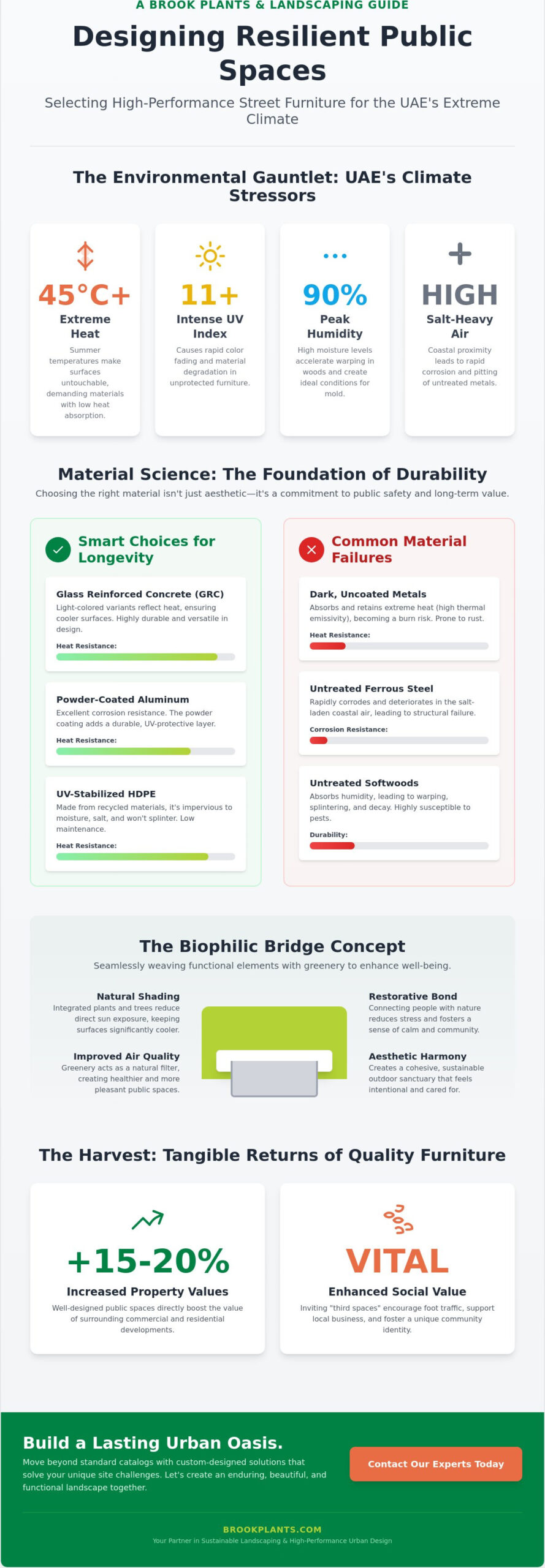
What if the very benches designed for relaxation in our community squares become entirely unusable for five months of the year? In the United Arab Emirates, where summer temperatures regularly climb above 45°C, choosing the right street furniture is more than an aesthetic decision; it’s a commitment to public comfort and safety. We’ve all seen beautiful installations succumb to the salt-heavy air and intense UV radiation, leaving behind faded colors and scorched surfaces that no one wants to touch. It’s a common challenge in a region where humidity levels often peak at 90% during the peak summer months, leading to rapid corrosion of standard materials.
At Brookplants, we believe that a functional urban landscape should feel like a natural extension of a well-tended garden, where every element is chosen with a craftsman’s eye for longevity. Just as we take pride in our 100% peat-free growing methods, we believe the hardscape should be as sustainable and hardy as the plants themselves. You deserve infrastructure that stays vibrant and structurally sound despite the coastal elements. This article promises to guide you through selecting and maintaining high-performance pieces that integrate seamlessly with your greenery while providing thermal safety for every visitor. We will explore the latest material breakthroughs for 2026 and share our expert tips for creating a cohesive, sustainable outdoor sanctuary.
Key Takeaways
- Learn how to design inviting “third spaces” that foster community connection and comfort within the UAE’s rapidly evolving urban landscape.
- Master the science of selecting high-performance street furniture with low thermal emissivity to ensure public seating remains cool and usable during peak summer heat.
- Discover the “Biophilic Bridge” concept, exploring how to seamlessly weave functional elements into greenery to create a restorative bond between people and nature.
- Gain a practical framework for assessing site-specific environmental stressors, such as salt-air corrosion and UV exposure, to ensure long-term durability and beauty.
- Explore the advantages of custom-designed solutions that move beyond standard catalogs to solve unique site challenges with expert, end-to-end craftsmanship.
What is Street Furniture and Why is it Vital for Modern UAE Urbanism?
Just as a well-placed bench in a lush nursery invites a moment of quiet reflection, high-quality street furniture serves as the heartbeat of our cities. When we examine the structural bones of a thriving neighborhood, we’re looking at What is Street Furniture? and how it facilitates the daily rhythms of public life. These aren’t merely functional objects; they’re the essential elements that transform a sterile pavement into a vibrant community hub. In the Emirates, the vision for 2026 has shifted toward creating “third spaces,” those vital areas between the home and the workplace where social bonds are nurtured.
Urban planning in the UAE has undergone a beautiful evolution. We’ve moved away from the purely functional, utilitarian designs of the early 2000s toward an aesthetic-first approach that prioritizes the pedestrian experience. By 2026, the focus is firmly on high-quality outdoor furniture that can withstand the desert climate while looking as delicate and architectural as a desert rose. This shift ensures that our streets aren’t just conduits for cars, but welcoming environments for people.
To better understand how these crafts shape our world, watch this helpful video:
The Core Components of an Urban Landscape
Think of these elements as the architectural perennials of the city. Seating solutions, such as modular benches, social pods, and ergonomic loungers, are vital for community interaction. They provide a place to rest under the canopy of urban shade. Safety is equally paramount; bollards, bike racks, and shaded bus shelters offer protection and structure. Finally, sanitation and utility elements like smart litter bins and drinking fountains keep our public spaces as healthy and vibrant as a peat-free garden. These components work together to ensure the landscape remains accessible and tidy for everyone.
The Economic and Social Value of Quality Furniture
Investing in premium street furniture yields a significant harvest for developers and residents alike. Well-designed public spaces can increase property values in surrounding developments by as much as 15% to 20% based on recent regional urban trends. Comfortable seating and shaded walkways encourage foot traffic in commercial districts, which directly supports local businesses. Beyond the dirhams, there’s a deep social value. Custom-branded urban elements foster a unique community identity. Much like the “grown by us” philosophy we apply to our plants, bespoke furniture ensures a neighborhood feels authentic, cared for, and deeply rooted in its local culture.
Gardener’s Note for Urban Planners: Always look for materials that are as sustainable as they are beautiful. Choosing durable, weather-resistant finishes ensures your “urban garden” thrives for years without the need for constant, wasteful replacements.
Material Science: Selecting Heat-Resistant and Durable Urban Elements
Designing for the UAE means respecting a climate where UV levels often reach 11+ on the index. It’s a harsh environment for any outdoor structure. By 2026, the focus for street furniture has shifted toward materials that don’t just endure the heat but actively mitigate it. Selecting the right material is a lot like choosing the right plant for a sun-drenched border; it requires an understanding of how the element will breathe and age in its specific environment.
Thermal emissivity is a critical factor that many overlook. When a material has low emissivity, it traps heat on the surface, making benches or handrails “untouchable” by 11:00 AM during the summer months. To combat this, we’re seeing a move toward light-colored Glass Reinforced Concrete (GRC) and specialized cool-roof powder coatings. These reflect solar radiation rather than soaking it up, keeping public spaces usable even when temperatures hit 45°C.
Coastal projects in Dubai Marina or Abu Dhabi’s Saadiyat Island face the added threat of salt-air corrosion. For these zones, Grade 316 stainless steel is the only reliable choice. It contains 2% molybdenum, which provides the necessary resistance to chloride-induced pitting. Using inferior grades often leads to visible rust streaks within 18 months, compromising the aesthetic of a premium development. Just as we prioritize a sustainable landscaping approach to ensure long-term growth, choosing high-grade alloys ensures the longevity of the urban fabric.
Comparing Materials for Longevity and Comfort
- Concrete and GRC: These offer incredible thermal mass. They stay cooler to the touch for longer periods compared to metal. GRC is roughly 20% the weight of traditional pre-cast stone, allowing for more intricate, flowing designs.
- Powder-coated aluminum: This is a lightweight, rust-proof option. It’s ideal for modular seating, though it must be finished with high-reflectivity pigments to manage heat absorption.
- Treated timbers: FSC-certified hardwoods like Iroko or Teak provide a natural, earthy aesthetic. They don’t conduct heat like metal, making them comfortable year-round. They do require oiling every 12 months to prevent the dry desert air from causing splits.
Surface Treatments and Protective Coatings
Protection is about more than just a fresh coat of paint. UV-stabilized finishes are now a baseline requirement to stop the sun from bleaching vibrant pigments into dull greys. In 2026, high-performance coatings are expected to maintain 95% of their original color after 5,000 hours of accelerated weather testing. For any street furniture placed within 5 kilometers of the coastline, the C5-M (Marine) corrosive environment standard is the essential benchmark for durability.
Gardener’s Note: We view urban elements much like our 100% peat-free nursery stock; they are part of a living ecosystem. Anti-graffiti coatings are the “waxy cuticle” of the furniture world, allowing maintenance teams to wash away marks without damaging the underlying material, keeping the community looking lush and cared for.
Integrating Street Furniture with Living Landscapes
We’ve often seen projects where the benches and bins arrive long after the last palm is planted. At Brook Plants & Landscaping, we believe that street furniture should never be an afterthought. It’s the “Biophilic Bridge” that invites people to pause and engage with the greenery we’ve worked so hard to cultivate. When we marry hardscape elements with softscape design, we’re creating a cohesive ecosystem rather than a collection of objects. Biophilic integration serves as a critical tool for urban cooling by replacing heat-absorbing concrete with breathable, shaded zones that lower ambient temperatures by up to 5 degrees Celsius during peak UAE summer months.
Our approach focuses on the long-term health of the environment. Every piece of furniture we select or design must support the lifecycle of the plants around it. We use the same care for our public installations as we do for our 100% peat-free nursery stock. It’s about ensuring that a heavy stone bench doesn’t compact the soil or that a metal chair doesn’t reflect scorching heat onto a “grown by us” sapling. We’ve found that when furniture feels like a natural extension of the garden, people treat the space with more respect and care.
Planters and Tree Grates: Protecting Urban Greenery
Properly designed planters are more than just containers; they’re life support systems. In the UAE’s arid climate, we ensure our planters feature integrated sub-irrigation to keep roots hydrated without wasting water. Tree grates serve a dual purpose by protecting sensitive root zones from foot traffic while expanding the walkable surface area in busy districts like Downtown Dubai. For semi-outdoor lobby spaces that bridge the gap between the street and the interior, we often integrate indoor plant wholesale uae strategies to ensure the transition feels lush and seamless. Gardener’s note: always ensure your planter has at least 20 percent extra root space to accommodate future growth cycles.
Creating Shaded Microclimates
Strategically placed pergolas and seating can harness the natural cooling power of transpiration. By coordinating street furniture with vertical gardens, we can significantly mitigate the urban heat island effect. A 2024 study of a residential development in Sharjah found that furniture placement directly impacts the survival of nearby flora. When seating was placed to provide afternoon shade to delicate groundcover, plant mortality rates dropped by 18 percent compared to exposed areas. We don’t just place a bench; we position it to protect the garden and the person sitting in it. This synergy ensures that even in the height of July, our urban spaces remain inviting and vibrant.
A Framework for Choosing High-Performance Street Furniture
Selecting the right elements for a public space requires a balance of botanical wisdom and structural engineering. We approach street furniture with the same care we use to select a hardy desert shrub. It’s about longevity and the way a piece settles into its environment. To build a landscape that lasts until 2026 and beyond, follow these four essential steps.
- Step 1: Environmental Exposure. The UAE sun is a powerful force. We look for materials that won’t warp or fade under 50°C heat. Marine-grade 316 stainless steel or GRC (Glass Reinforced Concrete) are ideal for coastal areas like the Abu Dhabi Corniche where salt air is constant.
- Step 2: User Demographics. A quiet neighborhood park in Al Ain needs different seating than a bustling metro station in Dubai. We consider the “stay time” of the user. Commuters need lean-rails, while families require grouped seating that encourages conversation.
- Step 3: Maintenance and Lifecycle. High-quality hardware should be a one-time investment. We evaluate the “total cost of ownership” rather than just the initial price tag. Choosing powder-coated finishes over wet paint can save thousands in touch-up costs over a five-year period.
- Step 4: Compliance. Every piece must meet the UAE Universal Design Code. This ensures that our urban spaces are welcoming to people of determination, providing the right heights and clearance for wheelchairs.
Functionality and Accessibility Standards
Inclusive design isn’t just a box to tick; it’s the heart of a healthy community. We ensure seating heights are set at a comfortable 450mm to 520mm, making it easier for seniors to stand up. Ergonomics matter because a bench that isn’t comfortable won’t be used. As we look toward 2026, smart city features are becoming standard. We’re seeing more street furniture with integrated solar-powered USB ports and sensors that alert waste management teams when bins are 80% full, keeping our streets pristine and efficient.
Sustainability and Peat-Free Values
Our commitment to the earth doesn’t stop at our nursery gates. Just as we’re proud to be 100% peat-free in our growing practices, we apply those same circular economy principles to urban hardware. We prioritize manufacturers who use recycled aluminum or FSC-certified timber. The “grown by us” philosophy means we value knowing exactly where a product comes from. By choosing localized sourcing and durable materials, we significantly reduce the carbon footprint of a project. It’s about creating a legacy of quality that respects the delicate balance of our natural world.
If you’re ready to transform your next project with sustainable, expert-led choices, discover our sustainable landscaping solutions today.
Custom Street Furniture Solutions: The Brook Plants Approach
While a catalog provides a quick fix, it rarely captures the essence of a specific site. In the UAE, where the midday sun pushes boundaries and architectural ambitions are high, standard street furniture often falls short. We see these pieces as more than just utilities; they’re an extension of the living landscape. Our end-to-end service bridges the gap between a conceptual sketch and a functional reality. By managing both the greenery and the hardscape, we ensure your outdoor space feels like a single, cohesive ecosystem rather than a collection of mismatched parts.
Working with a single partner for both landscaping and furniture simplifies the complex logistics of urban development. We understand how a tree’s root system might interact with a bench foundation or how the irrigation for a planter needs to be integrated into the furniture’s core. This integrated approach reduces installation friction and ensures that every element, from the soil to the seating, is designed to thrive together.
Bespoke Design for Unique Identities
We collaborate closely with landscape designers to create signature pieces that mirror a brand’s DNA. Whether it’s a sleek, minimalist bench for a DIFC rooftop or organic, flowing seating for a community park, the materials must be chosen with care. We often utilize Glass Reinforced Concrete (GRC) for its incredible durability or high-grade stainless steel that resists the corrosive salt air found in coastal developments. In 2024, we’ve noted a 25% increase in developers requesting “smart” furniture that incorporates cooling tech or integrated planters to maximize greenery in high-density areas. These aren’t just objects. They’re functional art pieces that define the character of a space.
Maintenance and Long-Term Care
Planting a garden is just the beginning; the same philosophy applies to urban furniture. The UAE’s harsh environment requires a proactive touch to keep materials looking their best. Dust and salt buildup can degrade even the toughest powder-coated finishes within 12 months if left unchecked. Our maintenance teams perform regular inspections to prevent these issues before they require costly repairs.
Our “gardener’s notes” for furniture care include specific top tips for the region:
- Regular Cleaning: We use pH-neutral solutions to remove sand and salt without stripping protective coatings.
- Timber Refurbishment: We apply specialized UV-resistant oils to timber elements twice a year to prevent cracking and fading in the 50°C summer heat.
- Structural Checks: Our team monitors thermal expansion in joints, ensuring that metal and stone elements remains safe and stable.
If you’re ready to transform your urban space into a vibrant, lasting sanctuary, reach out to our team. You can discuss your landscaping and furniture needs with our experts to find a solution that’s as durable as it is beautiful.
Cultivating Resilient Urban Sanctuaries for 2026
Designing for the UAE’s future requires a deep understanding of how materials react to intense summer heat and high humidity. Success in 2026 depends on choosing high-performance street furniture that bridges the gap between architectural durability and natural beauty. It’s vital to integrate these elements with living landscapes that offer shade and cooling, ensuring public spaces remain vibrant and usable throughout the year. At Brook Plants, we’ve spent over 20 years refining this craft since our founding in 2004. We don’t just supply products; we provide a comprehensive approach that includes expert design, meticulous execution, and dedicated maintenance services tailored to our unique climate.
Our passion for sustainable, climate-resilient landscaping ensures your outdoor project stands the test of time and weather. Whether you’re looking for custom benches that stay cool to the touch or planters that support healthy root growth in desert conditions, our team acts as your trusted mentor. We’re proud to be local growers and craftsmen who understand the heartbeat of the Emirates. Explore our range of street furniture and landscaping solutions to start your transformation. We look forward to helping you create a space where nature and community truly thrive.
Frequently Asked Questions
What is the best material for street furniture in the UAE climate?
GRC (Glass Reinforced Concrete) and high-grade aluminum are the most resilient materials for the UAE’s intense UV exposure. These choices withstand peak summer temperatures that often reach 50 degrees Celsius without warping or degrading. We’ve seen that GRC provides the architectural weight needed for stability while remaining cool to the touch. It’s a reliable choice for long-term street furniture projects where durability is a non-negotiable standard.
How do you prevent street furniture from getting too hot in the sun?
You prevent heat absorption by selecting materials with high solar reflectance and incorporating natural shade. Light-colored surfaces reflect about 80% of solar energy, keeping the seating much cooler than dark alternatives. We also recommend integrating pergolas or native Ghaf trees to provide 100% canopy coverage. This creates a lush, inviting microclimate that protects visitors from the harsh midday sun during the hottest months of the year.
Is stainless steel or aluminum better for coastal outdoor furniture?
Marine-grade 316 stainless steel is superior for coastal areas because it resists the corrosive salt air found in places like Dubai Marina. Standard 304 steel often shows signs of pitting and rust within 6 months of installation near the sea. Aluminum is also a strong contender if it features a high-quality powder coating. It doesn’t rust, making it a lightweight and hardy option for salt-heavy environments.
What are the benefits of integrating planters into street seating?
Integrating planters into street seating offers immediate cooling through evapotranspiration and boosts local biodiversity. Research shows that dense greenery can lower the surrounding air temperature by up to 5 degrees Celsius. It’s a beautiful way to bring life to urban spaces while providing a sensory experience for residents. Using our peat-free compost ensures these plants thrive sustainably while acting as natural filters for city dust and pollutants.
How often should street furniture be maintained in a desert environment?
Street furniture in the UAE requires a thorough cleaning every 30 days to remove abrasive desert sand and salt residue. Fine dust can degrade protective coatings if left to sit for long periods. You should also schedule a full structural inspection every 6 months to check for UV damage or loose fixings. Regular care ensures your urban landscape remains vibrant and safe for the thousands of people who use it.
Can street furniture help in achieving sustainability certifications like LEED?
Yes, street furniture contributes to LEED certifications by using recycled materials and regionally sourced components. Projects can earn points under the Materials and Resources category by selecting products with at least 25% post-consumer recycled content. We focus on sustainable manufacturing to help developers meet these rigorous environmental standards. It’s about building a greener future for the Emirates one bench or planter at a time.
What is GRC and why is it used for urban landscape elements?
GRC stands for Glass Reinforced Concrete, a durable composite made of cement, sand, and alkali-resistant glass fibers. It’s a favorite for urban elements because it’s 80% lighter than traditional pre-cast concrete but maintains incredible strength. This material allows for intricate, architectural shapes that bring a delicate beauty to heavy-duty landscape designs. It’s also fire-resistant and holds up perfectly against the UAE’s high humidity levels and coastal winds.
How do smart city features integrate into modern street furniture?
Modern street furniture integrates smart features through solar-powered USB ports and IoT sensors for maintenance alerts. These additions support Dubai’s 2030 Smart City Strategy by providing connectivity and gathering data on public space usage. Benches can now offer free Wi-Fi while monitoring air quality in real-time. It’s a seamless blend of traditional craftsmanship and digital innovation that makes our urban centers more functional and responsive to citizen needs.
Disclaimer
The content on this blog may be automatically generated and is provided “as is” without warranties of any kind, express or implied. No guarantee is made regarding the accuracy, completeness, or suitability of the information. The company expressly disclaims any liability for decisions or actions taken based on this content.
As this blog post was generated using automated content‑creation tools. While our team reviews posts for accuracy and relevance, the information provided may not always reflect the most current developments. The content is intended for general informational purposes only and should not be taken as professional advice. Our company is not liable for any actions taken based on this material.