
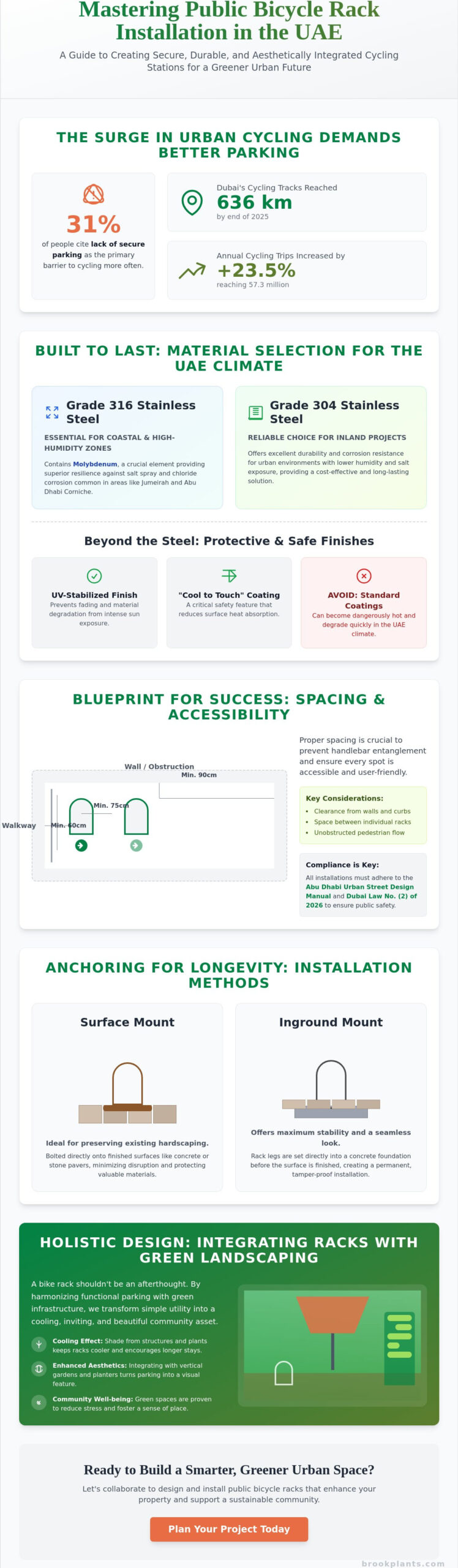
Did you know that 31% of people surveyed in 2025 cited the lack of secure parking as the main barrier to cycling more often? As our urban landscape evolves, with Dubai’s cycling tracks reaching 636 km by the end of 2025, the demand for thoughtful public bicycle rack installation has never been higher. We believe that a bike rack is more than just hardware; it is a vital ecological asset that must be harmonized with the landscape to promote sustainable living. However, in our unique climate, high humidity and intense heat can quickly degrade materials if they aren’t chosen with a deep respect for the craft.
You want to provide a safe haven for cyclists without damaging your existing hardscaping or cluttering the sidewalk. We’ll help you master the essentials of selecting and planning high quality stations that withstand environmental demands. We’ll explore the technical requirements of the Abu Dhabi Urban Street Design Manual and the latest 2026 safety regulations. You’ll discover how to create a secure, long lasting cycling station that integrates seamlessly with your street furniture, ensuring your project remains a beautiful and functional part of the community for years to come.
Key Takeaways
- Learn to select the ideal grade of stainless steel and UV-stabilized finishes to ensure your street furniture survives the UAE’s intense humidity and heat.
- Understand the precise spacing and clearance standards that prevent handlebar entanglement and ensure every parking spot remains accessible and user-friendly.
- Discover the structural differences between surface and inground mounting to choose a secure public bicycle rack installation method that protects your existing stone pavers.
- Explore how to harmonize functional bike parking with vertical gardens and large shade structures to create a cooling, green sanctuary for the local community.
The Strategic Role of Public Bicycle Rack Installation in 2026
The total length of cycling tracks in Dubai reached 636 km by the end of 2025. This growth is matched by a 23.5% increase in cycling trips, which rose to 57.3 million that same year. Our cities are breathing new life through active transport. To support this, a thoughtful public bicycle rack installation must provide more than just a place to lean a bike. It requires a blend of high capacity security and architectural harmony that complements the surrounding street furniture. This Bicycle parking rack overview highlights how essential the right materials are for creating a lasting impact in public spaces.
To better understand the practical side of how these systems support the cyclist, watch this helpful video:
Professional installation goes beyond simply bolting metal to a sidewalk. It’s a precise craft that ensures public safety and long term asset protection. With Dubai’s Law No. (2) of 2026 concerning public safety taking effect on June 1, 2026, meeting these rigorous inspection standards is no longer optional. A rack that isn’t anchored correctly can become a tripping hazard or a target for theft. When we approach public bicycle rack installation, we treat the existing concrete or stone as a canvas that must not be damaged. This careful touch preserves the integrity of the urban floor while providing a secure anchor for the growing number of cyclists. Well placed racks do more than serve a function; they increase property value and signal that a business supports modern sustainability goals.
Urban Mobility and Ecological Impact
The dream of the ’15 minute city’ relies on making low carbon transport the easiest choice. When people see accessible and reliable parking, they’re more likely to leave the car behind. We see street furniture as a reflection of a community’s heart. Choosing durable, beautifully crafted racks shows a genuine commitment to environmental stewardship. It isn’t just about utility; it’s about building a healthier world, one pedal stroke at a time. This shift reduces carbon footprints and nurtures a more vibrant, breathable urban ecosystem.
Identifying High-Traffic Cycling Hubs
Finding the right spot requires a keen eye for pedestrian flow. We aim for hubs near building entrances and public transport nodes where the connection between different modes of travel is strongest. Security thrives on visibility, yet we must ensure walkways remain clear. In Dubai, parking that obstructs traffic can lead to an AED 200 fine. We often recommend placing racks near our large shade structure umbrellas or lush planters. This keeps the metal cool in the UAE sun and makes the parking zone feel like a natural part of the landscape. Following the Abu Dhabi Urban Street Design Manual ensures these stations are both functional and aesthetically pleasing.
Selecting Materials for the UAE’s Unique Climate
The UAE sun is a powerful force that tests the very soul of our outdoor spaces. When we approach a public bicycle rack installation, we aren’t just looking at a piece of metal; we’re considering how that material will breathe and endure under intense UV radiation and salt laden air. Choosing the right alloy is the first step in a journey of environmental stewardship. For our beautiful coastal stretches in Jumeirah or the Abu Dhabi Corniche, Grade 316 stainless steel is the only choice that truly respects the environment. It contains molybdenum, a hidden hero that provides the necessary resilience against chloride corrosion that quickly eats away at lesser metals.
Inland projects might find a reliable partner in Grade 304 stainless steel, yet even then, the finish matters immensely. Standard powder coatings often absorb heat until the metal becomes painful to touch. We prioritize UV stabilized finishes and specialized “cool to touch” coatings. These aren’t just luxury additions; they’re essential safety features for a community where summer temperatures frequently climb. Integrating these bicycle parking and storage strategies ensures that the hardware remains inviting and safe for every cyclist, regardless of the season. By selecting materials with a long lifecycle, we reduce the need for frequent replacements and honor the natural resources used in their creation.
Corrosion Resistance and Longevity
One of the most common heartaches in urban design is “tea staining,” those unsightly brown surface streaks that can mar even the finest steel. It isn’t deep structural rust, but it suggests a lack of care. We prevent this by ensuring a high polish finish and recommending regular rinsing with fresh water to remove salt deposits. For the hidden bones of our structures, hot dip galvanizing provides a thick, protective shield that guards against the dust and moisture trapped in the air. A simple, consistent maintenance cycle keeps your street furniture looking pristine and welcoming for years.
Aesthetic Integration with Hardscaping
Metal doesn’t have to feel cold or industrial. We love the challenge of marrying modern glass facades with traditional textures. You can soften the visual impact of a rack by pairing it with our elegant outdoor planters or using preserved palms to create a lush, shaded sanctuary. This approach turns a functional utility into a piece of living art. When the finish of the rack matches the architectural palette of the surrounding stone, it creates a sense of belonging. It feels as though the installation was always meant to be there, growing naturally alongside the city itself.
Planning the Layout: Spacing and Accessibility Standards
Designing a space for cyclists is much like tending a garden; it requires a deep understanding of how life moves and flows within an environment. When we begin a public bicycle rack installation, we almost always return to the Sheffield rack as our foundation. This classic inverted U-shape remains the gold standard because it’s simple, honest, and incredibly effective. It provides the two-point contact required by the Abu Dhabi Urban Street Design Manual, ensuring the bicycle frame is supported in two places. This prevents the heart-wrenching sight of a fallen bike or a damaged wheel, showing a genuine respect for the rider’s property.
Spacing is where the technical craft meets human comfort. We’ve all felt the frustration of trying to untangle handlebars in a cramped parking zone. To avoid this, we recommend a minimum clearance of 900mm to 1000mm between each rack. This distance respects the user’s personal space and protects the delicate finishes of their bicycles. As the popularity of e-bikes and cargo bikes grows, our aisle widths must also evolve. A generous 1500mm aisle allows these larger, heavier frames to maneuver gracefully without bumping into others. Following these universal design principles ensures that your street furniture is welcoming to everyone, regardless of the type of cycle they choose to ride.
Optimizing Rack Density
We often calculate the number of racks based on building occupancy, but the specific usage of the site is just as vital. A bustling retail hub requires more short term parking than a quiet residential block. While staggered layouts can maximize a tight footprint, parallel arrangements often feel more intuitive for the rider. We take great care to ensure that the public bicycle rack installation doesn’t obstruct emergency exits or pedestrian paths. In Dubai, a rack that blocks traffic can result in a fine of AED 200, so precision in placement is a matter of both safety and legal responsibility. We prefer placing these in designated “furnishings zones” to keep the sidewalks clear and safe.
User Safety and Security Features
Security is a silent conversation between the cyclist and the urban environment. A two-point contact design offers the stability needed for protecting high value frames, which is a growing concern as more people shift to transport oriented cycling. We also consider the natural rhythm of the day; proper lighting is essential for making parking areas feel safe and inviting during the evening hours. Integrating smart monitoring or CCTV in high traffic zones provides an extra layer of peace of mind. By nesting these stations near well lit pathways or under our large shade structure umbrellas, we create a secure haven that encourages more people to choose the healthy, ecological path of cycling.
Professional Installation Techniques: Surface vs. Inground
The moment of public bicycle rack installation is where the vision of a sustainable city meets the hard reality of the ground. It’s a craft that requires a steady hand and a deep respect for the existing environment. We typically choose between two primary methods based on the lifecycle of the site. Surface mounting is often the most respectful choice for existing high quality concrete or stone pavers. It involves bolting the rack directly onto a stable concrete base, which the Abu Dhabi Urban Street Design Manual identifies as the ideal surface for stability. For new developments, inground mounting is the preferred path. By embedding the rack’s legs directly into a fresh concrete pour, we create a permanent, theft resistant anchor that feels like a natural extension of the urban floor.
To ensure we don’t disturb the peace of the surrounding hardscape, we use core drilling techniques. This method allows us to create precise, clean openings while minimizing the vibration damage that can lead to unsightly cracks in expensive stone. Once the holes are prepared, we rely on high strength epoxy anchors. These anchors create a chemical bond that is far stronger than a simple mechanical bolt, securing the racks against tampering and the constant stresses of daily use. It’s this attention to the hidden details that ensures your street furniture remains a reliable part of the landscape for decades.
Subsurface Preparation and Drainage
A lasting installation begins long before the first bolt is turned. We must ensure the subsurface is perfectly level to prevent water from pooling around the base of the rack, which can lead to premature wear. In areas with softer soils, our high quality geotextiles play a silent but vital role. They prevent soil shift and maintain the integrity of the installation site over time. We also take great care to manage expansion joints. Installing a rack across these joints can lead to structural failure as the ground naturally breathes with the heat, so we always plan our placement to respect these necessary gaps in the pavement.
The Installation Workflow
We follow a “measure twice, drill once” philosophy to ensure every station is perfectly aligned. This begins with precise marking and templating, ensuring the racks are parallel and meet the spacing standards we discussed previously. Once the rack is in place, we apply specific torque requirements to the security bolts. This ensures they’re tight enough to resist unauthorized removal but won’t stress the metal. To finish the work with a touch of elegance, we conceal the anchors with decorative base plates. This provides a clean, professional look that complements your modern street furniture and protects the hardware from the elements.
Holistic Solutions: Integrating Racks with Landscaping
A successful urban space is more than the sum of its parts; it’s a living ecosystem where every element supports the next. When we conclude a public bicycle rack installation, we don’t view it as a solitary task finished. Instead, we see it as an opportunity to weave functional utility into the vibrant fabric of the city. Metal meets leaf when we surround parking zones with our lush vertical gardens and elegant planters. This approach creates a “green” parking hub that does more than hold a frame. It provides a microclimate that shields both the rider and the machine from the reflective heat of the pavement, making the choice to cycle feel like a natural, refreshing part of the day.
Recent surveys show that 43% of cyclists now ride for transport, a significant rise that signals a shift toward a more sustainable future. To nurture this growth, we must design retreats rather than mere depots. Pairing bike racks with our other street furniture, such as benches and waste bins, creates a cohesive environment where commuters can pause and catch their breath. By integrating these elements with our outdoor landscaping expertise, Brook Plants & Landscaping LLC transforms a simple sidewalk into a destination. This harmony between hardscape and softscape is the hallmark of a city that truly cares for its people and the planet.
Designing for Comfort and Shade
The UAE heat is perhaps the greatest challenge to active transport. We address this by integrating our large shade structure umbrellas directly into the parking layout. These structures protect bicycles from direct sunlight, preventing the degradation of tires and saddles while keeping the metal cool to the touch. Strategic tree placement and the use of preserved palms can also provide natural cooling. We carefully select species that offer deep shade without the worry of sap-drop issues that might damage a cyclist’s pride and joy. These inviting, shaded spaces are essential for encouraging residents to choose their bikes over their cars for that “first and last-mile” journey to public transport hubs.
The Brook Plants Craftsmanship
We take immense pride in our identity as primary producers. This means we aren’t just placing items; we’re crafting environments from the ground up. Our custom planters and street furniture are designed to reflect the UAE’s rich architectural heritage while meeting modern ecological production standards. Every station we build is a testament to our commitment to quality, reliability, and environmental stewardship. We invite you to see how we can bring this same dedication to your next urban project. Explore our street furniture portfolio and request a consultation to begin your journey toward a more sustainable, beautifully integrated landscape.
Building a Greener, More Accessible Urban Future
Creating a vibrant, cycle friendly city is a journey of small, intentional choices. We’ve explored how selecting high grade materials and mastering the nuances of public bicycle rack installation can transform a simple sidewalk into a welcoming community hub. Whether you’re choosing the structural strength of inground mounting or the aesthetic harmony of custom finished steel, each decision reflects a deep respect for the rider and our shared environment. It’s about more than just hardware; it’s about nurturing the health of our planet and the well-being of those who live within it.
Brook Plants & Landscaping LLC has spent over two decades since 2004 perfecting this craft. Our custom designed street furniture is born from a love for the UAE’s unique landscape and built to endure its specific environmental demands. We provide integrated landscape design and execution services that move beyond simple utility to create a lasting legacy of growth and authenticity. Request a Professional Street Furniture & Installation Quote to see how your vision can flourish. Let’s work together to build an urban retreat that feels natural, secure, and ready for the future. Your journey toward a more sustainable landscape starts with a single, thoughtful step.
Frequently Asked Questions
What is the best material for public bike racks in a coastal environment?
Grade 316 stainless steel is the superior choice for coastal environments due to its high molybdenum content. This specific alloy provides the necessary resilience against chloride corrosion and salt laden air found near the shoreline. We always recommend a high polish finish to prevent tea staining, ensuring your street furniture remains a beautiful and enduring part of the landscape for years to come.
How much space should be left between two bicycle racks?
You should maintain a minimum of 900mm to 1000mm between individual racks to ensure user comfort and prevent handlebar entanglement. This distance respects the cyclist’s personal space and allows them to lock their frames with ease. If you’re expecting cargo bikes or e-bikes, widening this gap to 1200mm creates a more inclusive, accessible space that respects the diverse range of cycles in our community.
Is surface mounting secure enough for high-theft areas?
Surface mounting is highly secure when performed with high strength epoxy anchors rather than simple mechanical bolts. While inground mounting offers the maximum level of theft resistance for new builds, a professional surface installation on high quality concrete is incredibly difficult to tamper with. It’s a respectful choice for existing stone pavers where you want to provide security without causing significant structural disruption.
Do I need a permit for public bicycle rack installation on my property?
Permit requirements for public bicycle rack installation depend on whether the site is on private land or within a public right of way. In Dubai and Abu Dhabi, installations on public sidewalks usually require coordination with the RTA or local municipality to ensure compliance with the 2026 public safety laws. It’s best to consult with your local planning authority to verify specific setbacks and accessibility standards before beginning.
How can I prevent my bike racks from rusting in the high humidity?
Preventing rust in high humidity starts with selecting Grade 316 stainless steel and applying a UV stabilized or “cool to touch” coating. We suggest a simple, regular rinsing with fresh water to remove the salt and dust that can trap moisture against the metal surface. This gentle maintenance cycle, paired with a high polish finish, keeps the surface pristine and protects the long term lifecycle of your investment.
Can bike racks be integrated into existing landscaping without damaging plants?
Bike racks can be beautifully integrated into landscaping by using our custom planters and protective geotextiles. These elements allow you to create “green” parking zones that soften the industrial look of metal without harming delicate root systems. By placing racks near our large shade structure umbrellas, you provide natural cooling for the bikes while keeping the surrounding flora healthy and vibrant through thoughtful placement.
What are the benefits of ‘Sheffield’ style racks over other designs?
The Sheffield rack is favored because its inverted U-shape provides two point contact for maximum bicycle stability. Unlike “wheel bender” designs, it supports the frame directly, which is essential for protecting the integrity of modern, lightweight bicycles. Its simple, honest form integrates naturally with any architectural style, making it a timeless and reliable choice for sustainable urban infrastructure and active transport hubs.
How many bike parking spaces are required for a commercial building?
The number of required parking spaces is typically determined by building occupancy and local urban planning standards. While specific UAE commercial ratios vary, many modern guidelines suggest providing one space for every ten car parking spots. You should check the latest Dubai or Abu Dhabi street design manuals to ensure your public bicycle rack installation meets current 2026 accessibility and capacity requirements for your specific district.
Disclaimer
The content on this blog may be automatically generated and is provided “as is” without warranties of any kind, express or implied. No guarantee is made regarding the accuracy, completeness, or suitability of the information. The company expressly disclaims any liability for decisions or actions taken based on this content.
As this blog post was generated using automated content‑creation tools. While our team reviews posts for accuracy and relevance, the information provided may not always reflect the most current developments. The content is intended for general informational purposes only and should not be taken as professional advice. Our company is not liable for any actions taken based on this material.