
Did you know that Americans generate over 292 million tons of trash every year? It’s a staggering figure that reminds us why our communal parks and plazas need more than just a place to dump waste. Finding the right outdoor recycling bins for public spaces isn’t just about utility; it’s about honoring the beauty of the environment we’re trying to protect. We understand the frustration of seeing a stunning landscape marred by warped, faded bins that feel like an afterthought. You want your street furniture to be a natural extension of your design, not a distraction from it.
We agree that a public space should feel organized and intentional, where every element contributes to a sense of order and stewardship. In this guide, you’ll discover how to select and place recycling stations that harmonize with your landscape while promoting genuine environmental care. We’ll walk you through choosing durable materials that resist the heat and designing intuitive systems that make waste separation simple for everyone. Let’s explore how to turn essential utility into a lasting, beautiful asset for your community.
Key Takeaways
- Discover why waste management is the silent partner of successful landscape design. It’s how we protect the natural beauty of our shared environments.
- Explore how specialized materials like GRP and high-grade stainless steel resist intense UV rays. This keeps your furniture looking beautiful for years.
- Identify the perfect aesthetic for outdoor recycling bins for public spaces. Choose between natural wood for a park or sleek metal for a corporate plaza.
- Learn the “clustering” strategy to place your bins exactly where they’re needed most. This ensures your high-traffic zones stay clean and organized.
- See how integrating high-quality street furniture with your broader landscape design creates a cohesive space. It’s a reflection of your deep commitment to the planet.
The Role of Outdoor Recycling Bins in Sustainable Public Landscapes
When we imagine a flourishing park or a vibrant city square, our minds often drift to the rustle of leaves, the scent of fresh blooms, or the comfort of a well-placed bench. We rarely stop to consider the humble bin, yet outdoor recycling bins for public spaces act as the silent guardians of these shared retreats. They’re far more than mere receptacles; they’re essential pieces of modern street furniture that bridge the gap between human activity and environmental health. A thoughtfully chosen bin ensures that the transition from a quick snack to a clean path is effortless, keeping our focus on the beauty of the landscape rather than the remnants of a busy day.
Effective waste management is truly the silent partner of successful landscape design. It’s a foundational element that supports the health of every plant and the longevity of every walkway. When waste is managed with grace, the psychological impact on the community is profound. Clean spaces foster a sense of safety and belonging, encouraging people to linger longer and connect more deeply with their surroundings. Historically, public litter bins were often designed to be hidden away as eyesores. Today, we’ve seen a beautiful shift toward visible, attractive recycling stations that stand as proud symbols of a community’s values.
To better understand how these functional pieces can be integrated into a space with style, watch this helpful video:
Beyond Utility: Bins as Design Elements
Thoughtful design prevents essential utilities from becoming visual clutter in our precious green spaces. When we match the texture of a wooden bin to the slats of a nearby bench or the finish of our planters, we create a sense of intentionality and peace. We define integrated street furniture as the deliberate selection of functional elements that share a unified design language to foster urban harmony. This approach ensures that every piece, from the largest shade structure to the smallest recycling unit, feels like it belongs to the same story.
Promoting Environmental Stewardship
Clear, accessible recycling stations do more than just sort bottles and paper; they actively invite the public to participate in national sustainability goals. There’s a direct link between visible, high-quality recycling infrastructure and reduced littering in our parks. When a municipality or a business invests in premium street furniture, it signals a deep, authentic commitment to the planet. These bins become a reflection of a brand’s identity, showing that they care about the entire lifecycle of the products consumed within their space and the long-term health of our natural world.
Material Matters: Ensuring Durability in Harsh Outdoor Climates
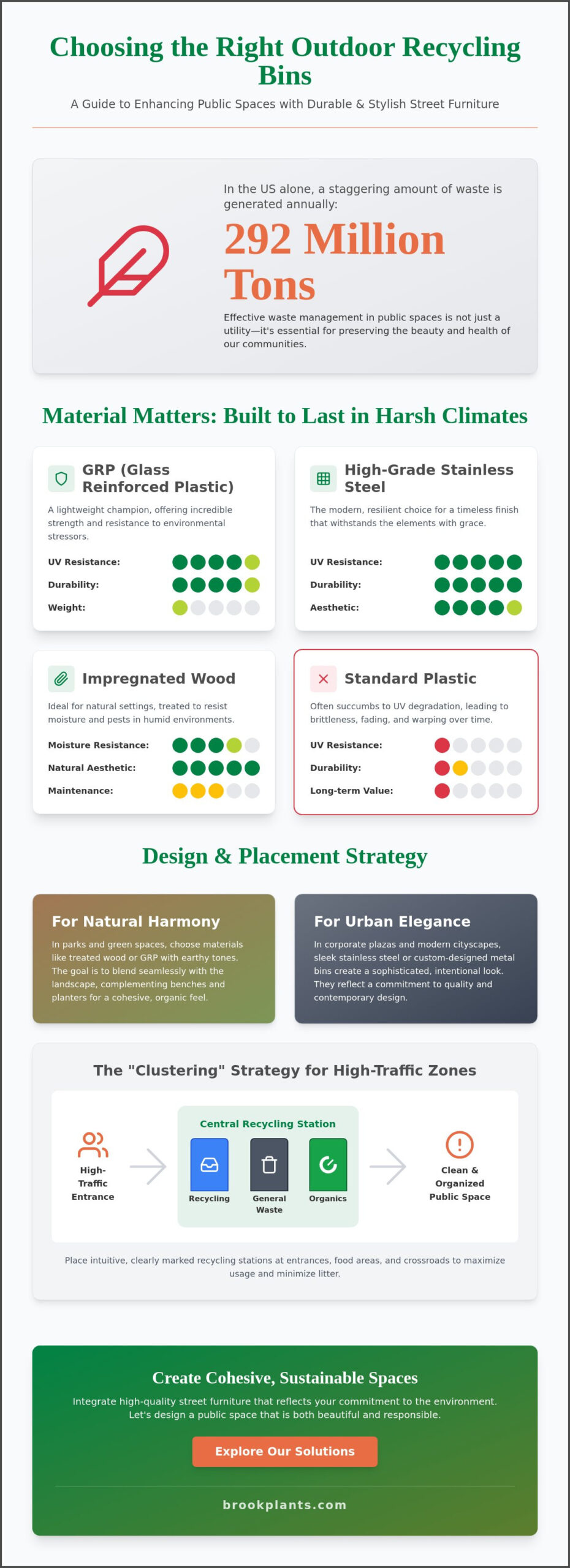
Selecting the right materials for outdoor recycling bins for public spaces is a delicate balance of artistry and engineering. In our region, the sun’s intensity isn’t just a weather report. It’s a constant force that tests the integrity of every piece of street furniture. Standard plastics often succumb to UV degradation, becoming brittle and losing their vibrant color within a few seasons. Untreated wood, while beautiful, can warp or split under the relentless glare. To combat this, we look toward materials like Glass Reinforced Plastic (GRP) and high-grade stainless steel. GRP offers incredible strength without the weight, while stainless steel provides a timeless, resilient finish that stands up to the elements without flinching.
For those designing in more humid locales, the choice of timber is vital. We often recommend impregnated woods, which have been deeply treated to resist moisture and the persistent pests that thrive in damp air. This process ensures the wood remains a living, breathing part of the landscape for years rather than a temporary fixture. When organizing large gatherings, referring to a resource like an Event Waste Guide can help you understand the volume requirements that influence these material choices. Choosing the right foundation ensures your investment matures as beautifully as the greenery surrounding it.
Resisting the Heat: Thermal Stability
Heat management is a critical, often overlooked detail in bin design. Certain finishes and lighter colors naturally deflect thermal energy. This ensures the bins don’t become painfully hot to the touch during the peak of summer. We also prioritize ventilation. Proper airflow through the bin casing reduces internal temperatures. It’s essential for minimizing the unpleasant odors that can develop in high heat. While recycled plastic composites have their place, high-quality treated timber often provides superior natural insulation, keeping the contents cooler and the surrounding air fresher.
Corrosion and Salt-Air Protection
If your project sits near the coastline, salt-laden air is your primary adversary. Powder coating isn’t just an aesthetic choice here. It’s a protective shield that prevents the underlying metal from oxidizing. We always distinguish between 304 and 316-grade stainless steel. While 304 is excellent for many urban settings, 316-grade contains molybdenum. This makes it far superior for resisting the pitting caused by sea salt. To keep these metal bins in peak condition, a simple periodic rinse with fresh water works wonders. If you’re looking for durable, beautifully crafted street furniture that survives these conditions, choosing the right grade is the first step toward longevity.
Choosing the Right Aesthetic: Wood vs. Metal vs. Custom Designs
A bin’s appearance is often the first thing a visitor notices, even if they don’t realize it. If a receptacle looks neglected or out of place, people are less likely to use it correctly. Selecting the right outdoor recycling bins for public spaces means choosing a design that speaks the same language as your architecture and greenery. Whether you’re tucking a bin into a quiet garden corner or placing it in the center of a bustling transit hub, the visual impact matters. It’s the difference between an eyesore and a functional sculpture that invites participation.
Sometimes, the best design is one that disappears into its surroundings. Custom stone or GRP enclosures can mimic natural textures like granite or limestone, allowing your waste stations to hide in plain sight. For municipalities and commercial developers, custom-branded bins with clear logos and specific color-coding are essential. Using intuitive colors, such as blue for paper or yellow for plastics, provides a silent guide for the public. It makes the act of recycling feel like a natural, effortless part of their journey through the space.
The Warmth of Timber in Public Spaces
There’s an undeniable soul in wood. For naturalistic parks or traditional garden environments, wooden-slat bins offer a soft, organic touch that blends seamlessly with the canopy above. We prefer wood species that age gracefully, such as teak or iroko, because they develop a beautiful silver-grey patina without losing their structural integrity. These timber elements do more than just hold waste; they soften the harsh edges of concrete-heavy urban environments. If you’re designing a transition area, like a semi-outdoor foyer, consider matching your bins with professional indoor plant wholesale UAE displays. This creates a cohesive, welcoming atmosphere that feels alive and cared for.
Modernity and Precision with Metal
In contemporary corporate plazas or high-end malls, metal is often the superior choice. Sleek, minimalist designs in stainless steel or aluminum project an image of precision and modern efficiency. Beyond looks, metal surfaces are non-porous and incredibly easy to clean, which is a major hygiene benefit in high-traffic food courts. You can even use laser-cut patterns to turn a standard bin into a piece of art that reflects local culture or branding. For areas prone to heavy use, we always recommend a heavy-duty metal gauge and secure fixings. This ensures your outdoor recycling bins for public spaces remain resistant to vandalism and daily wear while maintaining their sophisticated edge.
Strategic Placement and Capacity Planning for High-Traffic Zones
We’ve all seen a lonely bin tucked into a quiet corner while litter accumulates just meters away. Successful placement of outdoor recycling bins for public spaces isn’t about filling empty gaps; it’s about observing human behavior and responding with care. We look for “desire lines,” those natural paths people carve through a landscape as they move from one point to another. By placing bins where people naturally congregate or transition between areas, we make environmental stewardship the path of least resistance. It’s about working with the flow of the land rather than against it.
A central tenet of our philosophy is the “clustering” strategy. We believe recycling bins should always travel in pairs or trios. When a person has a bottle in hand, they shouldn’t have to search for a separate station. If the recycling option isn’t immediately adjacent to the general waste bin, the chance of cross-contamination skyrockets. Capacity planning is equally vital. A modest 40L bin is perfect for a winding garden path, but high-traffic event plazas require 120L or larger receptacles to prevent unsightly overflows that disrupt the peace of the space. Planning for volume ensures the landscape remains a place of rest.
Signage and Colour-Coding Psychology
Clear, universal icons are essential in our multicultural public spaces. They provide an instant, wordless guide that transcends language barriers and invites everyone to participate. We also utilize restricted apertures. Different shaped lids, such as a thin slot for paper or a round hole for bottles, act as a physical reminder of what belongs where. Truly, lid design is the most critical factor in recycling success. It forces a momentary pause, ensuring that the right materials reach the right lifecycle path without confusion.
Accessibility and Emptying Logistics
Maintenance is the heartbeat of a clean environment. We prefer front-opening bins over top-loading ones because they reduce the physical strain on the dedicated team members who keep our spaces beautiful. It’s also vital to ensure bins are accessible for everyone, including those with limited mobility. Height and reach must be considered during the initial design phase to ensure no one is excluded. We often suggest integrating bins into wider irrigation system layouts to ensure easy cleaning access. This holistic approach keeps both the furniture and the surrounding greenery in peak health. If you’re ready to enhance your landscape with functional art, explore our full range of premium street furniture today.
Crafting Harmonious Urban Spaces with Brook Plants
At Brook Plants, we see ourselves as more than just a supplier of products. We’re dedicated craftsmen who take pride in cultivating complete, thriving environments where people and nature can coexist. When you choose outdoor recycling bins for public spaces from a primary producer, you’re gaining a partner who understands the delicate balance of life in a landscape. Our street furniture isn’t designed in a vacuum; it’s built to live alongside the roots of a palm or the shade of a canopy. We understand how materials interact with soil, water, and sun, ensuring that every element we provide supports the long-term health of your project.
Our pride stems from our identity as primary producers rather than intermediaries. This distinction allows us to maintain a deep connection to the lifecycle of everything we create. We don’t just deliver a bin; we deliver a piece of a larger puzzle. By integrating bespoke street furniture with our deep knowledge of plant life, we help you execute a vision that feels unified and intentional. Whether you’re looking for custom planters to flank an entrance or durable seating that invites rest, our goal is to help you build a space that matures beautifully over time.
A Holistic Approach to Landscaping
We believe that a truly sustainable space requires a holistic perspective. This is why we often pair our high-quality recycling stations with vibrant vertical gardens and other bespoke street furniture. Creating these layers of greenery and utility transforms a simple walkway into a living ecosystem. We also recognize the value of national maintenance contracts in keeping furniture and plants pristine, ensuring your investment remains a source of community pride. Every item we import or custom-build is held to specific ecological production standards. These act as our moral anchor, reinforcing our commitment to the planet and the authenticity of our craft.
Your Partner in Public Space Excellence
We’re here to act as a trusted mentor throughout your journey, offering consultation services for large-scale commercial and residential landscape projects. Our involvement begins at the initial design phase and continues through to the final installation of street furniture and greenery. We provide the expert insights needed to choose the right materials and layouts for your specific climate and traffic needs. Quality and care are the traditional values that root our modern, eco-conscious practices. We invite you to contact our team to discuss your national project requirements today. Let’s work together to create a public space that reflects your dedication to sustainability and the natural world.
Cultivating a Greener Future Together
Creating a space that truly breathes requires an eye for detail and a heart for the environment. We’ve explored how the right materials, from UV-resistant GRP to marine-grade stainless steel, ensure your outdoor recycling bins for public spaces remain beautiful despite the heat. By understanding the psychology of placement and the harmony of design, you can transform a simple utility into a powerful statement of care. It’s about more than just waste; it’s about honoring the natural world through every piece of street furniture we place in our communal landscapes.
With 20+ years of national landscape expertise, we’re here to help you navigate the journey from initial design to flawless execution. As specialists in high-quality imported street furniture, we offer the guidance you need to build lasting urban sanctuaries that stand the test of time. Explore our range of premium street furniture and landscape solutions to see how we can bring your vision to life with authenticity and craft. We’re excited to help you nurture a cleaner, more vibrant world for everyone to enjoy.
Frequently Asked Questions
What are the best materials for outdoor recycling bins in extreme heat?
GRP and high-grade stainless steel with light-colored powder coatings are the most effective materials for withstanding intense thermal energy. These materials don’t just endure the sun; they actively deflect heat to keep the surface temperature manageable for park visitors. We also recommend choosing designs with built-in ventilation. This ensures internal air remains cool and odors are kept to a minimum during the hottest months of the year.
How many recycling bins do I need for a public park?
Most public parks benefit from placing a recycling cluster every 100 to 200 meters along primary walkways. This aligns with recent standards, like the Sacramento ordinance from February 2026, which requires recyclable containers to be as conveniently placed as solid waste containers. The exact number depends on your landscape’s “desire lines” and gather spots. Proximity encourages proper sorting and keeps your green spaces pristine. It’s about making the right choice the easiest one.
Are wooden recycling bins durable enough for national outdoor use?
Wooden bins are exceptionally durable when crafted from premium hardwood species like teak or iroko, or when using deeply impregnated timber. These woods are naturally resilient against moisture and pests, allowing them to age gracefully into a beautiful silver-grey patina over many years. Choosing high-quality timber ensures your street furniture feels like a living part of the environment. It’s a sustainable choice that honors the natural lifecycle of the materials we use.
What is the difference between 304 and 316 stainless steel for outdoor furniture?
The primary difference lies in the addition of molybdenum to 316-grade stainless steel, which provides superior resistance to salt-air corrosion. While 304-grade is an excellent, durable choice for inland urban areas, 316 is the essential standard for any public space located near the coastline. This choice prevents the pitting and unsightly “tea-staining” that can occur in saline environments. It’s a small technical detail that ensures your investment stays beautiful for the long term.
How can I prevent people from putting regular trash in recycling bins?
You can significantly reduce contamination in outdoor recycling bins for public spaces by using restricted lid apertures and clear, universal icons. For example, a narrow slot for paper or a small circular opening for bottles forces a momentary pause in the user’s action. Pairing this with distinct color-coding provides an intuitive guide that helps people make the right choice without thinking twice. It’s a gentle way to nurture better environmental habits within your community.
Can outdoor recycling bins be customised to match my landscape design?
Absolutely, our range of outdoor recycling bins for public spaces can be fully customized with specific color-coding, laser-cut patterns, or municipality logos. We can even create custom GRP or stone-textured enclosures that allow the bins to blend seamlessly into more naturalistic or historical settings. This ensures your utility elements contribute to the overall aesthetic harmony of your project. We love helping our clients turn essential furniture into a unique reflection of their values.
Do you offer installation services for street furniture across the country?
Yes, we provide comprehensive design and installation services for all our street furniture and greenery projects across the country. Our team works closely with you from the initial consultation to the final placement on-site, ensuring every piece is secured correctly and integrated into your landscape plan. We take great pride in seeing our handiwork come to life in vibrant public spaces. Our goal is to make the entire process as smooth and inspiring as possible.
How often should public recycling bins be maintained or cleaned?
Public bins in high-traffic zones generally require a thorough cleaning and inspection at least once a month to remain in peak condition. A simple rinse with fresh water is often enough to remove salt and dust, especially for metal surfaces. While we don’t provide ongoing maintenance services ourselves, we always design our furniture for easy access to ensure your own teams can work efficiently. Regular care ensures that your street furniture serves the community for years.
Disclaimer
The content on this blog may be automatically generated and is provided “as is” without warranties of any kind, express or implied. No guarantee is made regarding the accuracy, completeness, or suitability of the information. The company expressly disclaims any liability for decisions or actions taken based on this content.
As this blog post was generated using automated content‑creation tools. While our team reviews posts for accuracy and relevance, the information provided may not always reflect the most current developments. The content is intended for general informational purposes only and should not be taken as professional advice. Our company is not liable for any actions taken based on this material.