
What if the greatest threat to your AED 700,000 landscape development isn’t the 50-degree heat, but a single overlooked line item in your irrigation plan? You likely understand that mitigating project risks in large-scale landscaping is a botanical craft that starts long before the first shovel hits the sand. In the UAE’s ambitious 2026 market, a project’s success is measured by more than just its initial beauty. It’s about whether those vibrant Ghaf trees and architectural palms actually survive the first summer after handover. We’ve all seen the frustration of high plant mortality rates and the sting of budget overruns caused by poor logistical planning.
This guide provides the expert framework for identifying and neutralising these threats, helping you transition from the “why” of a design to the “how” of long-term survival. With the UAE’s ambitious greening initiatives driving significant growth in urban landscaping, the pressure on supply chains for botanical specimens is higher than ever. You’ll learn how to secure fixed-price certainty for complex designs and navigate the logistical hurdles of the country’s rapid urban expansion and extensive development plans. We’ll preview the essential steps to ensure your green spaces remain lush and resilient, using the same grown by us philosophy at Brook Plants & Landscaping LLC that prioritizes the health of the planet and your project’s timeline.
Key Takeaways
- Learn how to neutralize “silent killers” like soil salinity and implement thermoregulation strategies to protect architectural plants during the 50°C+ summer peaks.
- Discover why a dedicated acclimatisation period is the secret to preventing transit shock and ensuring your imported specimens thrive after installation.
- Master a strategic framework for mitigating project risks in large-scale landscaping, starting with pre-execution botanical audits that align your vision with the UAE’s unique environment.
- Ensure budget stability and project longevity by integrating smart automatic irrigation and sustainable materials like Ecogrid into your initial design.
- Explore the “Craftsman Philosophy” and how choosing plants grown with care by expert horticulturists leads to more resilient, vibrant green spaces.
The Landscape of Risk in Large-Scale Green Infrastructure
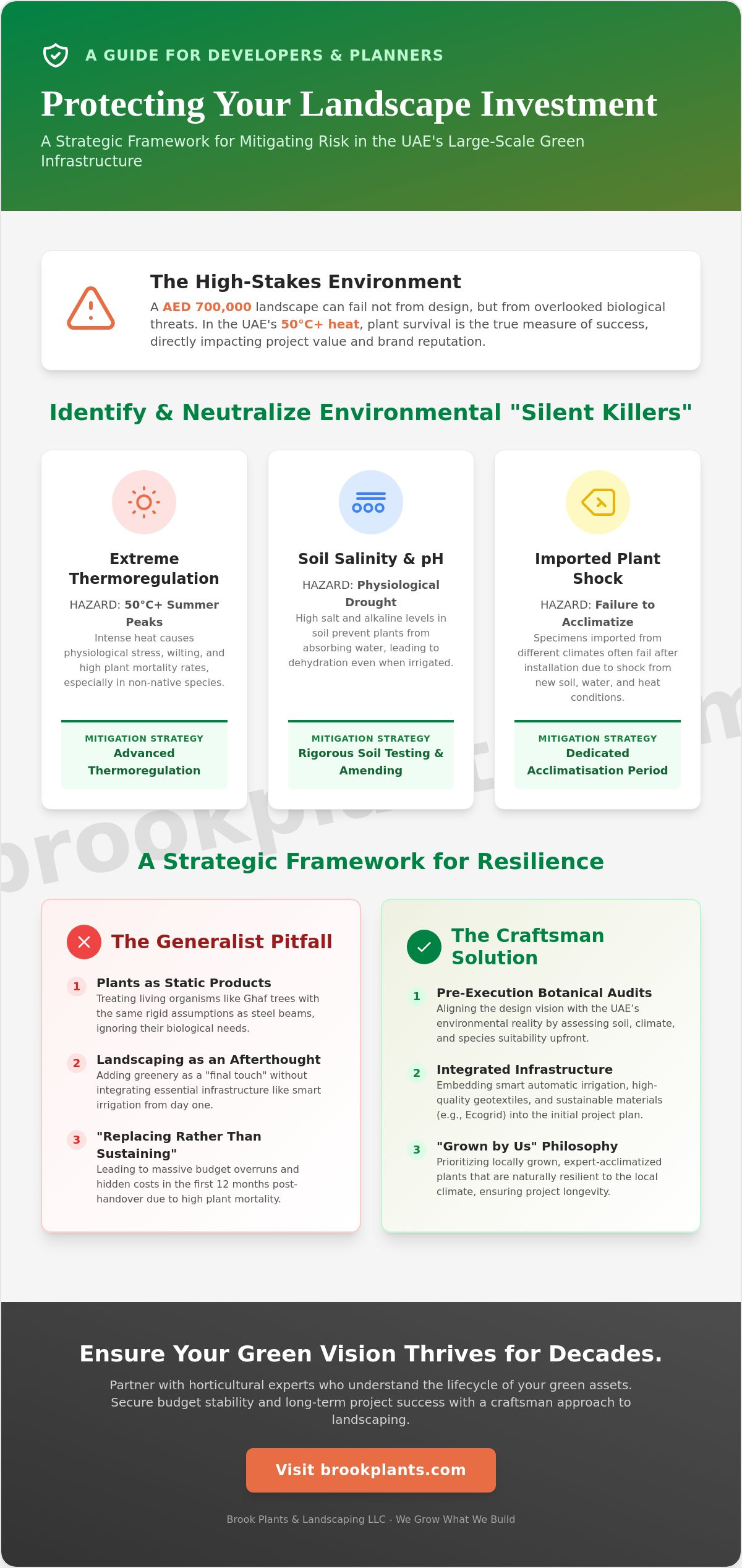
In the UAE, “large-scale” represents a commitment to transforming the desert into a living legacy through massive urban districts and high-end hospitality hubs. These projects involve thousands of living organisms that must thrive in one of the world’s most demanding climates. Successfully mitigating project risks in large-scale landscaping requires a fundamental shift in perspective. We cannot treat a twenty-year-old Ghaf tree with the same rigid assumptions we apply to a steel beam. While traditional project risk management focuses on procurement timelines and material costs, botanical risk management focuses on biological survival and environmental harmony. When a commercial project fails to account for the unique needs of its greenery, the financial impact is immediate. Replacing a failed landscape on a major development can easily push costs toward the upper limits of commercial budgets, not including the lasting damage to the developer’s brand reputation.
To better understand why these complex projects require a specialized approach, watch this helpful video regarding common pitfalls:
The intersection of aesthetic vision and environmental reality is where most risks reside. A designer might envision a lush, vibrant canopy, but without understanding the soil salinity or the specific thermoregulation needs of the species, that vision will wither before the first summer concludes. We’ve found that the most successful projects are those where the landscaping is treated as essential infrastructure, integrated with automatic irrigation and high-quality geotextiles from day one, rather than being an afterthought or a “final touch.”
The High Stakes of National Landscaping
For developers, the stakes go beyond simple aesthetics. A thriving landscape directly impacts property value and the perceived quality of the entire development. If a project suffers from high plant mortality, it’s not just a budget overrun; it’s a failure of the project’s sustainability promise. The first 12 months post-handover are the “make or break” period. During this time, hidden costs often emerge from “replacing rather than sustaining” assets. It’s far more cost-effective to invest in plants that are grown locally and acclimatized to our specific conditions than to constantly swap out dying imports that can’t handle the heat.
Why Generalist Contractors Struggle with Green Assets
Generalist contractors are experts at building with concrete and glass, but living landscapes operate on a different biological clock. Concrete doesn’t have a “growing season,” and it doesn’t suffer from transit shock. A common pitfall is treating a vertical garden or a row of architectural palms as a static product. Specialized horticultural knowledge is the only way to accurately assess risk. At Brook Plants & Landscaping LLC, we believe in a craftsman approach. Because we are growers, we understand the lifecycle of the plant. We know that a vibrant landscape depends on what’s happening beneath the surface, from the precision of the automatic irrigation to the quality of the soil and planters used. This expertise ensures that the architectural beauty of the design is matched by its practical longevity.
Identifying Environmental and Technical Hazards
The soil in the Emirates is often a challenging mix of high salinity and alkaline pH levels. These are the silent killers of a lush landscape. When salt builds up in the root zone, it prevents plants from taking up water, even if the soil looks wet. This physiological drought is a major factor, as imported specimens often struggle to adapt to these specific chemical profiles. Mitigating project risks in large-scale landscaping involves a rigorous soil testing phase to ensure your vibrant green assets don’t succumb to invisible hazards long after the contractors have left the site.
Extreme thermoregulation is another hurdle that requires more than just extra water. When temperatures exceed 50°C, architectural plants face solar radiation that can scorch leaves and damage vascular systems in hours. We often recommend integrating large shade structure umbrellas or strategically placed vertical gardens to create cooling microclimates. These structures don’t just provide comfort for residents; they offer vital relief for delicate species that might otherwise struggle in direct, punishing sunlight.
Water scarcity is a constant reality that demands a sophisticated response. Relying on a single irrigation line is a gamble that rarely pays off in the long term. We advocate for redundancy in automatic irrigation systems. If a sensor fails or a pipe bursts, having a manual backup or a secondary loop can save a multi-million dirham investment from total failure. Wind exposure also plays a significant role in risk. Large palms and heavy shade structures require deep structural stability and precise anchoring to withstand seasonal Shamal winds that can reach high speeds across open developments.
The UAE Environmental Risk Matrix
High UV indices can degrade plant tissues and fade the vibrant colors of your softscape. In urban plazas, the “heat island effect” can raise local temperatures by several degrees, making street furniture uncomfortable and stressing nearby planters. Xeriscaping serves as a primary risk-reduction strategy for water management by utilizing drought-tolerant species that require minimal supplemental irrigation. By selecting plants that have evolved to thrive in these conditions, you create a landscape that is both beautiful and biologically secure.
Technical Infrastructure Vulnerabilities
Automation is a powerful tool, but it isn’t infallible. Subsurface drainage issues are common in high-density planters, leading to root rot that goes unnoticed until the plant is beyond saving. Using high-quality geotextiles and Ecogrid helps maintain soil structure and prevents erosion during rare but intense rain events. If you’re planning a complex installation, exploring our range of sustainable landscaping solutions can help you build a more resilient foundation from the start.
Navigating Supply Chain and Procurement Vulnerabilities
Importing botanical specimens for a national development is a race against biology. While a reseller might focus on the lowest bid, mitigating project risks in large-scale landscaping requires a focus on the plant’s journey. Transit shock is a silent but devastating risk. When a vibrant architectural tree leaves a temperate climate and arrives in the UAE, the sudden shift in humidity and light can cause vascular collapse. If the specimen hasn’t been properly prepared for this journey, it may look healthy upon arrival but fail within weeks of installation.
Acclimatisation is the bridge between a nursery and a successful site. Every plant needs a “quiet time” or a transition period to adjust to the local UV index and soil chemistry. We’ve found that skipping this step is the primary cause of high mortality rates in large developments. By using nursery-direct relationships rather than middlemen, we ensure that every plant has a documented history of care. This “grown by us” philosophy means we know exactly what has gone into the soil, including our commitment to being 100% peat-free, which ensures a hardier root system for the long term.
Middleman sourcing often leads to inconsistent botanical quality. A reseller might pull stock from five different sources to fill a single order, resulting in a hedge or a row of palms that looks patchy and uneven. This “reseller risk” can ruin the aesthetic vision of a project and lead to costly replacements. Our gardener’s note for project managers: always ask for the provenance of your softscape. Knowing the nursery’s sustainable methods gives you confidence that your green assets are built to last.
Managing Botanical Logistics
Delicate indoor plants and vertical gardens need temperature-controlled transport to survive the journey to the site. If a container sits too long on the Jebel Ali docks in July, the project is delayed before it even starts. For developers seeking reliable wholesale indoor plants in the UAE, sourcing from local nurseries that manage their own logistics is the best way to reduce transit risk. Local growing reduces the time spent in dark containers and ensures the plants are ready for the UAE’s specific light levels.
Material and Hardscape Procurement
It’s not just about the greenery. Custom planters and street furniture must be built to withstand the intense UAE sun without warping or fading. High-quality preservation techniques are essential for preserved palms, ensuring they maintain their lush look in areas where automatic irrigation isn’t feasible. Large-scale shade structures and pool components often have lead times exceeding 12 weeks. Securing these early in the procurement phase prevents the “empty site” syndrome and keeps your timeline on track.
A Strategic Framework for Risk Mitigation
Successful execution isn’t just about moving soil; it’s about following a structured approach that respects the biological clock of the UAE. Mitigating project risks in large-scale landscaping starts with a Phase 1 pre-execution botanical audit. We don’t just look at the site; we test the soil’s heart. This ensures that the AED 300,000 to AED 700,000 typically invested in elaborate commercial projects isn’t lost to pH imbalances or drainage issues we could’ve corrected on day one. Phase 2 involves a Design-to-Reality validation. We take the architect’s vision and ask: “Will this thrive here in five years?” It’s a nurturing process of ensuring the architectural beauty is sustainable, not just a temporary show for the handover day.
Phase 3 moves into fixed-price execution models. By providing a comprehensive quote that covers everything from the precision of automatic irrigation to the placement of high-quality geotextiles, we eliminate the “budget creep” that often haunts large developments. Finally, Phase 4 focuses on a staged handover. We don’t just hand over the keys. We provide comprehensive maintenance training to ensure the team taking over understands the unique needs of our 100% peat-free, grown by us specimens. This craftsman’s approach ensures the plants continue to flourish long after our team has finished.
The Fixed-Price Advantage in Large-Scale Projects
Transparency is the foundation of trust in national-scale developments. When we provide a fixed-price model, it covers every technical detail, including the installation of Ecogrid for soil stability and custom planters designed for the UAE climate. This certainty is vital for commercial projects where budget predictability is just as important as the lush, vibrant result. You won’t find hidden costs in our labor or project management fees because we value the long-term success of the garden over a quick transaction.
Bridging Design and Maintenance
A beautiful design that’s impossible to maintain is a failure in the making. We select “maintenance-ready” plants that naturally fit the 10-year lifecycle of a development, choosing hardy species that can handle the heat with grace. Performing automated irrigation checks as a weekly risk mitigation task is essential to catch minor leaks or sensor errors before they become catastrophic botanical failures. If you’re ready to build a landscape that grows more beautiful with every season, consult with our expert growers today to start your botanical audit.
Partnering for Longevity: The Brook Plants & Landscaping LLC Approach
With over two decades of national landscaping expertise across the UAE, we understand that a successful project is a living investment. Our legacy is built on the belief that mitigating project risks in large-scale landscaping requires more than just a signature on a contract; it demands a deep-rooted passion for the land itself. We aren’t just contractors who source from the lowest bidder. Brook Plants & Landscaping LLC is a team of growers. This distinction is central to everything we do. It means every architectural specimen we install has been nurtured in our own nurseries, allowing us to guarantee the health and vitality of every plant from the moment it’s installed.
Our commitment to sustainable gardening practices is a moral anchor for our brand. We are proud to be 100% peat-free, a signature of our “grown by us” quality that ensures a hardier root system and a healthier planet. By focusing on the biological requirements of each species, Brook Plants & Landscaping LLC takes a craftsman’s approach to mitigating project risks in large-scale landscaping, ensuring that your investment survives the transition from nursery to site. Whether we’re designing vibrant vertical gardens or sprawling outdoor landscapes, we focus on the long-term lifecycle of the greenery. This holistic approach bridges the gap between a stunning initial concept and the enduring beauty of a thriving urban ecosystem.
Why Developers Trust Brook Plants & Landscaping LLC
Developers across the Emirates rely on us because we offer more than just botanical beauty. Our proven track record includes high-profile commercial and residential projects where reliability was non-negotiable. With a national distribution network, we can supply high-quality indoor and outdoor plants at scale, ensuring that your timeline remains predictable. Our fixed-price design and execution model provides the financial certainty needed for complex developments, eliminating the hidden costs that often arise when dealing with resellers who lack our horticultural depth.
Ensuring Your Project’s Future
We believe in creating low-risk ecosystems where every element works in harmony. This includes integrating smart automatic irrigation systems with architectural street furniture and lush greenery to form a cohesive environment. While we don’t provide maintenance services, we ensure your project’s future by monitoring plant health during the critical establishment phase and providing your teams with expert “gardener’s notes” for ongoing care. We want your garden to thrive as much as you do. If you’re ready to secure the botanical success of your development, Consult with our experts for your next large-scale project and let’s grow something remarkable together.
Cultivating Resilient Landscapes for the Future
Creating a vibrant green legacy in the UAE requires more than just a grand design. It demands a deep understanding of the delicate balance between architectural vision and environmental reality. You’ve seen how addressing soil salinity and prioritizing botanical acclimatisation can prevent the heartbreak of late-stage failure. By focusing on a structured framework and botanical integrity, mitigating project risks in large-scale landscaping becomes a journey of growth rather than a series of hazards. It’s about choosing plants that are grown with care and ensuring your technical infrastructure, from automatic irrigation to high-quality geotextiles, is built to last.
Since 2004, Brook Plants & Landscaping LLC has acted as a trusted mentor and craftsman for developers across the Emirates. As specialists in national-scale UAE projects, we pride ourselves on being direct importers and growers who prioritize sustainable, 100% peat-free methods. We’re here to help you turn ambitious urban master plans into thriving, healthy spaces that residents will enjoy for decades. Partner with Brook Plants & Landscaping LLC for your next large-scale landscape project to ensure your vision is rooted in expertise. Let’s work together to nurture a greener, more sustainable future for our desert home.
Frequently Asked Questions
What are the most common risks in UAE large-scale landscaping?
High plant mortality, soil salinity, and supply chain delays are the primary threats to national developments. In the UAE, extreme heat exceeding 50°C can scorch unacclimatized plants within hours if they aren’t properly shielded. Mitigating project risks in large-scale landscaping often involves addressing these environmental hurdles alongside logistical issues like transit shock for imported specimens that haven’t been prepared for the desert climate.
How does climate-specific design mitigate project failure?
Designing for the local environment means prioritizing native species like Ghaf or Sidr trees that naturally resist drought and high salt levels. By incorporating xeriscaping principles and large shade structure umbrellas, we reduce the thermal stress on the softscape. This approach ensures the design is sustainable rather than just a temporary aesthetic that fails during the first punishing summer peak after handover.
Can fixed-price landscaping contracts really prevent budget overruns?
Yes, fixed-price models provide financial certainty for complex designs where costs typically range from AED 50 to AED 500 per square meter. These contracts eliminate “budget creep” by accounting for every technical detail, from automatic irrigation components to high-quality geotextiles, right from the start. This transparency protects developers from the hidden costs often associated with variable labor or shifting material sourcing fees during construction.
What is the role of plant acclimatisation in risk management?
Acclimatisation is the vital process of gradually introducing plants to the UAE’s high UV levels and intense humidity. Skipping this transition period is a major cause of failure for imported botanical specimens. We use a “grown by us” philosophy to ensure plants are already adapted to local conditions, which significantly lowers the risk of transit shock and vascular collapse after they reach the project site.
How do irrigation failures impact the ROI of a commercial landscape?
A single day without water during the peak summer months can destroy a multi-million dirham softscape, leading to a total loss of your initial investment. Automatic irrigation systems require built-in redundancy and weekly sensor checks to prevent such catastrophic failures. When systems fail, the cost isn’t just the replacement plants; it’s the damage to the property’s reputation and the loss of the 34% growth in outdoor living value.
What should be included in a landscaping risk assessment for the UAE?
A comprehensive assessment must include soil pH and salinity testing, wind exposure analysis for large palms, and a subsurface drainage audit. It’s vital to evaluate the “heat island effect” in urban plazas and ensure that planters are equipped with proper drainage to prevent root rot. These technical checks prevent structural shifting and biological failure, keeping the landscape architectural and lush for the long term.
Is it better to source plants locally or import them for large projects?
Sourcing locally from a nursery that uses sustainable, 100% peat-free methods is generally safer and more reliable for the project timeline. Local plants have higher survival rates because they don’t experience the stress of international shipping or lengthy quarantine delays. While some unique specimens must be imported, mitigating project risks in large-scale landscaping is much easier when the majority of your stock is already hardy and acclimatized.
How does sustainable landscaping reduce long-term operational risks?
Sustainable practices like using Treated Sewage Effluent (TSE) and drought-tolerant native plants reduce the project’s dependence on scarce water resources. By integrating Ecogrid for soil stability and selecting “maintenance-ready” species, developers can avoid the high recurring costs of “replacing rather than sustaining.” This holistic approach aligns perfectly with the Dubai 2040 Urban Master Plan’s focus on resilient, green urban infrastructure.
Disclaimer
The content on this blog may be automatically generated and is provided “as is” without warranties of any kind, express or implied. No guarantee is made regarding the accuracy, completeness, or suitability of the information. The company expressly disclaims any liability for decisions or actions taken based on this content.
As this blog post was generated using automated content‑creation tools. While our team reviews posts for accuracy and relevance, the information provided may not always reflect the most current developments. The content is intended for general informational purposes only and should not be taken as professional advice. Our company is not liable for any actions taken based on this material.