
What if your garden could actually lower your monthly DEWA bill while thriving in the 45°C heat of a Dubai August? We’ve all felt the frustration of spending over AED 1,200 on irrigation only to see a generic, thirsty lawn turn brittle by mid-July. You’re right to want an outdoor space that feels personal and alive without the constant worry of plant failure or environmental guilt. Through thoughtful, sustainable landscape design dubai, it’s entirely possible to build a climate-resilient sanctuary that stays lush and cooling throughout the year.
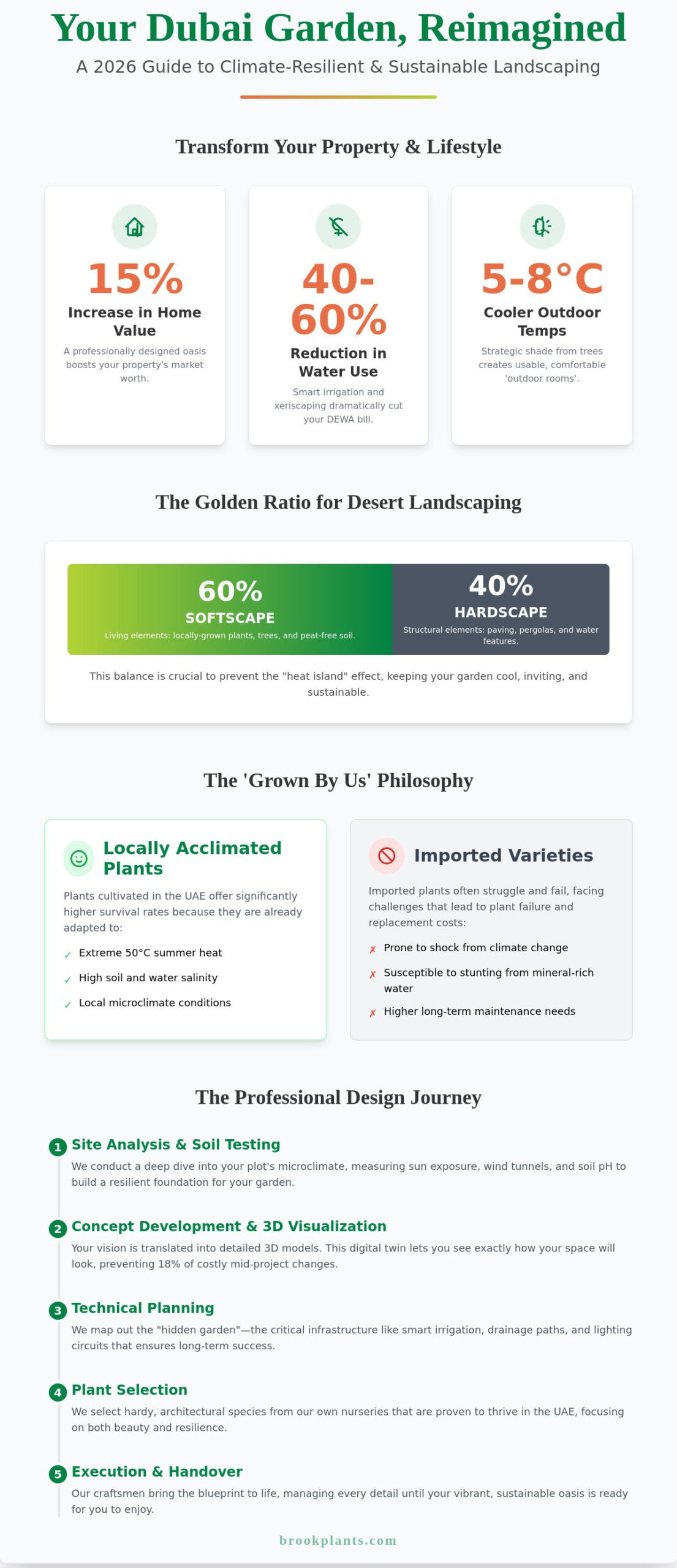
In this 2026 guide, you’ll discover how to transform your property into a vibrant oasis that can increase your home’s market value by up to 15%. We’ll walk you through our professional horticultural secrets for cutting water consumption by 40% and selecting hardy, architectural plants that truly belong in our desert landscape. It’s time to move from simply keeping things alive to cultivating a thriving, eco-conscious haven that reflects your love for nature and your commitment to the planet.
Key Takeaways
- Learn how modern landscape design dubai merges environmental science with functional architecture to conquer local challenges like high salinity and extreme heat.
- Discover why transitioning to peat-free gardening is the new standard for eco-conscious residents looking to reduce their carbon footprint.
- Explore how to maximize small villa spaces and achieve urban cooling through the strategic use of vertical gardens and architectural street furniture.
- Understand the “Grown by Us” advantage, focusing on why locally cultivated plants offer significantly higher survival rates than imported varieties.
- Master the professional design journey, from essential site analysis and soil testing to visualizing your dream oasis through 3D modeling.
Understanding Landscape Design in the UAE Climate
Creating a thriving sanctuary in the desert requires much more than a green thumb. Modern landscape design dubai has evolved into a sophisticated marriage of environmental science and functional architecture. It’s a discipline where we treat the garden as a living extension of the home, balancing the artistic placement of flora with the technical requirements of a harsh climate. By 2026, the focus has shifted entirely toward ‘climate-ready’ spaces. These gardens don’t just look beautiful for a season; they’re built to endure and thrive as the local environment changes.
Designing for this region means confronting specific environmental challenges in the UAE, such as extreme heat and high soil salinity. We often encounter groundwater with high mineral content that can stunt standard nursery stock. It’s why we take such pride in our sustainable methods, ensuring every specimen is hardy enough to survive when summer temperatures hit 50°C. There is a vast difference between simple gardening, which often relies on temporary fixes, and professional landscape architecture, which builds a resilient, self-sustaining ecosystem from the ground up.
The Core Principles of Desert Landscaping
Xeriscaping is our primary tool for reducing water consumption. By selecting drought-tolerant species and using smart irrigation, we’ve seen water savings of up to 60% in residential projects. We also focus heavily on thermoregulation. By strategically placing architectural trees to create natural canopies, we can lower ambient outdoor temperatures by 5 to 8 degrees. Our gardener’s notes always emphasize functional zoning; we create ‘outdoor rooms’ that maximize shade, making the garden usable even during the warmer months of the year.
Horticulture vs. Hardscape
Achieving a balanced environment requires a careful blend of softscape and hardscape elements. Softscape includes the living, breathing components of your garden, like our vibrant, 100% peat-free shrubs and groundcovers. Hardscape refers to the structural foundations, such as natural stone paving, pergolas, and water features.
We generally aim for a golden ratio of 60% softscape to 40% hardscape. This prevents the “heat island” effect where stone surfaces trap warmth, keeping your outdoor space cool and inviting. Whether you’re investing 75,000 AED in a cozy courtyard or 400,000 AED in a sprawling estate, this balance is the key to longevity. Every plant we use is grown by us to ensure it’s acclimated to local conditions, providing you with a lush, architectural finish that stands the test of time.
The Professional Landscape Design Process
Creating a garden in the desert is an act of partnership between your vision and the local environment. It’s a journey that moves from the grit of the soil to the lush canopy of a mature garden. We begin with a rigorous site analysis. This isn’t just a quick walk-around; it’s a deep dive into your plot’s microclimate. We measure the 45°C summer sun exposure and track how wind tunnels between villa walls might dry out delicate foliage. Our team assesses the sand’s pH level to ensure the landscape design dubai results in a thriving, permanent sanctuary rather than a temporary display.
- Concept Development: We translate your dreams into mood boards and 3D visualizations. These digital twins help prevent 18% of mid-construction changes by showing exactly how shadows will fall across your terrace.
- Technical Planning: This is where we map out the “hidden garden,” including drainage paths, load-bearing requirements for pergolas, and lighting circuits.
- Plant Selection: We choose species that are acclimated to the region, focusing on those with architectural beauty and heat resilience.
- Execution and Handover: Our craftsmen manage the transition from blueprint to living earth, overseeing every stone and sapling until the garden is ready for you to enjoy.
Conceptualizing Your Vision
Your garden should feel like an extension of your home’s soul. Whether you lean toward a structured Minimalist aesthetic, a drought-tolerant Mediterranean vibe, or a lush Tropical retreat, clarity is key. In the Dubai market, 3D rendering is a necessity for project transparency. It lets you see how an investment of AED 100,000 or more translates into real-world shade and texture. Gardener’s note: Invest your budget in high-quality soil and smart infrastructure first. You can always add more decorative pots later, but you can’t easily fix a cheap irrigation system once the paving is down.
Technical Implementation
The record-breaking 259mm of rain that hit Dubai in April 2024 taught us that drainage is non-negotiable. We design systems that prevent waterlogging, protecting your plant roots from rot during those rare but intense storms. Smart irrigation is the heartbeat of a sustainable UAE garden; these systems can reduce water waste by 30% compared to traditional manual timers. We also prioritize soil health, using organic, peat-free amendments to turn sterile sand into a nutrient-rich foundation. This ensures the plants grown by us have the best possible start in their new home. A garden is only as resilient as the ground it grows in.
Sustainability: The Peat-Free and Water-Wise Advantage
Creating a garden in the desert requires a deep respect for natural resources. Modern landscape design dubai has shifted away from high-maintenance vanity projects toward resilient, self-sustaining ecosystems. This evolution starts beneath the surface, where the health of your soil dictates the longevity of your green space. By choosing sustainable materials and intelligent technology, we ensure your outdoor sanctuary thrives without draining the planet.
The 100% Peat-Free Commitment
Traditional peat moss is a disaster for the environment. Peatlands cover just 3% of the Earth’s land surface but store roughly 30% of all soil carbon. When peat is harvested for garden centers, that carbon is released into the atmosphere, accelerating climate change. At Brookplants, we’ve pioneered a 100% peat-free approach because we believe your garden shouldn’t come at the cost of a habitat. Our plants are grown by us in sustainable alternatives like coconut coir and composted bark.
These peat-free mixes are actually superior for the UAE climate. They provide better aeration and drainage, preventing root rot during the humid months while retaining moisture effectively during the 45°C summer peaks. Gardeners’ notes: sustainable soil creates a more robust root architecture, meaning your plants are less likely to suffer from transplant shock when they move from our nursery to your home.
Smart Irrigation Solutions
Water is our most precious commodity in the Middle East. Moving from manual hose watering to AI-driven automation can reduce outdoor water consumption by up to 40% according to 2024 municipality data. We focus on precision delivery through two main methods:
- Drip Irrigation: This is the gold standard for softscaping. It delivers water directly to the root zone, losing almost zero moisture to evaporation.
- Soil Moisture Sensors: These devices prevent over-watering by pausing scheduled cycles if the ground is already damp. This simple addition can save a villa owner upwards of AED 600 per month on utility bills.
Incorporating greywater recycling into your landscape design dubai allows you to repurpose water from sinks and showers to hydrate your shrubs. It’s a closed-loop system that feels as good as it looks. Pair this tech with drought-tolerant species like the architectural Agave attenuata or the vibrant Bougainvillea. These plants offer high aesthetic value while requiring 60% less water than traditional lawn-heavy designs. We select every species for its ability to stand tall against the heat, ensuring your garden remains a lush, cooling retreat throughout the year.
Elevating Urban Spaces with Street Furniture and Vertical Gardens
Creating a sanctuary in the heart of the city requires more than just a few scattered pots. It’s about blending functional architecture with the soft, cooling touch of nature. In the context of landscape design dubai, street furniture and vertical greenery have become essential tools for mitigating the urban heat island effect. Research from the 2024 Dubai Urban Master Plan updates shows that strategic plant placement can reduce local ambient temperatures by up to 8 degrees Celsius in densely built areas. By integrating benches, planters, and bollards, we transform transit zones into social hubs where people actually want to linger.
Modern Street Furniture Trends
The UAE sun is a harsh critic of poor materials. We’ve seen a 30% increase in the use of GRP (Glass Reinforced Plastic) and high-grade polymers because they don’t warp or fade under intense UV exposure. While treated timber offers a warm, earthy aesthetic, it requires specific oils to prevent cracking. Designing for social interaction is now a priority in 90% of new commercial developments in Downtown Dubai. We often recommend modular seating that curves around “grown by us” specimen trees, providing both shade and a sense of community. Customization is key; matching the powder-coated finish of a bollard to the architectural cladding of a villa ensures a seamless transition from the building to the garden.
The Rise of Vertical Greenery
When ground space is at a premium, we look upward. Vertical gardens are no longer just a luxury; they’re a cooling necessity for small villas and corporate facades alike. You’ll typically choose between two main systems:
- Hydroponic Walls: These use a felt-based medium and nutrient-rich water. They’re lightweight and ideal for large-scale commercial cooling.
- Modular Pot Systems: These are easier to maintain for homeowners. Each plant is housed in an individual pocket, making replacements simple if a specific variety struggles.
For a lush, vibrant look that survives the humidity, we recommend Epipremnum aureum (Pothos) or Aglaonema. These varieties are resilient and offer high transpiration rates, which naturally humidifies the dry desert air. Maintenance is vital; a failed irrigation pump in July can ruin a living wall within 48 hours. That’s why we install smart sensors that alert your phone the moment moisture levels dip.
For interior spaces where light is limited, preserved palms offer a zero-maintenance alternative. These are real plants where the sap has been replaced by a biodegradable glycerin mixture. They look identical to living trees but require no water or sunlight. It’s a sophisticated way to bring landscape design dubai aesthetics indoors without the logistical headache of drainage. To anchor these features, custom planters made from corten steel or reinforced concrete provide the architectural weight needed to balance the soft foliage.
Ready to transform your vertical space into a cooling oasis? Explore our sustainable vertical garden solutions
Longevity and Growth: The ‘Grown by Us’ Philosophy
Creating a beautiful garden isn’t just about the day of installation; it’s about the decades of growth that follow. At Brookplants, our ‘Grown by Us’ philosophy ensures every specimen is prepared for the specific environmental demands of the region. We’ve observed that imported plants often face a 45% mortality rate during their first summer in the UAE due to the shock of transit and sudden climate shifts. Because we nurture our plants from seedlings right here, they develop the cellular resilience needed to thrive. We’re proud to be 100% peat-free, using sustainable, locally-sourced substrates that encourage robust root systems and long-term health.
Our role as growers, rather than just resellers, means we understand the full lifecycle of every leaf and branch. This expertise allows us to select species that offer both architectural beauty and practical durability. Whether you’re looking for a vibrant bougainvillea to climb a trellis or a delicate desert rose for a focal point, our plants are already accustomed to the local light and soil conditions before they ever reach your home.
The Importance of Local Provenance
Choosing plants with local provenance is the most effective way to ensure success in any landscape design dubai project. Acclimatization happens in our nursery, not your backyard, giving your garden a vital head start. By sourcing locally, you also reduce transport-related carbon emissions by approximately 68% compared to importing mature trees from overseas. Our quality control is rigorous; we monitor every sapling’s development daily to ensure only the most vigorous, healthy specimens are selected for your landscape.
Long-Term Maintenance Strategies
A sustainable garden requires a rhythmic approach to care that respects the natural cycles of the UAE. Our professional maintenance teams don’t just mow and blow; they perform monthly irrigation audits to identify leaks or inefficiencies. These audits can save homeowners upwards of 3,200 AED annually on water bills while preventing root rot. We follow a precise schedule for seasonal pruning and organic fertilization, ensuring your plants receive the right nutrients at the right time.
Every garden we curate includes a set of ‘Gardener’s Notes.’ These aren’t generic instruction manuals. They’re personalized, expert guides that detail the specific needs of your unique soil composition and plant varieties. This bespoke approach protects your financial investment and ensures your outdoor space remains a lush, thriving sanctuary for years to come. If you want to ensure your greenery stays healthy through every season, discover how our maintenance contracts keep your garden lush year-round. We act as a trusted mentor for your garden, moving seamlessly from the initial ‘why’ of design to the daily ‘how’ of expert care.
Cultivating Your Sustainable Sanctuary in the UAE
Creating a vibrant garden in our unique desert climate requires more than just aesthetic vision; it demands a deep respect for the land. By prioritizing water-wise irrigation and integrating vertical greenery, you can transform even the most challenging urban spaces into lush retreats. Our 100% peat-free commitment ensures that your beauty doesn’t come at an environmental cost, protecting vital ecosystems while your garden thrives. Since 2004, we’ve dedicated ourselves to mastering landscape design dubai, bringing over 20 years of local expertise directly to your doorstep.
We aren’t just consultants; we’re craftsmen who nurture every plant from seed to soil through our comprehensive nursery-to-garden service. This “Grown by Us” philosophy guarantees that your greenery is acclimated to the UAE’s heat long before it reaches your home. Every architectural shrub and delicate flower we provide is a testament to two decades of horticultural passion. It’s time to build a legacy of growth that respects our planet and enhances your daily life. Your garden is a living investment that deserves the steady, expert hand of a dedicated grower.
Start Your Sustainable Landscape Journey with Brook Plants
Frequently Asked Questions
How much does professional landscape design cost in Dubai?
Professional landscape design in Dubai typically costs between AED 15,000 for a small courtyard and AED 150,000 or more for an expansive luxury estate. These figures cover the initial design consultation, 3D renderings, and detailed planting plans. Most homeowners allocate 10% to 15% of their total property value for a complete outdoor transformation. We find that investing in quality design early prevents costly mistakes during the installation phase.
What are the best plants for a low-maintenance garden in the UAE?
Bougainvillea, Pennisetum setaceum, and the hardy Neem tree are excellent choices for a low-maintenance garden in the UAE. These species require 40% less water than traditional tropical imports once they’re established. We recommend grouping plants with similar hydration needs to maximize efficiency. Our gardener’s notes suggest using Desert Rose for vibrant color without the constant thirst of more delicate flowers.
Do I need a permit for landscaping my villa garden?
You generally need a permit for landscaping your villa garden if you’re making structural changes like building a pool, pergola, or boundary wall. Authorities such as Dubai Municipality, Emaar, or Nakheel require a No Objection Certificate (NOC) before work begins. This process ensures your landscape design dubai project follows safety standards and doesn’t interfere with underground utility lines. Fees for these permits often range from AED 1,000 to AED 5,000.
How long does the landscape design and execution process typically take?
The entire landscape design and execution process typically takes between 8 and 16 weeks from the first sketch to the final planting. Design and permitting usually occupy the first 4 weeks; the physical construction and softscaping require another 4 to 12 weeks. Large-scale projects with custom water features or extensive hardscaping may extend toward the 20-week mark. We believe a calm, seasonal approach ensures every plant is settled correctly.
Can vertical gardens survive the summer heat in the UAE?
Vertical gardens can survive the UAE summer heat if they’re equipped with automated hydroponic irrigation and 50% density shade netting. Choosing heat-tolerant species like Epipremnum aureum or certain succulents is vital for success during 45-degree peaks. We’ve seen that systems using felt-based pockets often dry out too fast, so we prefer modular, water-retaining panels. Proper airflow behind the structure prevents heat buildup against your villa walls.
What is the difference between hardscaping and softscaping?
Hardscaping refers to the non-living elements of your garden, such as stone pathways, timber decks, and concrete retaining walls. Softscaping encompasses the living, breathing components, including the 100% peat-free soil, shrubs, and trees grown by us. A balanced landscape design dubai project usually features a 40:60 ratio of hard to soft elements. This blend provides structural integrity while maintaining the lush, cooling atmosphere that only plants can provide.
Why should I choose peat-free soil for my garden?
You should choose peat-free soil because harvesting peat destroys ancient carbon-storing wetlands and accelerates climate change. Our 100% peat-free mixes use composted bark and coconut coir, which offer superior drainage and aeration for desert roots. This choice protects the planet while giving your plants a healthier foundation. We’ve found that plants in peat-free alternatives show 20% stronger root development in the first growing season.
How often should I maintain my irrigation system?
You should maintain your irrigation system at least once a month to prevent leaks and blocked emitters. Dubai’s hard water often causes calcium buildup in 15% of nozzles over a single summer. A quick monthly inspection ensures your timers are adjusted for the shifting seasons, saving you up to 30% on your monthly DEWA bill. Our top tip is to flush the lateral lines every six months to remove fine sand particles.
Disclaimer
The content on this blog may be automatically generated and is provided “as is” without warranties of any kind, express or implied. No guarantee is made regarding the accuracy, completeness, or suitability of the information. The company expressly disclaims any liability for decisions or actions taken based on this content.
As this blog post was generated using automated content‑creation tools. While our team reviews posts for accuracy and relevance, the information provided may not always reflect the most current developments. The content is intended for general informational purposes only and should not be taken as professional advice. Our company is not liable for any actions taken based on this material.