
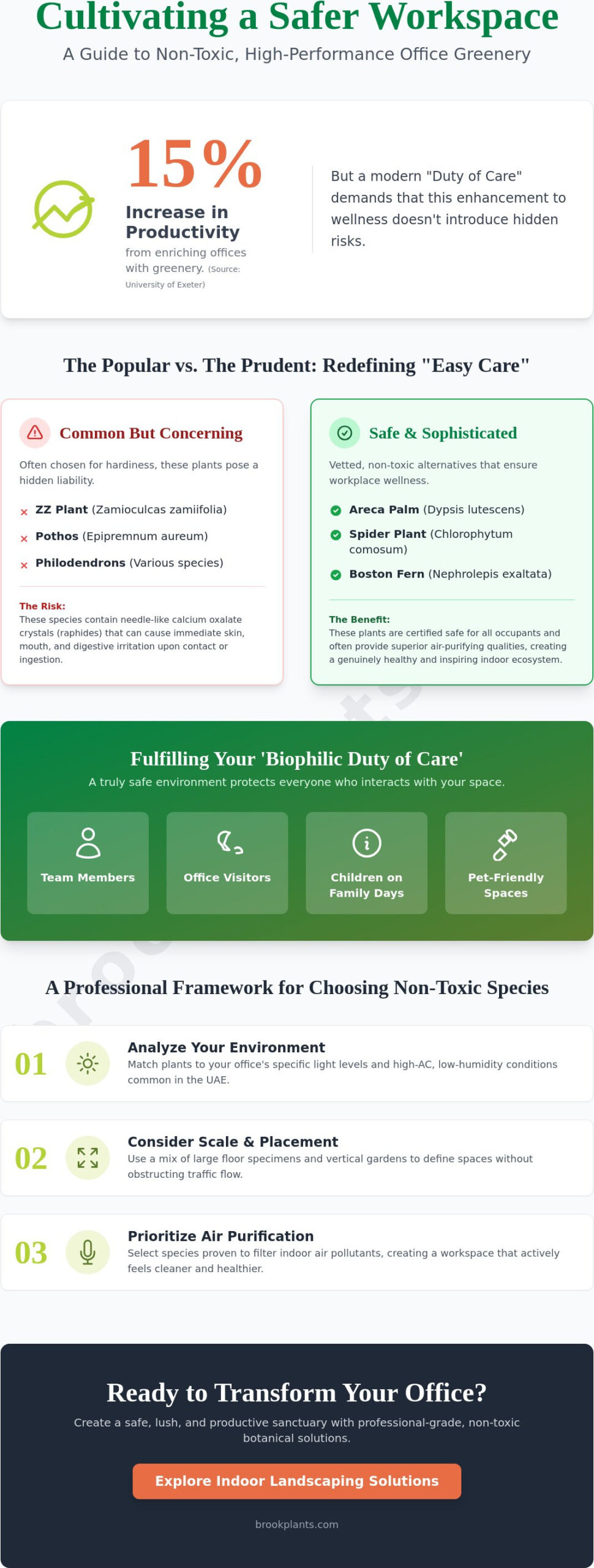
What if the very plants meant to boost your team’s productivity were actually a hidden liability? While research from the University of Exeter shows that enriching an office with greenery can increase productivity by 15%, many common choices carry toxicity risks that simply don’t align with a modern “duty of care” framework. Learning how to choose non-toxic plants for a corporate environment is no longer just about aesthetics; it’s about fostering a truly safe, biophilic sanctuary where wellness is the priority.
We understand the challenge of finding hardy, professional-grade specimens that can withstand the constant chill of high-AC environments without resorting to toxic staples. You shouldn’t have to choose between a lush atmosphere and the safety of your employees. This guide will help you curate a professional workspace using only certified non-toxic plants that ensure workplace wellness. We’ll share a vetted list of safe botanical alternatives and a practical framework for maintaining a vibrant indoor landscape that meets the UAE’s evolving sustainability standards.
Key Takeaways
- Identify why common office staples like the ZZ plant pose hidden risks and how to redefine safety through a 100% non-toxic botanical strategy.
- Master how to choose non-toxic plants for a corporate environment by balancing aesthetic desires with the practical realities of low light and high-AC humidity.
- Explore professional-grade alternatives like the air-purifying Areca Palm that offer sophisticated scale while remaining entirely safe for every team member.
- Learn to integrate greenery seamlessly into your floor plan using vertical gardens and architectural planters to protect both the plants and your office traffic flow.
- Gain insights into establishing a long-term care routine that ensures your sustainable indoor landscape remains vibrant and healthy year-round.
Why ‘Popular’ Office Greenery Often Fails the Safety Test
Many designers select office greenery based on a plant’s ability to survive low light and erratic watering schedules. This logic often leads to the selection of the ZZ plant, various Philodendrons, or the ubiquitous Pothos. While these species are undeniably hardy, they aren’t always the right fit for a healthy, vibrant workplace. Understanding how to choose non-toxic plants for a corporate environment requires looking past the surface level of “easy care” to investigate the biological makeup of every leaf and stem you bring indoors.
In a professional setting, “non-toxic” means more than just being safe for a quick touch. It implies that the plant won’t cause respiratory distress, skin rashes, or illness if accidentally handled or ingested. With the UAE’s growing focus on a “Biophilic Duty of Care,” choosing the wrong greenery can turn a wellness initiative into a hidden liability. We believe a workspace should breathe as naturally as a forest floor, free from the chemical defense mechanisms that many common houseplants use to survive in the wild.
To better understand which species offer the best balance of safety and air purification, watch this helpful video:
The Toxicity Spectrum: Irritants vs. Hazards
Many popular office staples belong to the Araceae family. These plants contain raphides, which are tiny, needle-like crystals of calcium oxalate. If a leaf is torn, these crystals can cause immediate burning and swelling of the mouth or skin. You can find more details on these species in this comprehensive list of poisonous plants. It’s a common misconception that “pet-safe” doesn’t apply to human offices; usually, if a plant is safe for a curious cat, it’s a much more reliable choice for a busy communal lobby. Differentiating between a mild skin irritant and a systemic hazard is the first step in curating a truly safe botanical collection.
Beyond Aesthetics: The Liability of Greenery
Liability is a genuine concern for modern businesses. Think about office visitors, children during family days, or the growing trend of pet-friendly workspaces in Dubai and Abu Dhabi. A Pothos vine trailing from a bookshelf might look beautiful, but it’s a hazard if a guest has a sensitive reaction to its sap. Beyond physical contact, certain toxic plants can even affect indoor air quality if they release specific pollens or volatile compounds. Learning how to choose non-toxic plants for a corporate environment ensures your Indoor Plants or Vertical Gardens remain a source of inspiration rather than a safety concern. Clear labeling and the use of certified safe species allow you to grow your green footprint with total peace of mind.
A Professional Framework for Choosing Non-Toxic Species
Designing a green workspace requires more than just picking a species from a list. It involves a deep understanding of your building’s unique microclimates. When considering how to choose non-toxic plants for a corporate environment, you must first look at the light. A sun-drenched atrium demands vastly different life than a windowless basement conference room. We believe in matching the plant’s natural habitat to your office architecture, ensuring that every leaf feels at home. This balanced approach pairs aesthetic beauty with the practical requirements of your specific floor plan.
Scale also plays a vital role in your selection. A delicate tabletop arrangement provides a personal touch to a workstation, while large, floor-standing specimens can define a room’s boundaries. By prioritizing air-purification capabilities alongside safety, you create a workspace that doesn’t just look better, but actually feels better. If you’re ready to transform your office into a safe, lush sanctuary, exploring our collection of Indoor Landscaping solutions is a wonderful place to start.
Light and Atmospheric Requirements
High-rise offices in the UAE present a specific challenge: the constant hum of air conditioning. This creates a dry, desert-like interior climate that can sap the life from many tropical varieties. To combat this, we look for resilient species that thrive in lower humidity or use specialized Planters to help maintain a steady moisture level. Identifying “dead zones,” those corners far from natural light, is crucial. For these spots, we rely on a scientific framework for choosing non-toxic species that can tolerate artificial light without losing their luster. Proper placement ensures your Vertical Gardens or individual pots don’t just survive, but truly flourish.
Sustainability and Sourcing Standards
Authenticity matters in a professional setting. We’ve found that plants sourced directly from primary producers carry a level of hardiness that resellers simply can’t match. When you understand the cultivation history of your Indoor Plants, you’re not just buying a product; you’re investing in a life form that has been nurtured for resilience from the very start. Internal cultivation ensures that the plant hasn’t been shocked by multiple transitions between nurseries. This careful stewardship makes a significant difference in how well a plant adapts to a corporate lobby or a shared workspace. It’s about more than a quick transaction; it’s about the long-term health of your office ecosystem and the planet.
Top 5 Non-Toxic Plants for Professional UAE Workspaces
Selecting the right greenery involves balancing botanical health with the specific safety needs of your team. When you’re deciding how to choose non-toxic plants for a corporate environment, you want species that don’t just survive but actively contribute to a healthier air supply. Our years of hands-on cultivation have shown that these five varieties are the true workhorses of the modern UAE office, standing up to the rigors of indoor life without posing a risk to anyone who walks through your doors.
The Areca Palm is often called the gold standard for a reason. It’s a powerhouse of air purification, yet it remains entirely safe according to the University of Connecticut’s list of safe and toxic plants. Its feathery fronds add a soft, organic touch that contrasts beautifully against the sharp lines of modern office architecture. For those open-plan areas where humidity is often stripped away by the AC, Boston Ferns are a wonderful choice. They act as natural humidifiers while providing a lush, forest-like texture. If you’re looking for something nearly indestructible, the Spider Plant is your best friend. It’s safe, resilient, and its cascading leaves make it a perfect candidate for our Vertical Gardens.
Internal cubicles often suffer from lower light levels, which is where the Bamboo Palm shines. It brings a sense of the tropics to the most tucked-away corners without needing direct sun. To add a splash of color and “living art” to your space, we often recommend Calathea species. Their intricate, patterned leaves close at night, a rhythmic reminder of the natural world’s cycles right in your boardroom. We take immense pride in how we grow these species, ensuring they are robust enough to handle the transition from our nursery to your office. This internal stewardship is what sets our Indoor Plants apart from mass-market resellers.
Best for High-Impact Lobby Areas
Lobbies are the first impression of your brand. Using Areca and Bamboo palms provides architectural height that commands attention and fills large volumes of space effectively. When paired with our custom Planters, these palms create a premium, curated look that feels both professional and welcoming. To keep these large palms lush in UAE indoor light, ensure they’re positioned away from direct AC drafts. While they are resilient, the constant dry air from a vent can brown their tips, so we suggest grouping them to create a small, self-sustaining microclimate.
Best for Desktops and Meeting Rooms
The versatility of the Spider Plant makes it ideal for smaller workstations where space is at a premium. It’s a champion of air quality that doesn’t mind the occasional missed watering. For conference tables, the Calathea provides a sophisticated focal point, offering a more sustainable and safe alternative to traditional cut flowers. We also love using Boston Ferns in hanging installations. This approach creates a “green ceiling” effect that can increase well-being by up to 47%, according to research from the University of Exeter, all without cluttering your floor space or creating trip hazards.
Strategic Placement and Workplace Safety Protocols
Bringing greenery into a workspace is a joyous act of stewardship, but it requires a thoughtful layout to ensure both the plants and the people thrive. When you understand how to choose non-toxic plants for a corporate environment, the next step is ensuring their placement respects the flow of a busy office. High-traffic corridors are better suited for sturdy, floor-standing varieties in heavy Planters that won’t tip easily. By keeping delicate species on higher surfaces or in protected corners, you protect the plant from accidental damage while maintaining a clear path for your team.
Transitioning an existing office from a mix of toxic and safe plants to a 100% certified environment is a process of care. We suggest starting with a “green audit” to identify any hidden hazards like Pothos or ZZ plants. Once identified, these can be replaced with the safe alternatives we’ve discussed, such as the Spider Plant or Areca Palm. Implementing a “Plant Safety Registry” for your facility management team ensures that every new addition is vetted for safety before it enters the building. If you are ready to start this transition, our team can help you select the perfect Indoor Plants to replace outdated, toxic species.
Maximizing Biophilic Impact
Strategic placement allows you to use greenery as a functional tool within your office design. You can use lush groupings to define “quiet zones” for deep work or vibrant hubs for collaboration. The psychological benefits are profound; studies have shown that employees in offices with plants report a 37% drop in tension and anxiety. Integrating vertical gardens is a brilliant way to achieve a modern, safe aesthetic without sacrificing valuable floor space. These living walls keep greenery out of reach of tripping hazards while maximizing the air-purifying surface area of your workspace.
Safety Communication and Signage
Sharing the story of your non-toxic office with your staff builds a sense of community and pride in the workplace. We recommend placing small, informative signs near communal areas like kitchenettes to explain why specific plants were chosen for their safety and air-purifying qualities. This education is vital for managing potential allergens in a diverse workforce. While the plants we recommend are non-toxic, keeping them away from direct food preparation surfaces is a best practice for hygiene. By fostering this shared love for the natural world, you inspire confidence in your team’s ability to interact safely with their environment every day.
Scaling Your Green Space with Professional Maintenance
Once you’ve carefully selected your botanical team, the journey toward a permanent green sanctuary begins. While knowing how to choose non-toxic plants for a corporate environment sets the stage, these living organisms need consistent, expert attention to stay vibrant. Understanding how to choose non-toxic plants for a corporate environment is only half the battle; the other half is providing the stewardship they need to flourish in a busy office. An office isn’t a natural habitat; it’s a controlled environment where light, air, and water must be meticulously balanced to support life. A simple splash of water once a week isn’t enough to sustain the air-purifying efficiency of a large Areca Palm or the intricate leaf patterns of a Calathea.
Professional monitoring is essential for catching the subtle signs of stress before they become visible problems. In the high-AC environments of the UAE, humidity levels can fluctuate wildly, leading to dust buildup on leaves or the sudden appearance of pests. Regular checks ensure that your investment in wellness continues to pay off by maintaining the plant’s ability to filter toxins effectively. We believe that a successful indoor landscape is a living legacy, one that requires a partner who understands the unique physiological needs of every species in your collection, from the thirsty Boston Fern to the resilient Bamboo Palm.
The Value of Expert Upkeep
Long-term growth is achieved through rhythmic cycles of pruning and fertilization that mimic natural seasons. Removing spent foliage isn’t just about looks; it encourages new, healthy growth and prevents the plant from wasting energy on dying limbs. It’s also vital to monitor your Automatic Irrigation systems or manual watering schedules to prevent office-damaging leaks or root rot. Consistent professional monitoring ensures that every plant in your Vertical Gardens or individual Planters remains a peak performer in your air-quality strategy, providing the lush, oxygen-rich atmosphere your team deserves.
Your Partner in Professional Landscaping
Choosing a partner with deep roots in both Indoor Landscaping and Outdoor Landscaping provides a level of expertise that retail shops simply can’t match. There is a vast difference between mass-produced retail plants and professionally cultivated wholesale stock that has been hardened for corporate life from the seedling stage. When you source high-quality plants from a primary producer, you’re getting specimens that have been nurtured with a focus on long-term resilience and ecological integrity. This authenticity is the hallmark of a truly sustainable workspace, ensuring your national corporate footprint remains lush, safe, and inspiring for years to come. By prioritizing quality over a quick transaction, you build a workplace that reflects your commitment to both the planet and your people.
Cultivating a Safer, Greener Future for Your Team
Building a vibrant office sanctuary is a journey of stewardship that starts with a single, safe choice. We’ve explored how moving beyond common toxic staples and mastering how to choose non-toxic plants for a corporate environment can safeguard your team while boosting productivity by up to 15%. By matching resilient, air-purifying species to your unique office microclimate and traffic patterns, you ensure your greenery remains a source of wellness rather than a hidden liability.
Since 2004, we’ve used our 20 years of UAE expertise to act as primary producers and importers of the region’s finest botanical specimens. We take immense pride in our internal cultivation standards, ensuring every plant is robust and ready for the rigors of a professional setting. If you’re ready to elevate your office health, transform your workspace with a professional, non-toxic landscape design from Brook Plants. Our comprehensive maintenance contracts provide the peace of mind you need to focus on your business while we care for your living ecosystem. Let’s work together to grow a workspace that truly breathes.
Frequently Asked Questions
Are Snake Plants really toxic for a corporate office?
Snake Plants are mildly toxic because they contain chemical compounds called saponins. While they’re often praised for their resilience, these substances can cause nausea or skin irritation if handled improperly or accidentally ingested. For a workspace that prioritizes a 100% safe environment, it’s better to choose truly non-toxic alternatives like the Cast Iron Plant or the Parlor Palm.
What are the best low-light, non-toxic plants for internal rooms?
The Parlor Palm and the Cast Iron Plant are exceptional choices for windowless meeting rooms or internal cubicles. These species have evolved to thrive under the forest canopy, meaning they can maintain their lush green color even in low-light conditions. When you’re learning how to choose non-toxic plants for a corporate environment, these hardy varieties provide the perfect balance of safety and aesthetic beauty for darker spaces.
How often do non-toxic office plants need watering in the UAE?
Most non-toxic office plants in the UAE require watering every 7 to 10 days, though this varies based on your building’s air conditioning settings. Constant AC can dry out the soil faster than you’d expect, so it’s vital to check the top inch of soil for moisture. Using high-quality Planters with proper drainage helps regulate this cycle and prevents the root rot that often plagues indoor greenery.
Can non-toxic plants improve indoor air quality as well as toxic ones?
Non-toxic plants are just as effective at purifying air as their toxic counterparts. Species like the Areca Palm and Spider Plant are world-renowned for their ability to filter out volatile organic compounds (VOCs). You don’t have to compromise on respiratory health to ensure the safety of your team; a well-designed indoor landscape provides the best of both worlds.
Is it better to buy or hire plants for a corporate environment?
Purchasing your plants from a primary producer ensures you receive specimens that have been nurtured for long-term health rather than a quick sale. When you own your indoor landscape, you’re investing in a permanent ecosystem that grows with your company. This approach allows for a more personalized selection of Indoor Plants that truly reflects your brand’s commitment to sustainability and employee wellness.
What should I do if an employee has an allergic reaction to an office plant?
If an employee experiences an allergic reaction, you should move the plant to an isolated area immediately and clean the surrounding surfaces. While the plant itself might be non-toxic, it’s possible that dust on the leaves or mold in the soil is the actual trigger. Ensuring your team has input on the workspace design can help identify these sensitivities before the greenery is even installed.
Are there any non-toxic flowering plants suitable for offices?
African Violets and Phalaenopsis Orchids are beautiful, non-toxic flowering options that can brighten up any reception desk or boardroom. These plants offer a pop of color without the safety risks associated with lilies or other toxic blooms. They require a bit more attention to light and water, but the sensory appeal they bring to a professional setting is well worth the extra care.
How can we ensure our office plants survive the weekend without staff?
Ensuring your greenery survives the weekend is easy with the right tools, such as self-watering Planters or a professionally installed Automatic Irrigation system. These solutions provide a steady, controlled moisture supply that keeps the soil hydrated even when the office is empty. This technical precision allows your lush sanctuary to flourish 24/7 without requiring constant manual intervention from your staff.
Disclaimer
The content on this blog may be automatically generated and is provided “as is” without warranties of any kind, express or implied. No guarantee is made regarding the accuracy, completeness, or suitability of the information. The company expressly disclaims any liability for decisions or actions taken based on this content.
As this blog post was generated using automated content‑creation tools. While our team reviews posts for accuracy and relevance, the information provided may not always reflect the most current developments. The content is intended for general informational purposes only and should not be taken as professional advice. Our company is not liable for any actions taken based on this material.