
A park bench in the UAE isn’t just a place to sit; it’s a battleground where thoughtful design meets a relentless sun. You’ve likely walked past those “ghost” plazas where expensive installations sit empty because the materials are too hot to touch or have already started to crack and fade. We understand the deep frustration of trying to balance aesthetic beauty with the heavy-duty durability required for our unique climate. Enhancing public spaces with urban furniture requires a genuine respect for the elements and a craftsman’s eye for materials that actually endure. It’s about more than just filling a gap in a blueprint; it’s about cultivating a social realm where residents feel truly invited to linger.
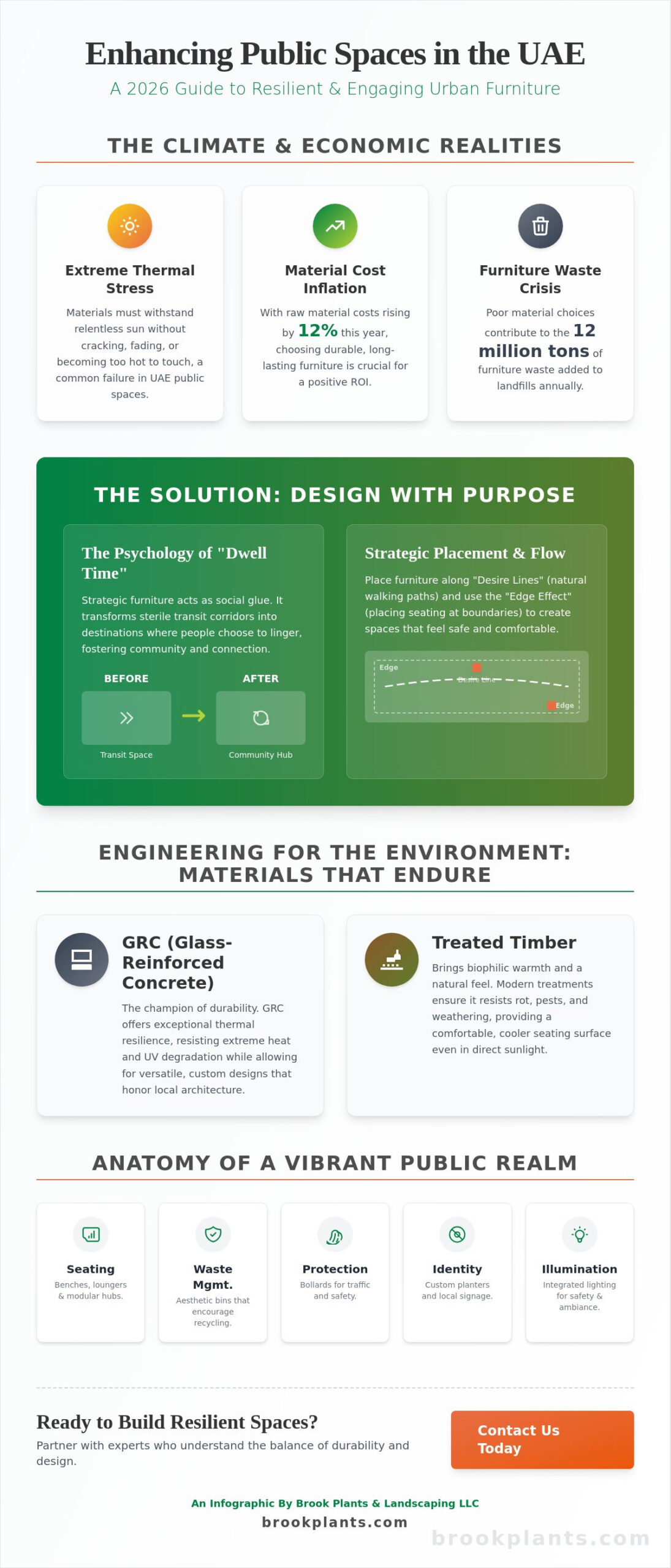
In this 2026 guide, you’ll discover how strategic furniture selection transforms underutilized areas into vibrant, resilient communal destinations. With raw material costs rising by an average of 12% this year, making a durable choice the first time is essential for achieving a high ROI and avoiding the 12 million tons of furniture waste that ends up in landfills annually. We’ll walk through the latest shifts in biophilic design, modular flexibility, and the technical standards that ensure your investment supports both social wellbeing and environmental stewardship. From solar-integrated seating to thermally resilient planters, we’ll show you how to build a space that feels like a natural, lasting extension of the community’s heart.
Key Takeaways
- Understand the psychology of “dwell time” and how intentional seating acts as the social glue for vibrant communal engagement.
- Master the technical side of enhancing public spaces with urban furniture by choosing GRC and treated timber designed for extreme thermal resilience.
- Learn to map “desire lines” and apply the “Edge Effect” to place furniture where people naturally feel safe and comfortable gathering.
- Explore how modular social hubs and integrated waste management solutions create a cohesive, inviting, and cleaner public realm.
- Discover how custom street furniture designs can honor local architectural identity while adhering to the highest ecological production standards.
The Psychology of Place: Why Urban Furniture Matters
Urban furniture isn’t just a collection of objects; it’s the social glue that binds a community together. When we think about urban furniture, we’re really talking about the infrastructure of human connection. It’s the difference between a sidewalk people rush across and a plaza where they choose to linger. By carefully enhancing public spaces with urban furniture, we invite residents to slow down and reclaim their surroundings as their own. It’s a craft that requires both technical precision and a deep empathy for the person who will eventually rest there.
The concept of “dwell time” is central to this transformation. When a space offers comfortable, inviting places to sit, people naturally stay longer. This increased presence leads to more spontaneous conversations and a stronger sense of local identity. A well-placed bench or a cluster of planters doesn’t just fill a gap; it signals that a space is cared for. This care fosters a deep emotional connection among residents, turning a patch of concrete into a cherished communal landmark.
To better understand how these elements are evolving to meet modern needs, watch this helpful video:
From Transit to Destination
Many of our cities are filled with transit spaces, which are areas designed solely for moving from point A to point B. Our goal as craftsmen is to turn these into destination places. Strategic placement of seating and shade encourages people to stop, transforming a lonely corridor into a social hub. Aesthetics play a vital role here. When a space looks beautiful and intentional, it feels safer and more welcoming to families and individuals alike. Tactile urbanism is the practice of using physical, sensory-rich interventions to transform cold environments into warm, human-centric hubs for community building.
Fostering Social Interaction
How we arrange these pieces determines the type of life that flourishes in a park or plaza. Grouping benches in a semi-circle facilitates lively conversation, while solitary loungers offer a peaceful retreat for reflection. Inclusive design is non-negotiable. We must ensure that every resident, regardless of age or ability, can enjoy these spaces comfortably. Integrating greenery through handcrafted planters helps soften the hardscape, bringing a touch of the natural world back into the urban heart. This balance of function and organic beauty is what truly makes a space feel like home.
Core Elements for Modern Public Realm Enhancement
Building a social realm requires a curated toolkit of high-quality elements that balance durability with a welcoming spirit. When we talk about enhancing public spaces with urban furniture, we’re looking at a holistic system where every piece serves a specific human need. From the bench that invites a weary traveler to rest to the bin that keeps our communal grounds pristine, these objects should reflect a commitment to both beauty and utility. These choices should always align with core placemaking principles, ensuring that every addition contributes to a sense of belonging and community pride. A successful space integrates several key components:
- Seating Solutions: Benches, loungers, and modular social hubs that accommodate both groups and individuals.
- Waste Management: Aesthetic bins that encourage recycling while blending into the architectural environment.
- Protection: Bollards and barriers that provide essential safety and traffic management without creating an industrial or “fortress” feel.
- Identity: Custom planters and signage that define a neighborhood’s unique brand and heritage.
- Illumination: Lighting integrated directly into seating or planters to ensure utility and safety during evening hours.
If you’re looking to curate a space that stands the test of time, exploring our collection of handcrafted street furniture is a wonderful place to start.
Seating That Serves the Community
Ergonomics play a vital role in the longevity of a public space. If a bench is uncomfortable, it won’t be used, regardless of how beautiful it looks. We focus on designs that support the natural curve of the back and provide appropriate seat heights for all ages. Modular furniture offers incredible flexibility; you can rearrange clusters to support a weekend community market or spread them out for quiet morning reflection. We often encourage a mix of materials to heighten the sensory appeal of a space. The organic warmth of a wood-grain finish offers a comforting touch, while the sleekness of polished stone provides a cool, sophisticated contrast that remains resilient under the sun.
Planters and Green Integration
Custom planters are masterful tools for defining “rooms” within an open plaza. They act as natural partitions, guiding foot traffic and creating intimate pockets for conversation without the need for harsh walls. There is a beautiful synergy between professional indoor plant wholesale uae sourcing and outdoor hardscapes. By mirroring the lushness of indoor environments in our outdoor squares, we create a seamless transition for residents. Because our climate is demanding, every planter we craft is designed to work in harmony with automatic irrigation systems. This ensures that the greenery thrives year-round, maintaining the vibrant, healthy atmosphere that every community deserves.
Engineering for the Environment: Durability and Material Selection
The sun is a powerful force that dictates every design choice we make. When we’re enhancing public spaces with urban furniture, we aren’t just selecting shapes; we’re choosing how those shapes interact with extreme UV radiation and thermal expansion. In a climate where temperatures can cause materials to expand and contract violently, selecting the wrong substrate leads to cracking, fading, and eventual failure. We believe that true craftsmanship lies in understanding these invisible forces. Low-maintenance isn’t just a convenience for national projects; it’s a fundamental requirement for a product’s survival and long-term return on investment. With raw material costs rising by an average of 12% recently, choosing resilient materials the first time is more than just good design; it’s a financial necessity.
Selecting the right material requires a balance of technical precision and sensory appeal. We often compare several high-performance options to ensure the best fit for the specific location:
- GRC (Glass Reinforced Concrete): Offers incredible thermal mass and strength while remaining lighter than traditional concrete.
- Treated Timber: Provides organic warmth and beauty, provided it is sourced and treated to withstand parching heat.
- Powder-Coated Steel: Delivers a sleek, modern look with high structural integrity.
Heat-Resilient Materials
Selecting finishes that remain cool to the touch is a matter of safety and comfort for every resident. We often turn to GRC because its unique properties allow it to absorb heat without becoming scorching to the skin, unlike traditional metal which can reach dangerous temperatures in the direct afternoon sun. GRC stays temperate and inviting, encouraging people to stay and enjoy the space. When we do use metal elements, we ensure the powder-coating thickness is precisely calibrated to provide maximum corrosion resistance against salty air and humidity. This attention to detail ensures that a bench remains a welcoming place of rest rather than a heat hazard.
Sustainable Craftsmanship
Our commitment to the planet means we look at the entire lifecycle of everything we produce. We’ve seen a significant shift toward sustainable urban design in 2026, with a growing focus on recycled composites and aluminum. These materials offer the durability of stone with a much smaller carbon footprint. If we’re using timber, it must come from sustainably managed forests, treated with care to resist the elements. We believe that longevity is the ultimate form of sustainability. By building something that lasts decades instead of years, we respect the natural resources used to create it and help reduce the 12 million tons of furniture waste that clogs landfills annually. This approach aligns with the 2026 Edition of the Furniture Sustainability Standards, which advocates for a holistic view of material sourcing and end-of-life options.
Strategic Placement: Designing for Human Interaction and Flow
Placement is a silent language. It tells people where they’re welcome to stay and how they should move through a space. When we approach the task of enhancing public spaces with urban furniture, we begin by observing the “desire lines” of the community. These are the paths people naturally carve out, regardless of where the paved walkways lie. By placing seating and social hubs along these intuitive routes, we respect the natural rhythm of human movement rather than trying to force it. It’s a patient, observant process that ensures every piece of furniture feels like it has always belonged there.
We also design with the “Edge Effect” in mind. Human psychology suggests that we feel most comfortable when our backs are protected while we have a clear view of the open space in front of us. This is why you’ll often see benches placed at the perimeter of a plaza rather than directly in the center. To make these spaces usable during the peak heat of the day, we integrate preserved palms and large shade structure umbrellas. These elements extend the usable hours of a public realm, turning a midday “ghost town” into a shaded sanctuary. If you’re ready to map out your own community destination, explore our range of bespoke street furniture solutions today.
Micro-Climates and Shade Mapping
In our climate, shade is the most valuable currency. We carefully map the movement of natural shadows from surrounding buildings to decide where a bench will provide the most relief. When natural shade is scarce, we use vertical gardens to create cooling “green walls”. These living structures don’t just look beautiful; they actually lower the ambient temperature through transpiration, creating a refreshing micro-climate for those resting nearby. Pairing these with our large shade umbrellas ensures that the space remains a destination even during the most intense summer months. It’s about building a resilient environment that works with the sun, not against it.
Accessibility and Safety
A space isn’t truly public if it isn’t accessible to everyone. With one in four adults living with a disability, we prioritize human-centric designs that follow the latest accessibility standards. This means ensuring clear, wide pathways for strollers and wheelchairs and selecting furniture heights that are inclusive for all. Safety is another layer of this craft. We use strategically placed bollards to protect pedestrian zones from vehicle traffic without making the area feel restricted or industrial. Subtle lighting integrated into the furniture itself helps eliminate dark corners, providing a warm glow that improves nighttime security and keeps the community connected long after sunset.
Sustainable Urban Solutions with Brook Plants & Landscaping LLC
At Brook Plants & Landscaping LLC, we don’t just supply objects; we cultivate environments. Our heritage as primary producers means we have a hands-on relationship with every material and plant that enters your project. When enhancing public spaces with urban furniture, we believe the process should be as sustainable as the final result. This is why we uphold the “Brook Plants Standard,” a commitment to internal cultivation and ecological production that ensures every piece reflects the soul of our craft. By designing custom street furniture that honors our national architectural identity, we help developers create spaces that feel both modern and deeply rooted in our shared heritage. This internal production is especially vital in 2026; it allows us to offer high-quality, locally crafted solutions that bypass the complications and 25% import tariffs currently affecting upholstered wooden furniture.
Our identity as craftsmen rather than intermediaries ensures a level of authenticity that resellers simply cannot match. We take immense pride in our sustainable methods, from the way we source our raw materials to the precision of our final assembly. This patient, expert approach allows us to act as a trusted mentor to our clients, guiding you through the complexities of selecting materials with a high ROI and a long lifecycle. We understand that every communal area has its own story, and our comprehensive services, from initial concept design to final installation, are designed to help you tell that story through durable, beautiful infrastructure.
A Holistic Approach to Landscaping
We believe that a bench or a planter is only one part of a living ecosystem. A holistic approach to landscaping means pairing our handcrafted street furniture with advanced automatic irrigation and thoughtful softscaping. This ensures that the greenery surrounding your installations remains vibrant and healthy despite our demanding climate. By integrating preserved palms and vertical gardens directly into the design phase, we create a seamless transition between the built and natural worlds. Working with a producer who understands the full lifecycle gives you the confidence that every element will thrive in harmony. We focus on the natural cycles of growth and health, ensuring your public realm remains a lush, cooling sanctuary year-round.
Partnering for the Long Term
Choosing a partner for a public realm project is an investment in the community’s future. Our commitment to quality is rooted in traditional values of care, yet we remain focused on the rigorous 2026 sustainability standards that define modern urban planning. We offer specialized consultation services for developers looking to revitalize existing spaces, helping you navigate the complexities of material selection and strategic layout to improve the social wellbeing of residents. We’re here to help you move beyond empty plazas and create a destination that stands the test of time. Transform your public realm with Brook Plants today and build a legacy of resilient, beautiful communal spaces that the community will cherish for generations.
Cultivating the Future of Our Communal Realms
The journey toward a more resilient public realm begins with a shift in perspective. We’ve seen how the right seating arrangements and intuitive placement turn transit corridors into social destinations. By prioritizing materials that respect our environment and human-centric layouts that invite accessibility, we do more than just fill a space; we foster a shared sense of belonging. Enhancing public spaces with urban furniture is ultimately an investment in the social fabric of our neighborhoods, ensuring they remain vibrant hubs of life for decades to come.
Since 2004, Brook Plants & Landscaping LLC has brought deep regional expertise to the craft of urban design. We aren’t just suppliers; we’re primary producers who specialize in heat-resilient materials and sustainable production methods. Our comprehensive design-to-execution service for commercial projects ensures that your vision is managed with the care and precision it deserves. We take pride in our role as eco-conscious craftsmen, dedicated to building public realms that are as durable as they are beautiful.
If you’re ready to transform your community’s landscape, we invite you to explore our range of sustainable street furniture and landscaping solutions. Let’s work together to create spaces that breathe, grow, and inspire.
Frequently Asked Questions
What are the best materials for urban furniture in high-heat environments?
GRC (Glass Reinforced Concrete) and specially treated aluminum are the premier choices for extreme thermal environments. These materials possess a high thermal mass that allows them to absorb heat without becoming scorching to the touch, unlike standard iron or untreated plastics. By enhancing public spaces with urban furniture made from these resilient substrates, you ensure that seating remains usable even during the peak afternoon sun.
How does street furniture improve property value in residential communities?
High-quality street furniture acts as a visual anchor that significantly boosts the perceived value and desirability of a residential community. When potential residents see well-placed benches and lush planters, they perceive a space that’s safe, social, and meticulously cared for. This “destination” feel transforms a standard development into a premium lifestyle hub, fostering a sense of pride that often translates into higher property demand.
What is the average lifespan of public benches in the UAE?
The lifespan of public furniture in our region depends heavily on material choice, but premium GRC and powder-coated steel typically endure for over a decade. While cheaper imports might degrade quickly due to UV-induced brittleness, handcrafted pieces designed for our specific climate maintain their structural integrity for much longer. It’s essential to look for materials that resist both thermal expansion and the corrosive effects of high humidity.
Can urban furniture be integrated with smart technology like charging ports?
Integrating technology like solar-powered charging ports and wireless pads is a major trend for 2026 urban projects. Many modern benches now act as “smart hubs” that provide utility to residents while they rest. These features are often powered by discreet solar panels integrated into the furniture’s design, ensuring that the community stays connected without the need for complex, invasive electrical wiring across the site.
How do you prevent vandalism or damage to public furniture?
Preventing damage starts with choosing heavy-duty, high-density materials like GRC that are naturally resistant to impact and difficult to move. We also recommend applying specialized anti-graffiti coatings that allow for easy cleaning without damaging the underlying finish. Strategic lighting placement and the inclusion of greenery can further discourage vandalism by making the space feel active and “watched” by the community.
What maintenance is required for wooden urban furniture in this climate?
Wooden furniture in this climate requires periodic treatment with UV-resistant oils or sealants to prevent the fibers from parching and cracking. While the wood provides a beautiful organic warmth, it must be seasoned correctly during production to handle the low humidity. Owners should check the surface finish annually to see if it needs a fresh coat of protection to maintain its supple feel and rich color.
How do custom planters help with urban heat island effects?
Custom planters mitigate the urban heat island effect by replacing heat-absorbing concrete surfaces with living, cooling greenery. The soil and the planter’s own mass act as a thermal buffer, while the plants themselves release moisture through transpiration. This process can noticeably lower the ambient temperature in a small plaza, making the act of enhancing public spaces with urban furniture a vital strategy for environmental cooling.
Is it possible to install street furniture without major excavation?
Many street furniture designs are available as surface-mounted or “freestanding” units that require absolutely no deep excavation. Heavy GRC benches and large planters often use their own weight to remain secure, while others use simple bolt-down systems that attach directly to the existing pavement. This approach is ideal for revitalizing established spaces where underground utilities might limit your ability to dig traditional foundations.
Disclaimer
The content on this blog may be automatically generated and is provided “as is” without warranties of any kind, express or implied. No guarantee is made regarding the accuracy, completeness, or suitability of the information. The company expressly disclaims any liability for decisions or actions taken based on this content.
As this blog post was generated using automated content‑creation tools. While our team reviews posts for accuracy and relevance, the information provided may not always reflect the most current developments. The content is intended for general informational purposes only and should not be taken as professional advice. Our company is not liable for any actions taken based on this material.