
Imagine walking through a beautifully designed park in Dubai during the peak of July, only to find the benches are too hot to touch and the timber is already splintering from the humidity. It’s a common frustration for procurement managers who see high replacement costs when materials warp under the intense desert sun. Selecting durable public seating solutions isn’t just about picking a sturdy bench; it’s about understanding how materials like DesertBoard PSB or natural stone react to the unique intensity of the UAE climate.
We all want public spaces that feel like an extension of our own gardens, places where the 88.5% of our expatriate community can gather comfortably and safely. You likely agree that a bench shouldn’t just be a piece of hardware, but a sustainable investment that fosters connection without requiring constant upkeep. This guide will show you how to navigate the 2026 regulations, such as Dubai Law No. 2 on public safety, while choosing eco-conscious materials that achieve at least a Bronze Al Sa’afat rating. We’ll explore social-centric layouts that meet Abu Dhabi’s 8-meter residential buffer rules and identify low-maintenance finishes that will keep your landscape vibrant and welcoming for years to come.
Key Takeaways
- Learn why FSC-certified hardwoods and specific metal coatings are essential for resisting saline corrosion and UV degradation in coastal UAE environments.
- Identify durable public seating solutions that achieve high “Thermal Touch” ratings, ensuring furniture remains comfortable for users even during the height of summer.
- Explore how modular and curved designs can transform sterile walkways into social hubs that encourage community interaction and natural flow.
- Master a professional procurement checklist that verifies material certifications and sustainability standards to ensure long-term architectural beauty.
- Discover the “Brookplants Approach” to seamlessly blending high-quality street furniture with vibrant planters for a lush, integrated urban oasis.
Evaluating Durable Public Seating Solutions for the UAE Climate
Choosing durable public seating solutions for a city like Dubai or Abu Dhabi is a bit like selecting the right hardy plant for a sun-drenched border. You need something that doesn’t just look good on day one, but survives the relentless test of time. In our region, durability means three things: resisting UV degradation that turns plastics brittle, managing thermal expansion so joints don’t pop, and fighting the saline corrosion that drifts in from the Arabian Gulf. It’s about finding that perfect balance between architectural beauty and the rugged strength required to thrive in our unique environment.
As we look toward the 2026 national urban development goals, street furniture is playing a bigger role in cooling our cities. The “Urban Heat Island” effect can make paved areas feel 10 degrees hotter than green spaces, which is why seating must provide thermal relief. Under Dubai Law No. 2 of 2026, which takes effect on June 1, public spaces must prioritize safety and comfort. This includes providing seating that meets the Bronze Al Sa’afat Green Building rating for sustainable, heat-resistant materials. Benches are typically made of wood, metal, or stone, but in the UAE, these materials must be treated with expert care to remain functional year-round.
To better understand how high-quality seating is manufactured for long-term performance, watch this overview of expert public seating solutions:
The Impact of High UV and Salinity
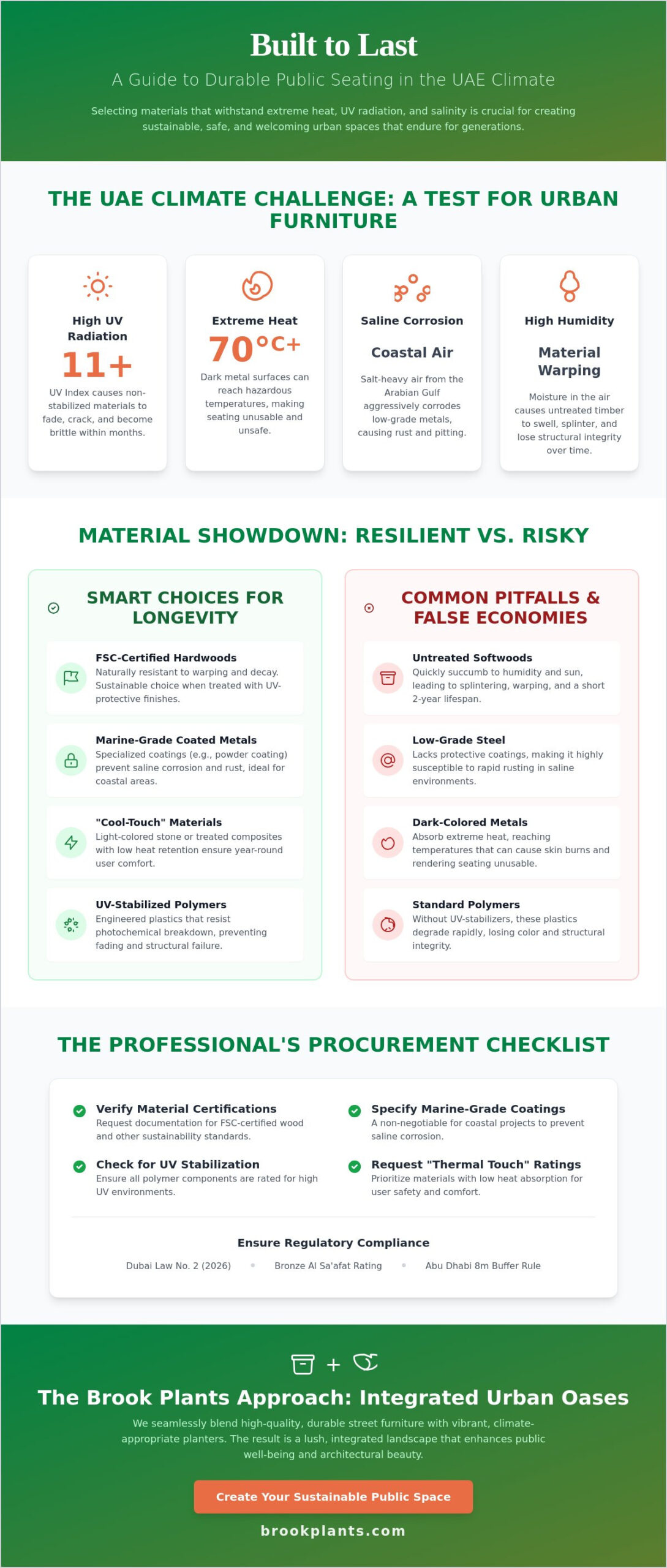
The UAE often faces a UV index of 11 or higher, which acts like a slow-burning fire on standard materials. Without specific UV-stabilization, common polymers lose their structural integrity and fade within months. For coastal developments, the salt-heavy air is just as aggressive, eating through low-grade steel. We consider UV-stabilisation a non-negotiable requirement for any synthetic components to ensure they don’t crumble under the sun’s gaze. Expert finishers often use marine-grade coatings to protect metal alloys from the pitting and rust caused by high salinity.
Thermal Comfort: Making Seating Useable Year-Round
A bench is only useful if someone can actually sit on it. Darker metals can reach temperatures exceeding 70°C in August, making them literal hazards for pedestrians. By selecting “cool-touch” materials like light-colored stone or treated hardwoods, we create spaces that invite people to stay. Shade structures are vital, but the material itself must have low heat retention to foster community use throughout the seasons. This thoughtful selection helps transform a simple walkway into a vibrant social hub.
Opting for “cheap” seating is a false economy that often results in full replacement within two years. When you factor in the labor for maintenance and the cost of new units, those initial savings vanish. High-quality durable public seating solutions are an investment in the landscape’s future, much like planting a slow-growing, resilient Ghaf tree that will provide shade for generations. By choosing quality now, we respect both the environment and the long-term health of our public spaces.
Material Science: The Foundation of Long-Lasting Street Furniture
Just as a gardener selects a hardy sapling for its resilient root system, choosing the right material for our public spaces is the secret to a landscape that matures gracefully. In the UAE, the materials we choose must act as a silent shield against the elements. While aesthetic beauty catches the eye, it’s the underlying material science that ensures our durable public seating solutions don’t become a maintenance burden within a few short seasons. We believe in sourcing materials with the same integrity we use for our 100% peat-free growing methods; it’s about respecting the lifecycle of the product and the health of our planet.
When we look at the permanent installations across Dubai and Abu Dhabi, high thermal mass materials like concrete and natural stone remain favorites for a reason. They offer a sense of permanence and architectural weight. However, for more flexible urban layouts, we often turn to advanced composites and metals. Choosing between powder-coated aluminium and stainless steel involves a careful balance of weight and corrosion resistance. While aluminium is lightweight and easy to move, 316-grade stainless steel is the gold standard for coastal projects where the salt air is particularly aggressive. If you’re looking for guidance on how to integrate these elements into your next project, our team at Brookplants is always happy to share our expertise on creating sustainable, lush environments.
Sustainable Timber in Arid Environments
Timber brings a warmth and organic texture to the city that metal simply can’t replicate. In our experience, hardwoods like Teak and Iroko are the “hardy perennials” of the street furniture world. These species are naturally oily, which helps them resist the cracking and splintering that often occurs in our low-humidity winters. We always recommend FSC-certified timber to ensure your project supports responsible forestry. Gardener’s Note: If you prefer a silver-grey patina, you can let the wood age naturally; otherwise, a simple seasonal oiling will keep those vibrant, honey-toned hues alive. This commitment to sustainable sourcing is a core part of how we think about the longevity of any landscape.
Advanced Metal Finishes and Composites
For modern, complex shapes, GRP (Glass Reinforced Plastic) and recycled composites like DesertBoard PSB offer incredible flexibility. These materials allow designers to design accessible amenities that are both inclusive and visually striking. When it comes to metal, the thickness of the powder coating is vital. A high-quality finish should be at least 60 to 80 microns thick to ensure long-term color retention against the 2026 sun. By focusing on these technical details, we ensure that the furniture remains as inviting as the day it was installed, fostering a true sense of community in our shared outdoor rooms.
Functional Design: Balancing Aesthetics with Low-Maintenance
A well-placed bench does more than provide a place to rest; it defines the rhythm of a public walkway. When we design a garden, we think about how a path flows and where a person might want to pause to admire a vibrant bloom. Durable public seating solutions should follow this same organic logic. They aren’t just static objects but functional tools that shape how people interact with the urban landscape. In 2026, the focus has shifted toward creating “destination” seating that feels as welcoming as a seat in a private courtyard, yet remains tough enough to handle thousands of daily users.
Modular seating systems are particularly effective for the evolving needs of UAE public spaces. They offer the same flexibility as a collection of movable planters, allowing you to reconfigure layouts as the community grows. Whether you’re designing for a small pocket park or a sprawling transit hub, modularity ensures the furniture can adapt. We also see a rise in circular and curved designs that hug natural features like Ghaf trees or architectural water elements. These shapes encourage conversation, moving away from the “bus stop” style of linear seating toward a more social, human-centric approach. Gardener’s Note: Curved forms don’t just look beautiful; they naturally steer foot traffic and prevent the “clutter” feel of mismatched straight benches.
Social Seating Configurations
Creating “outdoor rooms” is a wonderful way to make large public areas feel more intimate and cooled. By integrating seating with large, integrated planters, we can use lush greenery to provide natural shade and privacy. This combination is a signature of our approach at Brookplants, where we believe nature and structure should always work in harmony. Curved seating banks are ideal for these setups, as they complement the fluid, organic lines found in modern UAE architecture, such as the Museum of the Future or the latest sustainable developments in Masdar City.
Ease of Maintenance and Repair
Beauty shouldn’t be high-maintenance. It’s a simple truth that even the best durable public seating solutions will eventually face wear and tear. We recommend selecting designs that allow for individual slat replacement rather than requiring a full bench overhaul. This modular repair approach can save significant costs over a five-year period. Top Tip: Pay close attention to the joints in curved designs. These are often where dust and moisture gather, so ensure they are engineered with precision to prevent internal corrosion. Additionally, proper drainage is vital; seating surfaces should have a subtle 2-degree pitch or integrated weep holes to prevent water pooling after cleaning or rare rainfall, which protects against unsightly mineral staining.
To ensure longevity, look for anti-vandalism features that are invisible to the eye. Concealed fixings prevent tampering while maintaining a clean, architectural silhouette. Applying graffiti-resistant coatings during the manufacturing process ensures that any markings can be wiped away without damaging the underlying finish. By standardising these components across a development, procurement managers can reduce their spare parts inventory by up to 25%, ensuring that the landscape remains pristine with minimal effort.
The Procurement Checklist: Selecting Seating for High-Traffic Areas
Selecting the right furniture for a public project is much like choosing the right hardy shrub for a high-traffic border; it requires a keen eye for quality and a deep understanding of the local environment. When you’re looking for durable public seating solutions, you’re looking for a long-term companion for your landscape. Start your checklist by verifying material certifications. FSC-certified timber and ISO-standard metals are the bedrock of any quality installation, ensuring that the materials have been tested for structural integrity and ethical sourcing. Don’t overlook the “Thermal Touch” rating. In a region where summer temperatures frequently exceed 45°C, seating must remain comfortable to the touch. A robust warranty, ideally five years for structural integrity and colour-fastness, is your best protection against the harsh UV rays that can turn a vibrant finish into a dull, faded surface.
The ease of installation on different substrates, from concrete to sand or even Ecogrid systems, ensures your project remains on schedule and within budget. For 2026 urban designs, integrated technology like solar-powered USB charging points and subtle LED lighting has become a standard requirement for fostering community connection in our digital age. If you’re looking for pieces that marry these technical needs with a natural aesthetic, you can browse our locally sourced landscaping components designed for long-term beauty and resilience.
Technical Specifications for UAE Projects
For all non-metallic components, we recommend a UV-resistance rating of at least Grade 7 on the Blue Wool Scale to prevent sun-bleaching and brittleness. In coastal zones, metal finishes must endure a minimum of 1,000 hours of salt-spray testing to guarantee they won’t succumb to corrosion. We define Lifecycle Cost Analysis as the primary metric for ROI, as it accounts for the total cost of ownership including maintenance and eventual replacement rather than just the initial sticker price.
Sustainability and Eco-Labels
Our commitment to being 100% peat-free in our nursery reflects a broader dedication to the planet that we bring to every procurement decision. We encourage choosing street furniture that contributes to LEED or Estidama green building credits, helping your project meet the UAE’s 2026 sustainability targets. By partnering with suppliers who prioritise eco-conscious craftsmanship and the value of “grown by us” authenticity, you’re investing in a piece of the UAE’s future that respects the delicate balance of our natural world.
The Brook Plants Approach: Sustainable Seating Integrated with Nature
At Brookplants, we see every public square as a potential garden waiting to bloom. Our approach to durable public seating solutions isn’t just about the hardware; it’s about the heartbeat of the space. We believe that a bench should feel like an invitation, a place where the 88.5% of our expatriate community can pause and connect amidst lush, vibrant greenery. By marrying high-quality street furniture with botanical precision, we create seamless urban oases that stand up to the desert heat while feeling as refreshing as a shaded garden corner. Our pride stems from our 100% peat-free methods and the fact that our landscaping elements are “grown by us,” ensuring that every planter and seating combination is rooted in quality and care.
We provide a complete, end-to-end service that moves smoothly from the initial design concept to long-term maintenance. This holistic view ensures that the furniture doesn’t just look good on the day of installation but matures alongside the surrounding flora. Whether it’s a bespoke modular system for a new Dubai development or a permanent stone installation in Abu Dhabi, we bring a dedicated craftsman’s touch to every project. We don’t just sell products; we nurture environments where people and plants can thrive together in harmony.
Why Horticulture and Furniture Must Co-exist
Seating shouldn’t be an island in a sea of concrete. Biophilic design, the practice of connecting people with nature, has proven psychological benefits, including reducing urban stress and fostering a sense of belonging. We use vertical gardens and architectural palms to soften the hard edges of modern structures, providing a natural cooling effect that artificial shade can’t quite replicate. It’s about finding that delicate balance where a bench is sheltered by a canopy of leaves. This creates a microclimate that remains inviting even during the warmer months, making the space truly useable year-round.
Partnering for National UAE Projects
With our extensive experience in both residential and commercial landscape execution across the Emirates, we’ve learned that success lies in the technical details. We don’t just supply furniture; we integrate it with sophisticated irrigation systems to ensure the surrounding greenery stays healthy and lush. Whether you are looking for a professional indoor plant wholesale UAE guide or need help designing a sprawling outdoor plaza, we’re here to help. We invite you to consult with us on custom street furniture and irrigation integration to ensure your project meets the 2026 Al Sa’afat sustainability standards and becomes a landmark of eco-conscious craftsmanship.
Building the Future of UAE Urban Landscapes
Creating a vibrant public space is a journey that begins with a deep respect for both the environment and the community. We’ve explored how selecting the right materials, such as UV-stabilised polymers and marine-grade metals, ensures your landscape survives the UAE’s intense climate without the burden of high replacement costs. By following the 2026 procurement checklist and focusing on the thermal comfort of every surface, you can transform a simple walkway into a lush, social sanctuary that invites people to stay and connect.
Since our founding in 2004, Brookplants has brought decades of expertise to the region, acting as a dedicated mentor for those looking to integrate custom planters with high-quality street furniture. We pride ourselves on providing comprehensive design, execution, and maintenance services that reflect our 100% peat-free growing philosophy. It’s our passion to help you select durable public seating solutions that align with the UAE’s sustainable goals while fostering a genuine love for nature in our urban centers.
Explore our range of durable street furniture and landscape solutions to start your next project with confidence. Let’s work together to grow a greener, more connected future for our cities, one bench at a time.
Frequently Asked Questions
What are the best materials for public benches in the UAE heat?
Light-colored natural stone, concrete, and high-density hardwoods like Iroko are the best choices for managing the UAE’s 45°C summer peaks. These materials have low thermal conductivity, meaning they don’t absorb and hold heat as aggressively as dark metals. For more intricate, architectural shapes, GRP (Glass Reinforced Plastic) is an excellent alternative that remains comfortable to the touch throughout the day.
How long do wooden public benches last in a desert climate?
High-quality hardwoods like Teak or Iroko typically last 10 to 15 years in the UAE if they receive basic seasonal care. In contrast, cheaper softwoods often splinter or warp within just 24 months due to the extreme low humidity of our winters. To ensure longevity, we recommend a bi-annual application of UV-protective oil to keep the timber’s natural oils from drying out.
Is recycled plastic seating durable enough for high-traffic areas?
Recycled plastic and composites are incredibly durable for high-traffic areas, provided they have a UV-stabilisation rating of at least Grade 7. Materials like DesertBoard PSB, which is crafted from upcycled palm fronds, are specifically engineered to withstand saline corrosion and intense sunlight. They don’t rot or attract pests, making them a very reliable choice for busy urban pathways and coastal parks.
How do you prevent metal public seating from becoming too hot to touch?
You can prevent metal seating from overheating by applying light-coloured powder coatings that reflect solar radiation. We also recommend using “cool-touch” inserts, where the seating surface is made of timber or composite slats while the frame remains metal. Combining these durable public seating solutions with strategic shading from Ghaf trees or architectural canopies ensures they stay useable even at noon.
What is the difference between 304 and 316 stainless steel for street furniture?
The main difference is the addition of molybdenum in 316 stainless steel, which provides much higher resistance to salt and chlorides. While 304 stainless steel is suitable for inland areas, 316 is the mandatory choice for coastal developments within 5 kilometers of the sea. Using the wrong grade in a place like Dubai Marina can lead to unsightly pitting and rust in less than 12 months.
Can public seating be integrated with automatic irrigation systems?
Public seating can absolutely be integrated with automatic irrigation systems through hidden internal conduits. These modular units allow for “plug-and-play” connectivity to a site’s main water line, ensuring the surrounding greenery stays lush without manual labor. This approach is a core part of our philosophy, as it allows vibrant plants and sturdy furniture to thrive together in a self-sustaining ecosystem.
What maintenance is required for durable public seating solutions?
Maintenance for durable public seating solutions is generally minimal but essential for a long lifecycle. We recommend a bi-annual inspection to tighten any fixings and a simple wash with mild soap to remove salt and dust buildup. If your seating features timber, a seasonal coat of protective oil will maintain its vibrant honey tones and prevent the wood from becoming brittle in the dry desert air.
Do sustainable seating options qualify for green building certifications?
Sustainable seating options play a significant role in achieving green building certifications like LEED, Estidama, and Dubai’s Al Sa’afat system. Using FSC-certified timber or materials with high recycled content can help a project earn points toward a Bronze or Silver rating. Our commitment to eco-conscious craftsmanship ensures that every piece we provide supports the UAE’s 2026 sustainability goals while respecting the planet’s resources.
Disclaimer
The content on this blog may be automatically generated and is provided “as is” without warranties of any kind, express or implied. No guarantee is made regarding the accuracy, completeness, or suitability of the information. The company expressly disclaims any liability for decisions or actions taken based on this content.
As this blog post was generated using automated content‑creation tools. While our team reviews posts for accuracy and relevance, the information provided may not always reflect the most current developments. The content is intended for general informational purposes only and should not be taken as professional advice. Our company is not liable for any actions taken based on this material.