
In the scorching 50-degree heat of a typical UAE summer, a standard fiberglass container can lose nearly 40% of its structural integrity within just two seasons. It’s a frustrating reality for many developers who see their vibrant architectural visions fade into brittle, cracked shells under the intense UV index of the desert. Choosing the right commercial outdoor planters Abu Dhabi projects demand means looking beyond simple aesthetics to find materials engineered for extreme resilience. We know you want your urban spaces to remain lush and inviting without the constant headache of replacing degraded containers or managing soaring irrigation costs. The desert doesn’t forgive shortcuts.
This 2026 guide helps you discover how to select high-performance, sustainable planters that thrive in our unique climate while integrating seamlessly with modern architectural designs. We’ll explore UV-stable materials that won’t fail under pressure, self-watering technologies that cut maintenance by 60%, and eco-friendly procurement strategies. Our expert gardener’s notes provide the technical precision you need to ensure your landscape remains a thriving, green sanctuary for years to come.
Key Takeaways
- Learn how to select high-performance materials like UV-stable GRP and custom metalwork engineered to thrive in the challenging 50°C+ temperatures of the UAE.
- Discover how to use architectural planters as functional dividers to create sophisticated “outdoor rooms” that complement the scale of Abu Dhabi’s high-rise developments.
- Master the technical essentials for commercial outdoor planters Abu Dhabi, from integrating smart irrigation sensors to implementing professional-grade drainage strategies.
- Understand the vital importance of using “grown by us” acclimatised plants and 100% peat-free growing media for immediate and sustainable project success.
- Identify the critical design differences between standard retail pots and commercial-grade vessels built for the rigours of professional urban landscaping.
The Role of Commercial Outdoor Planters in Abu Dhabi’s Urban Landscape
Abu Dhabi’s skyline is a masterclass in modern architecture, but the true pulse of the city’s commercial districts often lies in the greenery that softens the edges of glass and steel. As we approach 2026, the selection of commercial outdoor planters Abu Dhabi has evolved from a simple aesthetic choice into a vital component of urban engineering. These vessels act as essential street furniture, defining pedestrian flow and creating micro-sanctuaries in high-traffic areas. At Brookplants, we view these containers as the foundation for sustainable urban life, requiring a blend of botanical precision and structural integrity that far exceeds standard retail options.
The shift toward professional-grade container gardening in the UAE is driven by a need for longevity and performance. High-quality greenery is a proven asset for property owners; data from international urban planning studies indicates that well-landscaped commercial spaces can see a 15% increase in foot traffic compared to those without natural elements. Whether it is a vibrant hotel entrance or a delicate terrace garden, these planters serve as the life-support system for architectural plants that must thrive in a desert metropolis.
To better understand how premium greenery elevates a commercial space, watch this helpful video showing professional installations in action:
Environmental Challenges for Outdoor Greenery in the UAE
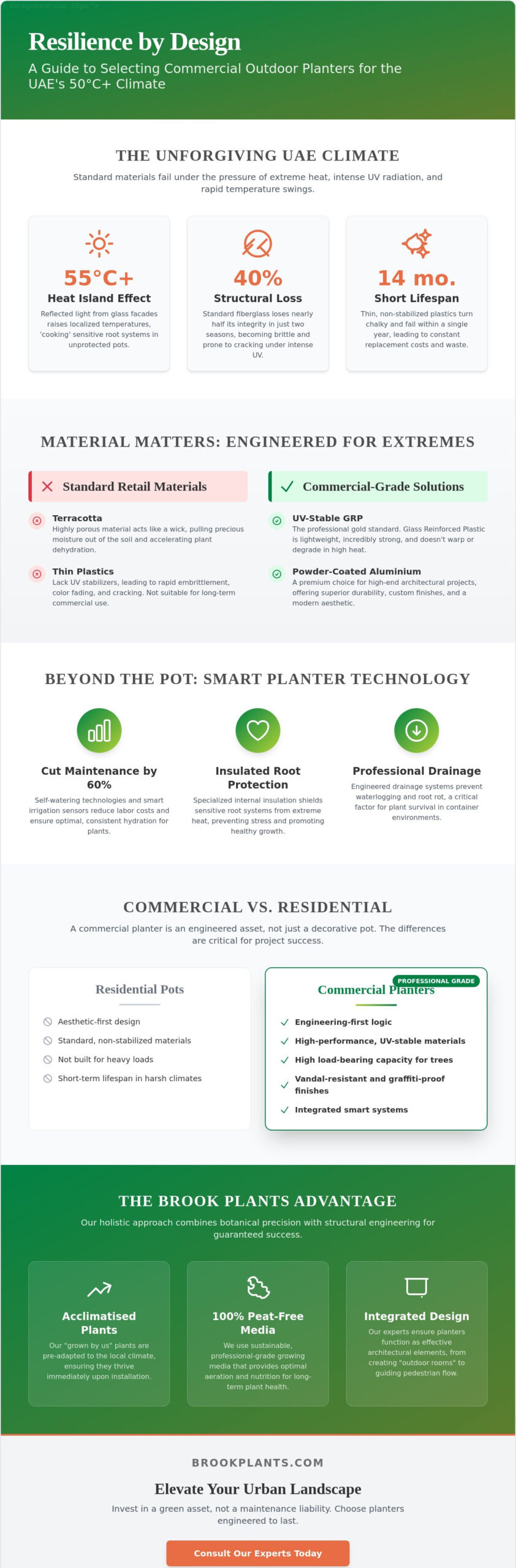
The UAE climate is unforgiving, with UV levels that can degrade standard plastics and composites in a single season. The “Heat Island” effect is particularly intense near Abu Dhabi’s glass facades, where reflected light can raise localized temperatures to over 55°C. This requires planters with specialized internal insulation to protect sensitive root systems from “cooking” inside the pot. Thermal expansion in outdoor planters for the UAE climate refers to the physical stretching and contracting of container materials caused by extreme daily temperature swings, a process that requires specialized engineering to prevent structural failure.
Commercial vs. Residential Planters: Key Differences
While a home gardener might prioritize a specific color, commercial assets require a focus on load-bearing capacity and public safety. Large-scale commercial outdoor planters Abu Dhabi often house trees weighing several hundred kilograms, requiring reinforced bases that won’t bow or crack under pressure. Public spaces also demand anti-vandalism features, such as heavy-duty wall thicknesses and graffiti-resistant finishes. Our “grown by us” approach to horticulture ensures that the plants we recommend are perfectly matched to these durable vessels, guaranteeing a lush, healthy appearance for years rather than months. Investing in commercial-grade quality ensures that your greenery remains a vibrant asset rather than a maintenance liability.
Material Science: Selecting Planters for 50°C+ Temperatures
Choosing commercial outdoor planters Abu Dhabi requires a shift from aesthetic-first thinking to engineering-first logic. When ground temperatures exceed 50°C, the material dictates whether your greenery thrives or perishes within a single season. At these extremes, the planter isn’t just a container; it’s a life-support system for the root ball. Traditional terracotta fails here because it’s too porous. It acts like a wick, pulling moisture out of the soil and into the dry air. Similarly, thin, non-stabilized plastics usually fail within 14 months, turning brittle and chalky under the 400 W/m² solar radiation typical of the UAE summer.
Glass Reinforced Plastic (GRP) remains the professional gold standard. It’s incredibly lightweight yet offers immense structural strength. Unlike standard plastic, GRP doesn’t warp or expand significantly when the sun hits. For high-end architectural projects, powder-coated aluminium is a favorite. It reflects a high percentage of thermal energy, keeping the internal environment stable. Corten steel is another popular choice for its rugged, industrial patina. However, we always advise that metal planters must be professionally lined to prevent the metal from conducting heat directly into the soil.
Glass Reinforced Concrete (GRC) offers excellent thermal mass. This means the material absorbs heat slowly, providing a cooler environment for roots during the peak of the day. The trade-off is weight. A 60cm GRC cube can exceed 65kg when empty, making it less suitable for balconies or modular office layouts than GRP. If you’re looking for the right balance of durability and design, our team can help you select professional-grade containers that suit your specific site requirements.
Thermal Insulation and Root Protection
Double-walled planter designs are a game-changer for the Middle Eastern climate. These containers feature an internal and external skin with a 15mm to 20mm air gap between them. This gap acts as a thermal break, preventing the sun’s heat from “cooking” the roots. Inside the planter, we recommend applying a thick bitumen coating. This serves two purposes: it provides a secondary waterproofing layer and adds a barrier that helps retain soil moisture. Choosing a material with high insulation properties can reduce your required irrigation frequency by 35% to 40%, which is a vital consideration for large-scale commercial maintenance budgets.
UV Stabilization and Colour Retention
The intense Arabian sun can bleach a standard planter in just one summer. To maintain a professional appearance, look for advanced automotive-grade finishes. These coatings include UV inhibitors that prevent pigments from breaking down. This ensures your “Slate Grey” doesn’t turn into a patchy light blue by year two. In 2026, we’re seeing a significant shift toward environmentally preferable building materials in commercial landscaping. Recycled polymer composites are now offering the same 15-year lifespan as virgin resins. These sustainable options don’t just look architectural; they support the circular economy goals currently prioritized by many Abu Dhabi developers.
Light colors aren’t just a design choice; they’re functional. A white or light beige planter can stay up to 10°C cooler than a black or dark grey one. If your project involves direct midday sun, opting for lighter shades will significantly improve the health of your 100% peat-free plants.
Technical Integration: Irrigation and Drainage Systems
In the intense heat of Abu Dhabi, where summer temperatures frequently exceed 45°C, a planter is more than a decorative vessel; it’s a life-support system. Successful commercial outdoor planters Abu Dhabi installations require a precise balance between hydration and drainage. Without a dedicated strategy, stagnant water quickly reaches high temperatures in the sun, essentially cooking the root ball. Conversely, over-watering without proper management leads to unsightly mineral leaching and salt staining on expensive travertine or granite paving, which can cost upwards of 600 AED per square meter to professionally restore.
Water retention in desert environments depends heavily on planter depth. For commercial projects, we recommend a minimum soil depth of 60cm for shrubs and 100cm for small trees. This volume acts as a thermal buffer, keeping the core root zone significantly cooler than the ambient air. We’ve found that deeper reservoirs reduce the irrigation frequency by 25% compared to shallow, wide troughs, ensuring your greenery remains lush even during July’s peak heat. It’s about creating a stable microclimate within the container itself.
Automatic Irrigation for Large-Scale Planter Arrays
Manual watering isn’t feasible for expansive commercial developments. Integrating automatic irrigation into your planter design is a core requirement for plant longevity. Drip irrigation delivers water directly to the roots, minimizing evaporation loss. However, for high-end hospitality projects, sub-irrigation or self-watering systems are often preferred as they draw water upward through capillary action. Modern Abu Dhabi smart buildings now connect these systems to a central BMS (Building Management System), allowing facilities managers to monitor soil moisture sensors in real-time and adjust flow rates based on local weather data to prevent waste.
Drainage Layers and Geotextiles
Preventing root rot is just as vital as providing water. Every professional planter should feature a 50mm to 100mm layer of Leca (lightweight expanded clay aggregate) or specialized drainage cells at the base. This creates a structural void that allows excess water to exit the soil profile quickly. To maintain this system, a heavy-duty geotextile fabric must separate the soil from the drainage layer, preventing fine particles from migrating downward and causing pipe blockages. This setup facilitates the air-gap principle, where a layer of oxygen-rich space between the soil and the base of the planter prevents water from siphoning back up and saturating the roots. It’s a simple, expert touch that ensures your architectural plants thrive for years rather than months.
Designing with Planters: Aesthetics and Functionality
Designing a commercial space in Abu Dhabi requires a keen eye for both the grand architectural scale of our city and the intimate comfort of the people who live here. We’ve seen a significant shift toward using commercial outdoor planters Abu Dhabi as structural elements rather than mere decoration. Large troughs and dividers act as living walls, carving out ‘outdoor rooms’ in sprawling hospitality venues. This approach is particularly effective for zoning restaurant terraces; it lets you create private dining pockets without the need for permanent, costly construction permits or structural changes.
Proportion is vital when you’re working alongside high-rise glass towers. Small pots simply get lost against such massive backdrops. We recommend oversized, architectural planters that mirror the verticality of the skyline. By 2026, the trend of ‘Vertical Greenery’ will be even more prevalent. Using modular planter wall systems allows us to bring lush life to narrow corridors or blank facades, cooling the air and softening the concrete. These systems are often 100% peat-free in their composition, reflecting a growing commitment to the long-term health of our planet.
Customization has moved beyond simple color choices. Modern designs now incorporate integrated LED lighting for evening ambiance, built-in seating for weary shoppers, and even laser-cut branding. It’s about making every piece work harder for the environment it inhabits. We take pride in the fact that many of our solutions are grown by us, ensuring the plants are already acclimated to the specific light and heat conditions of the UAE before they reach your site.
Hospitality and Retail Applications
Greenery isn’t just an aesthetic choice; it’s a proven economic driver for retail. Data from UAE retail hubs suggests that well-placed greenery can increase customer stay-time by up to 22%. In shopping malls and plazas, we use commercial outdoor planters Abu Dhabi to guide pedestrian flow naturally. This steers visitors toward key storefronts while providing a sensory experience that counters the urban heat. It’s a gentle, organic way to manage crowds while keeping the atmosphere welcoming and fresh.
Urban Greening and Street Furniture
In public spaces, planters often serve a dual purpose as functional street furniture. We’re seeing a rise in security-rated planters that use sheer weight and reinforced materials for perimeter protection. These provide essential safety for pedestrians without creating a fortress-like atmosphere. They’re ideal for adding height to a border while maintaining a friendly, open feel. You can explore our range of integrated street furniture to see how we blend security with sustainable, architectural design.
If you’re ready to transform your commercial space with expert horticultural design, browse our collection of sustainable planters to find the perfect fit for your project.
The Brook Plants Approach: Sustainable Commercial Excellence
At Brook Plants, we don’t just supply greenery; we nurture it from seed to site. Our “Grown by Us” philosophy is the cornerstone of our success with commercial outdoor planters Abu Dhabi. Because our plants are raised in our local nursery, they’re already acclimatized to the intense UAE sun and humidity before they arrive at your property. This local hardening process leads to a 95% survival rate in the first year, significantly outperforming imported stock that often wilts under the 45°C summer heat. It’s a difference you can see in the immediate, vibrant health of every installation.
Our commitment to the environment is visible in our 100% peat-free growing media. We’ve moved away from traditional peat to protect precious carbon-storing wetlands, opting instead for high-performance organic alternatives like coconut coir and recycled wood fiber. This shift isn’t just about ethics; it’s about plant health. These media provide superior aeration and drainage, which are vital for preventing root rot in the high-efficiency irrigation systems used in modern commercial projects. We’re proud to be craftsmen who care as much about the planet as we do about your project’s aesthetic.
Sustainability in UAE Landscaping
Using peat-free methods allows us to reduce the carbon footprint of a standard landscaping project by approximately 3.4kg of CO2 per cubic meter of soil. We pair this sustainable foundation with water-wise plant selections. By choosing species like Carissa macrocarpa or Pennisetum, we ensure your green spaces thrive while reducing water consumption by up to 40%. For developers looking to create a seamless transition between the street and the lobby, our indoor plant wholesale uae guide offers insights into maintaining that lush, architectural look across all environments.
End-to-End Project Management
We believe a successful project starts with a shared vision. Our team manages the entire journey, from the initial landscape design to the custom fabrication of durable planters that can withstand 50°C peaks without cracking or fading. We turn architectural sketches into reality using materials specifically chosen for the Abu Dhabi climate. Gardener’s Tip: Even the best-designed planter needs a helping hand. Our professional maintenance packages protect your long-term ROI by ensuring every leaf stays lush and every irrigation line remains clear.
Ready to transform your commercial space with expert greenery? Partner with Brook Plants & Landscaping for your next project and let’s grow something beautiful together.
Cultivate a Resilient Green Legacy in the Capital
Building a successful urban garden in the Emirates means preparing for the reality of 50°C summers. You’ve seen how the right material science and integrated irrigation systems are vital for plant health in our unique climate. Selecting high-quality commercial outdoor planters Abu Dhabi isn’t just a design choice; it’s a commitment to creating a sustainable, cooling microclimate that survives and thrives year-round. Expertly designed drainage and smart water management ensure your architectural greenery remains lush without wasting precious resources.
At Brook Plants, we’re more than just suppliers. We’re dedicated growers with over 20 years of UAE horticultural experience. Our 100% peat-free growing methods are a hallmark of our craft, reflecting a deep respect for the lifecycle of every plant we nurture. We provide a full-service approach, covering everything from the first design sketch to professional supply and ongoing maintenance. It’s about more than just aesthetics; it’s about the long-term health of our planet and your property.
Design your commercial landscape with Brook Plants today
Let’s work together to make Abu Dhabi a greener, more vibrant place to live and work.
Frequently Asked Questions
What is the best material for commercial outdoor planters in Abu Dhabi?
High quality Glass Reinforced Plastic (GRP) is the superior choice for commercial outdoor planters Abu Dhabi because it withstands 50°C heat without warping or cracking. Unlike metal which absorbs heat and scorches delicate roots, GRP acts as an insulator to keep the soil cool. Our gardener’s notes suggest choosing UV stabilized finishes to prevent colors from fading under the intense Arabian sun, ensuring your architectural landscape remains lush for years.
How do I prevent outdoor planters from staining my terrace or paving?
You can prevent staining by using hidden pot feet or integrated drainage plinths that raise the planter 5mm to 10mm off the ground. This gap allows water to evaporate instead of pooling, which prevents the 3% mineral salt buildup often found in local irrigation water from marking your paving. We recommend using internal reservoirs to manage runoff, keeping your limestone or granite terraces pristine while supporting healthy, peat-free growth.
Can commercial planters be moved once they are filled and planted?
Most commercial planters are difficult to move once filled because a standard 100cm trough can exceed 250kg when saturated with water. If your project requires flexibility, we can install heavy duty recessed casters during the manufacturing process that remain hidden from view. For permanent installations, it’s best to finalize the layout before filling with our nutrient rich, sustainable soil blends to avoid structural strain on the planter walls.
How often do commercial outdoor plants need to be watered in the UAE?
Plants in the UAE typically require daily watering during the peak summer months from June to September when evaporation rates are highest. During the cooler winter season, you can reduce this frequency to three times per week. Top tip: installing an automated drip irrigation system ensures each plant receives exactly 2 to 5 liters of water daily, depending on the species, which promotes deep root health and water conservation.
Are custom-sized planters available for specific architectural projects?
Yes, we specialize in creating bespoke commercial outdoor planters Abu Dhabi tailored to specific architectural blueprints and site requirements. Whether you need a 3 meter curved bench planter or a narrow 20cm trough for a balcony rail, custom GRP molds allow for precise dimensions. This flexibility is essential for 90% of our commercial projects where integrating greenery into existing structural layouts requires a millimetre perfect fit.
What are the benefits of using GRP planters over concrete (GRC)?
GRP planters offer a 75% weight reduction compared to Glass Reinforced Concrete (GRC), making them much safer for rooftop installations and high rise balconies. While GRC is durable, GRP is non porous and won’t develop the hairline cracks often caused by the UAE’s extreme thermal expansion cycles. Our “grown by us” philosophy extends to the vessels we use; we prefer GRP for its longevity and its ability to hold moisture more effectively.
Is it possible to integrate lighting into commercial planter boxes?
Integrating LED lighting into planter boxes is a highly effective way to highlight architectural foliage and improve nighttime safety in commercial spaces. We can factory fit recessed channels for IP67 rated waterproof LED strips or internal conduits for uplighting. Adding light to a lush, leafy display transforms a daytime garden into a vibrant evening landscape, extending the usability of outdoor areas during the cooler Abu Dhabi nights.
How do I ensure my outdoor planters are wind-resistant for high-rise balconies?
To ensure planters remain stable on high rise balconies during 50km/h wind gusts, we recommend filling the bottom 15% of the container with heavy drainage aggregate. For extreme heights, planters can be bolted directly to the sub floor or joined together to create a heavier, continuous unit. Our gardener’s notes suggest choosing low profile, aerodynamic plant species like hardy grasses to reduce the sail effect and keep your green space secure.
Disclaimer
The content on this blog may be automatically generated and is provided “as is” without warranties of any kind, express or implied. No guarantee is made regarding the accuracy, completeness, or suitability of the information. The company expressly disclaims any liability for decisions or actions taken based on this content.
As this blog post was generated using automated content‑creation tools. While our team reviews posts for accuracy and relevance, the information provided may not always reflect the most current developments. The content is intended for general informational purposes only and should not be taken as professional advice. Our company is not liable for any actions taken based on this material.