
What if the peak of a 45°C July wasn’t a death sentence for your garden, but simply a season of more mindful stewardship? We’ve all felt that sinking feeling when a prized jasmine bush begins to scorch, even after a heavy morning soak. It’s frustrating to watch your water bills climb into DEWA’s red slab of AED 10.120 per cubic meter while your plants still look thirsty and tired. Learning how to protect garden plants from UAE summer heat is about more than just turning up the tap. It’s about creating a resilient, multi-layered cooling shield for your living spaces.
We understand the deep pride that comes from cultivating a lush sanctuary in the desert. You deserve a garden that survives dust storms and intense UV rays without costing a fortune in utility fees. This 2026 survival guide shares the professional-grade techniques we use to nurture life in extreme conditions. We’ll explore how to optimize automatic irrigation for 30 to 50% water savings, the vital role of structural shade, and how to choose heat-tolerant species that truly belong in our climate. Let’s transform your outdoor space into a thriving, sustainable retreat that stays vibrant all year round.
Key Takeaways
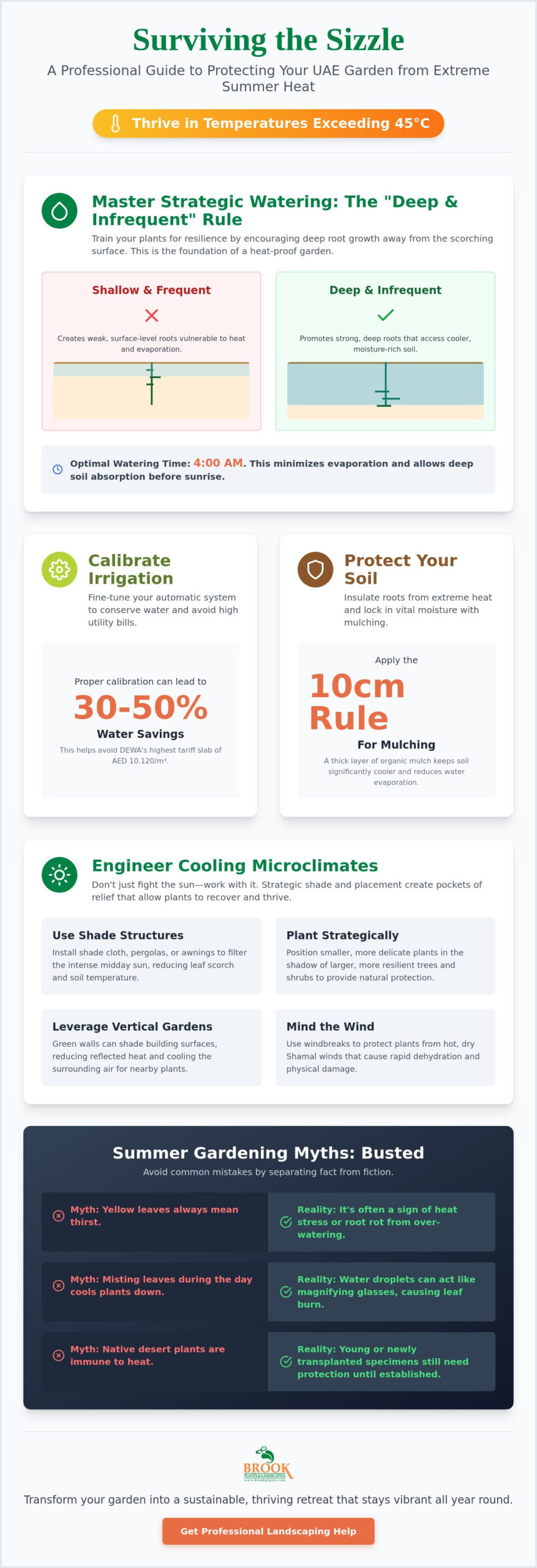
- Learn how to master the “Deep and Infrequent” watering rule to train your plant roots for resilience against the intense 45°C+ summer peak.
- Discover how to protect garden plants from UAE summer heat by engineering cooling microclimates using strategic shade structures and vertical gardens.
- Understand the “10cm rule” for mulching to keep your soil temperatures significantly lower while preserving vital moisture in sandy desert ground.
- Calibrate your automatic irrigation system to balance plant health with water conservation, helping you avoid the highest utility tariff slabs.
- Explore the principles of climate-resilient landscaping design to ensure your garden thrives year-round with a focus on sustainable, long-term health.
The Science of Heat Stress in the UAE Climate
When the thermometer climbs past 40°C, your garden enters a biological “danger zone.” At this threshold, most plants stop growing and focus entirely on survival. This state of Abiotic stress can lead to permanent damage if the plant’s internal systems aren’t supported. Understanding the physiological shift that happens during a Dubai July is the first step in learning how to protect garden plants from UAE summer heat. It’s not just about the sun’s intensity; it’s about how the plant manages its internal moisture when the air feels like a furnace.
To help visualize these challenges for smaller green companions, this guide offers a practical look at seasonal care:
Humidity plays a deceptive role in our climate. In coastal areas like Dubai Marina, high humidity can actually slow down a plant’s ability to cool itself through evaporation. Conversely, inland areas face bone-dry heat that sucks moisture out of leaves faster than roots can replenish it. Then come the Shamal winds. These hot, dusty gusts act like a giant hair dryer, causing rapid dehydration and mechanical damage to delicate foliage. You might notice leaves turning brittle or edges browning; this is often wind-scorch rather than a simple lack of water.
Distinguishing between a plant that is truly thirsty and one that is simply scorched is vital. Thirst shows as overall wilting that typically recovers in the evening. Sun-scorch appears as bleached or brown patches on the parts of the leaf most exposed to the light. Root-rot, often caused by panicked over-watering in heavy soil, presents as soft, mushy stems and yellowing that starts from the bottom of the plant.
Transpiration and the Cooling Mechanism
Plants “sweat” through tiny pores called stomata in a process known as transpiration. This keeps them cool, much like how we stay comfortable on a hot day. However, when the heat is extreme, plants close these pores to save water, which causes their internal temperature to spike. If they reach the “permanent wilting point,” the cellular damage becomes irreversible. In the UAE, high night-time temperatures are particularly taxing because plants never get a chance to recover from the day’s heat. Mastering the science of these environmental pressures is the foundation of how to protect garden plants from UAE summer heat successfully.
Common UAE Summer Plant Myths
Dispelling these common misconceptions helps you become a more confident, nurturing gardener:
- The Thirst Myth: Yellowing leaves don’t always mean your plant is thirsty. In the summer, yellowing can often be a sign of heat-induced dormancy or even root-rot from over-watering in heavy soil.
- The Misting Myth: Spraying leaves during the day won’t cool them down. Water droplets can act as tiny magnifying glasses, focusing the sun’s rays and causing leaf burn.
- The Immunity Myth: Even native “desert” plants have limits. While they are more resilient, young or newly transplanted specimens still need protection until their root systems are fully established.
Mastering Strategic Irrigation and Deep Hydration
Watering your garden in the height of a UAE summer requires more than just a garden hose and good intentions. The most successful desert gardeners follow the “Deep and Infrequent” rule. By delivering water slowly and deeply into the earth, you encourage roots to travel down into the cooler, moisture-retaining depths of the soil. Shallow, daily sprinkles are a common mistake; they keep roots near the scorching surface where they are easily cooked by the midday sun. Learning how to protect garden plants from UAE summer heat starts with this fundamental shift in perspective. You aren’t just wetting the dirt; you’re training your plants to be resilient.
Timing is everything when the mercury hits 45°C. We consider 4:00 AM the gold standard for irrigation. At this hour, the air is at its coolest, the winds are usually calm, and the water has several hours to soak into the root zones before the sun begins its relentless ascent. This prevents the massive evaporation losses seen in midday watering and ensures the plant is fully hydrated before the heat stress begins. To ensure your soil is actually absorbing this moisture, use the “chopstick test.” Push a wooden skewer deep into the soil; if it comes out clean and dry, your plants are still thirsty, regardless of how wet the surface looks.
Optimizing Automatic Irrigation Systems
A well-calibrated automatic irrigation system is your garden’s lifeline. During the May to September peak, you must adjust flow rates for different zones. Grass requires frequent, even coverage, while deep-rooted trees need slower, longer sessions. In the UAE, tap water often carries high mineral content, leading to salt build-up in drippers. Check your emitters monthly for white crusting to prevent localized droughts. Modern smart controllers are an excellent investment here; they use real-time weather data to skip cycles on humid days, potentially saving you 30 to 50% on your water bill while following best practices for Heat Proofing Your Garden.
Pot vs. Ground: Different Hydration Needs
Plants in containers are far more vulnerable than those in the ground. During 48°C heatwaves, potted plants often require “double-soaking.” This involves watering once to dampen the soil, then returning ten minutes later to ensure the water is fully absorbed rather than just running down the inside of the pot. While the “saucer method” can provide a humidity buffer for balcony plants, be cautious. Standing water can lead to root rot or salt accumulation if not managed carefully. For large, established trees like the Ghaf or Palms, focus on a wide radius around the trunk to reach the active “drip line” where the feeder roots live. This strategic approach is essential when discovering how to protect garden plants from UAE summer heat.
Engineering Microclimates: Shade, Wind, and Placement
While mastering irrigation is vital, creating a physical shield against the elements is the secret to a garden that truly thrives. In our region, the sun isn’t the only adversary. The hot, dry Shamal winds can strip moisture from leaves in minutes, leaving even well-watered plants looking parched and brittle. Engineering a microclimate involves strategically placing barriers and choosing materials that deflect heat rather than absorbing it. By understanding these environmental layers, you gain the upper hand in how to protect garden plants from UAE summer heat. It’s about creating a sanctuary where the air stays a few degrees cooler and the wind loses its sting.
Structural shading offers a permanent solution for your most sensitive outdoor areas. We often suggest integrating Large Shade structure umbrellas or custom pergolas to provide consistent relief for delicate species. Unlike temporary netting that can tear or sag, these robust structures maintain airflow while blocking the harshest UV rays. Grouping your plants also creates a natural humidity pocket. As they breathe together, they raise the local moisture levels, making the air slightly more hospitable for the entire cluster. This simple act of clustering can be the difference between a scorched plant and a surviving one.
Choosing the Right Shading Materials
When selecting shade cloth, the percentage of light blocked is critical. For most UAE gardens, a 50-70% shade net is the “sweet spot.” It provides enough protection to prevent leaf scorch while still allowing enough light for photosynthesis to continue. If you’re using planters, be mindful of where they sit. Concrete villa walls can act like radiators, soaking up heat all day and releasing it directly onto your foliage at night. Moving your pots just 30 centimeters away from a wall or placing them behind a permeable screen can significantly lower the ambient temperature around the root zones and help you learn how to protect garden plants from UAE summer heat effectively.
The Role of Hardscaping in Temperature Control
Your choice of hardscaping materials directly impacts your garden’s temperature. Darker stones and tiles absorb heat, contributing to a “heat island” effect that stresses your greenery long after sunset. Opting for light-coloured pavers and integrating street furniture into shaded zones helps keep the ground cooler and more comfortable for both you and your plants. One of the most effective ways to lower ambient temperatures is through Vertical Gardens. These living walls act as thermal insulators for your villa, preventing the sun from baking the masonry and radiating that heat back into your garden. For more expert insights on managing these conditions, the Desert Plant Care in Heat guide offers excellent scientific context for arid-climate gardening.
Soil Preservation and Nutrient Management During Peak Heat
While we often look to the sky for solutions, the real battle for survival happens beneath the surface. In the UAE, our sandy soil has a poor capacity for holding both moisture and nutrients, which can lead to a rapid decline when temperatures soar. Understanding how to protect garden plants from UAE summer heat requires a deep commitment to soil stewardship. When the ground temperature reaches extreme levels, the delicate microbiology that supports plant health begins to suffer. By focusing on soil preservation, you create a stable, cooling foundation that allows your garden to weather the most intense months of the year.
One of the most effective tools in our sustainable toolkit is the use of Geotextiles and Ecogrid. These materials aren’t just for heavy construction; they play a vital role in modern landscaping by stabilizing the soil and preventing the rapid runoff of precious water. When integrated correctly, they help maintain the structure of your garden beds, ensuring that the cooling hydration we discussed in previous sections actually stays where it’s needed most. This structural approach to soil health is a hallmark of a truly resilient desert garden.
The Art of Summer Mulching
Mulching is your garden’s primary defense against the sun’s radiant heat. We follow the “10cm rule,” which involves applying a thick layer of mulch to keep the root zones 5 to 10 degrees cooler than the ambient air. In the UAE, you have several choices. Organic mulches like bark chips or recycled organic matter are excellent for improving soil quality over time, though they do decompose faster in the heat. Inorganic options like gravel or pebbles are highly durable and provide a clean, modern aesthetic. When applying your mulch, always leave a small gap around the base of stems and trunks. This prevents moisture from trapping against the bark, which can lead to stem rot even in the height of summer.
Safe Summer Feeding Protocols
A common mistake is trying to “boost” plants with high-nitrogen fertilizers during a heatwave. This triggers a flush of new, tender growth that the plant simply cannot support when it’s in survival mode. This forced growth puts immense stress on the vascular system and can actually kill a plant that was otherwise holding its own. Instead, switch to gentle soil conditioners like liquid seaweed or organic kelp. These provide micronutrients that help with heat resistance without forcing unsustainable growth. We strongly advise against any heavy pruning or fertilizing until the cooler temperatures of October return. If you’re looking to upgrade your soil’s resilience, you can find professional-grade Geotextiles and soil solutions to help your garden thrive through the peak summer months.
Professional Maintenance and Heat-Resistant Landscaping Design
True resilience in a desert garden is grown, not just built. While we’ve discussed the immediate tactics of shading and hydration, the long-term secret of how to protect garden plants from UAE summer heat lies in the philosophy of “the right plant in the right place.” Moving into 2026, we’re seeing a beautiful shift toward landscaping that respects our local ecology rather than fighting it. By choosing species that have evolved to thrive in our unique conditions, you reduce the need for constant intervention and create a sanctuary that feels naturally at home in the dunes. Sustainable design isn’t just about survival; it’s about creating a landscape that gains character as the seasons pass.
Preparing your garden for the summer months also means thinking ahead for when you travel. A garden left to its own devices in 48°C heat can vanish in a matter of days if a single irrigation line fails. Professional oversight ensures that your green spaces are monitored by experts who understand the subtle signs of distress before they become fatal. This proactive stewardship is especially vital for detecting pests like stem borers, which often target trees already weakened by heat stress. Expert eyes can spot these early indicators, preserving the health of your investment while you’re away.
Top Heat-Resistant Species for UAE Gardens
Embracing native and naturalized species is the most effective way to ensure a lush garden year-round. The Ghaf and Sidr trees are the undisputed stars of the region, offering deep shade and unmatched drought tolerance once established. For vibrant colour, the Desert Rose and Bougainvillea remain reliable favorites that actually thrive under the intense sun. If you’re looking for a lush look with zero water requirements for high-heat areas, Preserved Palms are an ingenious alternative. They provide the majestic aesthetic of a tropical retreat without the hydration demands, making them a smart choice for modern, eco-conscious designs.
The Benefits of Professional Oversight
A thriving garden requires a balance of technical precision and artistic care. Regular check-ups of your Automatic Irrigation systems are essential, as even a small leak or a clogged emitter can lead to localized plant loss during a heatwave. Beyond the hardware, professional landscaping expertise helps you navigate the transition to more sustainable, hardy species as your garden matures. To ensure your outdoor sanctuary remains a vibrant retreat through the harshest months, you can rely on the specialized landscaping and irrigation design expertise of Brook Plants & Landscaping LLC.
Before you depart for your summer holiday, follow this essential checklist to safeguard your greenery:
- Irrigation Audit: Test every zone and replace any batteries in your timers to avoid system failure.
- Shade Check: Ensure all Large Shade structure umbrellas and nets are securely anchored against Shamal winds.
- Mulch Top-up: Verify that the 10cm cooling layer is intact across all beds to protect sensitive root zones.
- Planter Placement: Move smaller planters into the deepest shade possible to reduce evaporation.
Cultivating Resilience in the Desert Sun
Nurturing a vibrant garden through 45°C+ temperatures is a rewarding journey that blends scientific precision with a deep love for the natural world. By implementing the deep irrigation cycles, structural shade, and soil cooling strategies we’ve discussed, you’ve already taken the most vital steps. Mastering how to protect garden plants from UAE summer heat is about working with our unique environment rather than fighting against it. It’s about choosing native species that belong in our dunes and using technology to conserve our most precious resource.
We’ve been helping residents across the UAE transform their outdoor spaces into sustainable sanctuaries since 2004. Our team brings decades of expertise in automatic irrigation and a specialized knowledge of both native and imported heat-tolerant species. If you’re ready to ensure your green oasis survives and thrives through the peak of summer, we’re here to act as your trusted mentors. Book a Summer Garden Consultation with Brook Plants & Landscaping LLC today. With the right care and professional insight, your garden won’t just survive the heat; it will become a lush, enduring testament to your dedication to our beautiful desert landscape.
Frequently Asked Questions
How often should I water my garden in the UAE summer?
You should water daily during the peak summer months, ideally at 4:00 AM to minimize evaporation. While daily hydration is necessary, the focus should remain on deep watering that reaches the root zone rather than a shallow surface spray. This technique is a cornerstone of learning how to protect garden plants from UAE summer heat, as it encourages roots to grow deeper into the cooler, moist earth.
Is tap water in the UAE safe for all garden plants?
UAE tap water is generally safe for most hardy species, but its high mineral content can lead to salt accumulation over time. You might notice a white crust on your planters or around irrigation drippers. To manage this, periodically flush the soil with extra water to leach out salts and ensure your Automatic Irrigation emitters are cleaned monthly to prevent clogs.
Why are my plant leaves turning brown even though I water them daily?
Browning leaves are often a sign of environmental stress such as wind-scorch from Shamal gusts or radiant heat from nearby walls. If the soil is wet but the leaves are crispy, the plant might have reached its “permanent wilting point” where it can’t move water fast enough to stay cool. Avoid the urge to over-water, as mushy stems can indicate root rot instead of thirst.
What are the best shade-loving plants for a UAE balcony in summer?
For a shaded UAE balcony, hardy species like the Snake Plant or certain types of Agave thrive well in the heat if kept out of direct afternoon sun. You can also use Vertical Gardens to create a lush, cooling backdrop that naturally lowers the ambient temperature of your balcony. These living walls provide a beautiful, space-saving solution for urban dwellings while offering a thermal buffer against the summer sun.
Can I use an automatic irrigation system for my potted plants?
Yes, installing an Automatic Irrigation system for potted plants is one of the most effective ways to ensure consistent hydration. We often use specialized micro-drippers for planters to deliver precise amounts of water directly to the soil. This prevents the “feast or famine” cycle that often kills container plants during 48°C heatwaves, especially when you’re away from home.
What should I do with my garden when I go on summer holiday?
Before leaving on holiday, you should conduct a full audit of your irrigation system and ensure your shade structures are secure. Grouping your pots together creates a small microclimate of shared humidity that helps them survive. For complete peace of mind, professional oversight is the best way to ensure your garden doesn’t suffer from a sudden pump failure or a broken pipe while you’re traveling.
Are there any plants that actually thrive in 45-degree heat?
Native UAE species like the Ghaf, Sidr, and Desert Rose are biologically designed to flourish even when temperatures hit 45 degrees. These native stars have deep root systems or water-storing stems that make them incredibly resilient. Incorporating these species is a fundamental part of how to protect garden plants from UAE summer heat while maintaining a beautiful, low-maintenance landscape that respects our local ecology.
How do I protect my lawn from drying out in the UAE sun?
Protecting a lawn requires a combination of choosing heat-tolerant Paspalum grass and maintaining a higher mowing height. Longer grass blades shade the soil, which keeps the root system cooler and reduces evaporation. Ensure your irrigation is calibrated for the pre-dawn hours and consider using Geotextiles under the turf during installation to improve long-term water retention in our sandy desert soil.
Disclaimer
The content on this blog may be automatically generated and is provided “as is” without warranties of any kind, express or implied. No guarantee is made regarding the accuracy, completeness, or suitability of the information. The company expressly disclaims any liability for decisions or actions taken based on this content.
As this blog post was generated using automated content‑creation tools. While our team reviews posts for accuracy and relevance, the information provided may not always reflect the most current developments. The content is intended for general informational purposes only and should not be taken as professional advice. Our company is not liable for any actions taken based on this material.