
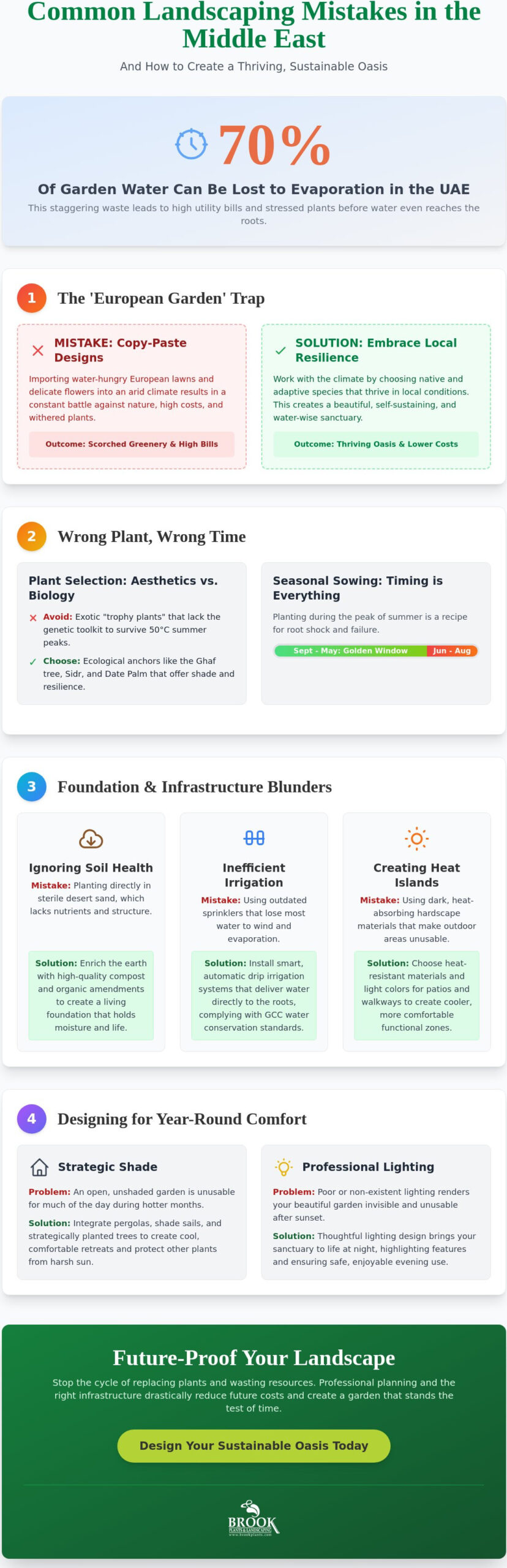
Did you know that in the UAE, up to 70% of the water used in your garden can be lost to evaporation before it even reaches a single root? It’s a staggering figure from 2026 research that explains those climbing utility bills and why so many homeowners find themselves caught in a frustrating cycle of replacing scorched greenery every September. We’ve all felt that disappointment of watching a once-vibrant space wither under the relentless sun. These failures often stem from common landscaping mistakes in the Middle East, such as trying to force a water-heavy European aesthetic onto an arid landscape that has its own beautiful, desert rhythm.
You deserve an outdoor sanctuary that feels like a natural extension of your home, not a constant drain on your resources. We understand the pride that comes from cultivating a space that respects our planet’s limits. In this guide, you’ll discover how to navigate the unique challenges of our climate to create a sustainable, thriving outdoor space that stands the test of time. We’ll explore the shift toward native species like the Ghaf and Sidr, the necessity of smart irrigation systems that meet new GCC water conservation standards, and how to design functional areas that stay cool. It’s time to stop fighting the heat and start growing with it.
Key Takeaways
- Learn why trying to replicate lush European lawns is one of the most common landscaping mistakes in the Middle East and how to embrace the natural beauty of drought-tolerant native plants instead.
- Discover how to transform sterile desert sand into a living ecosystem by using organic amendments that support long-term plant health and vitality.
- Understand the critical role of automatic irrigation and heat-resistant materials in preventing your garden from becoming an expensive “heat island” during the summer months.
- Find out how to design for year-round comfort by integrating strategic shade structures and professional lighting that brings your outdoor sanctuary to life after sunset.
- Explore how professional planning and the right infrastructure, like high-quality planters and geotextiles, can drastically reduce plant replacement costs and future headaches.
The ‘European Garden’ Trap: Why Copy-Paste Designs Fail in the Middle East
Many homeowners arrive in the region with dreams of rolling emerald lawns and delicate rose bushes, often inspired by “Pinterest-perfect” designs from temperate climates. However, trying to force these water-hungry landscapes into an arid environment is one of the most common landscaping mistakes in the Middle East. Our climate is defined by extreme evapotranspiration rates, high soil salinity, and intense UV levels that can bleach the life out of non-native plants within a single season. When we treat our gardens like a copy of a London suburb, we ignore the beautiful, resilient reality of our own geography.
Instead of fighting the desert, we can look to history for inspiration. The principles of traditional Islamic garden design offer a far more sustainable blueprint, focusing on the cooling power of shade and the efficient use of water. By understanding the local rhythm, we move from a struggle against nature to a partnership with it. This shift in perspective is what transforms a high-maintenance burden into a thriving, self-sustaining sanctuary.
To better understand how to build a resilient outdoor space, watch this helpful video on avoiding high-maintenance pitfalls:
Ignoring Native and Adaptive Species
Choosing plants based solely on aesthetics rather than biology is a frequent and costly error. While exotic “trophy plants” might look stunning in a climate-controlled nursery, they often lack the genetic toolkit to survive our 50°C summer peaks. We advocate for a shift toward ecological anchors like the Ghaf tree and the Date Palm. These species have thrived here for centuries and provide essential shade without demanding excessive irrigation. Transitioning from thirsty exotics to salt-hardy, drought-tolerant alternatives ensures your garden remains a lush haven rather than a constant source of replacement costs and disappointment.
The Seasonal Sowing Mistake
Timing is everything in our region, and ignoring the calendar is another of the common landscaping mistakes in the Middle East. Planting in the middle of June is a recipe for immediate root shock; the heat is simply too aggressive for young root systems to anchor. The “Golden Window” for successful execution typically opens in the cooler autumn months, from September through May. This period provides the gentle environment necessary for plants to establish themselves before the summer test. Acclimatization is the vital process of gradually exposing plants grown in controlled nurseries to the specific light, heat, and humidity levels of their final outdoor home. Respecting this natural cycle is the secret to a garden that doesn’t just survive, but truly belongs to the land.
Softscape Failures: Soil, Spacing, and the Science of Growth
Many homeowners look at the vast dunes and assume that because plants grow in the wild, the sand in their garden is ready for planting. This is one of the most common landscaping mistakes in the Middle East. True soil is a living community of microbial life and organic matter. Desert sand lacks this structure, which leads to rapid nutrient leaching and thirsty roots. We believe in building from the ground up, enriching the earth with high-quality compost and organic amendments to create a foundation that holds life. Without these additions, your plants are essentially sitting in a sterile, hot substrate that offers no support.
While it seems counterintuitive in an arid climate, poor drainage is a silent garden killer. When we over-irrigate to combat the heat, water can pool around roots in heavy or compacted sands, leading to “wet feet” and fungal rot. This is particularly dangerous when considering the broader context of water scarcity in the Middle East; wasting water while simultaneously drowning your plants is a double tragedy. Using professional-grade geotextiles helps manage this by preventing soil migration and keeping your drainage layers clear and functional over many seasons.
Soil Preparation and Salinity Management
Salt is the invisible enemy of the desert gardener. Before you dig, it’s essential to test for high salinity, which can stunt growth or kill sensitive species. For larger trees, we recommend deep-pit preparation. This involves replacing vast volumes of native sand with nutrient-rich mixes to ensure long-term stability and health. Once planted, don’t overlook mulch. A thick layer of organic mulch acts as a critical thermal barrier, keeping root temperatures stable when the surface sand is scorching. It’s a simple step that acts as a protective blanket for your garden’s most delicate systems.
Plant Spacing and Vertical Architecture
It’s tempting to pack a garden with small nursery plants to get that “instant” lush look. However, calculating the mature size of a species is vital to avoid one of the most common landscaping mistakes in the Middle East: over-planting. In humid coastal cities like Dubai or Doha, poor air circulation between cramped plants invites powdery mildew and other fungal diseases. If you’re working with a smaller villa plot, consider using vertical gardens to maximize your greenery without sacrificing floor space. Layering your plants by height doesn’t just look beautiful; it creates a self-shading microclimate where taller, hardy species protect the more delicate undergrowth below.
Achieving this balance requires a deep respect for the lifecycle of every leaf and branch. If you’re ready to start your journey with the right foundation, exploring our range of sustainable outdoor landscaping solutions can help you avoid these early pitfalls and build a garden that truly thrives.
Infrastructure Blunders: Irrigation and Hardscape Heat Islands
It’s a quiet morning, and you’re standing in your garden with a hose, believing that a gentle spray is enough to sustain your plants through a desert summer. This ‘Manual Watering’ myth is one of the most common landscaping mistakes in the Middle East. Hand-watering is notoriously inconsistent; it often only dampens the surface, leaving deeper roots parched while most of the water evaporates before it can do any good. We see this often when homeowners try to apply Western gardening habits to an environment that demands much more precision. This disconnect is a central theme in the challenges of imported landscape designs, where imported styles fail to account for the sheer thermal intensity of our region.
Beyond water, the very ground you walk on can work against you. Dark concrete and heavy stones act like thermal sponges, soaking up UV rays and radiating heat long after the sun goes down. These ‘heat islands’ don’t just make your patio uncomfortable; they actually bake the surrounding plants and increase their water needs. Integrating automatic irrigation and thoughtful hardscaping into your initial plan isn’t a luxury; it’s a survival strategy for your garden. We also see many residents missing the ‘Greywater’ opportunity, where treated water from the home could be redirected to sustain large-scale perimeter planting, significantly reducing utility costs.
Smart Irrigation vs. Basic Timers
A simple timer is a start, but it doesn’t know if it’s a humid morning in Dubai or a bone-dry afternoon in Riyadh. Weather-based ‘smart’ controllers are essential because they adjust watering schedules based on real-time soil moisture and atmospheric data. We always advocate for deep-drip systems over surface sprays. By delivering water directly to the root zone, you encourage plants to grow deeper, more resilient roots that can handle stress. A properly designed automatic irrigation system can reduce water consumption by up to 50% compared to traditional sprinklers. This efficiency is vital for long-term sustainability in our arid climate.
Material Choices and Thermal Mass
When selecting your hardscape, look for light-reflective materials like travertine or porcelain tiles that stay walkable even in the peak of July. We also recommend using Ecogrid or permeable pavers for driveways and paths. These allow occasional heavy rains to soak into the ground rather than pooling and creating runoff issues. Don’t forget your pots, either. Custom planters should have built-in insulation or double-wall construction to prevent the sun from ‘cooking’ the roots of your favorite shrubs. It’s these technical details that separate a garden that struggles from one that truly flourishes as a functional outdoor living area.
Lifestyle and Design Errors: Shade, Lighting, and Furniture
Designing a space that looks like a postcard but feels like a furnace is one of the most common landscaping mistakes in the Middle East. We often see breathtaking designs that completely forget the person who has to live in them. If you can’t sit in your garden comfortably during the day, it isn’t a living space; it’s just a sculpture you look at through a window. The intensity of our sun demands that shade be a primary architectural element rather than an afterthought. Without it, the most beautiful villa plot becomes a “no-go zone” for nearly half the year.
Furniture choice is another area where enthusiasm often outpaces practicality. We see many homeowners try to use indoor-style furniture or low-quality sets that aren’t built for our high UV levels and salt-laden air. These materials degrade rapidly, cracking and fading within months. For larger residential estates or commercial developments, neglecting “Street Furniture” elements like integrated benches and bins is a missed opportunity. These pieces invite people to linger and engage with the environment, turning a simple path into a communal destination. We believe every element should be as durable as it is beautiful, ensuring your investment lasts as long as the trees you plant.
Creating Functional Microclimates
To extend your outdoor season, you need to think about cooling beyond just plants. Large Shade structure umbrellas are essential for creating pockets of relief where family and friends can gather. When you pair these with the strategic placement of native trees, you create a natural cooling effect that can even lower the interior temperature of your home. We also love integrating water features. The sound is soothing, but the real magic is the evaporative cooling they provide, which can drop the local temperature by several degrees on a dry afternoon.
The Art of Night-Scaping
A garden shouldn’t disappear when the sun goes down. Many people rely on solar lights, but these often fail to provide the consistent, high-output power needed for a professional finish. We recommend low-voltage LED systems to highlight focal points, such as the architectural silhouettes of Preserved Palms or the textured bark of a Ghaf tree. It’s about finding the balance between safety and ambience. Path lighting keeps you sure-footed, while dramatic up-lighting creates depth and makes the space feel expansive after dark.
If you’re ready to make your garden usable year-round, explore our premium outdoor shade and furniture collections to find pieces that stand up to the desert sun.
The Professional Path: Future-Proofing Your Landscape
Choosing to work with a professional isn’t just about hiring extra hands; it’s about investing in a biological system designed to survive. Avoiding common landscaping mistakes in the Middle East requires a shift from viewing your garden as a weekend project to treating it as a managed asset. When design, supply, and execution are integrated from the start, you reduce the heartbreak and high cost of replacing dead plants every season. Professional execution ensures that the technical foundations, like soil microbial health and drainage, are set correctly before the first leaf is even planted. This foresight turns a struggling patch of sand into a thriving sanctuary that adds genuine value to your property.
Long-term success also depends on a commitment to the landscape’s lifecycle. Even the most perfectly designed garden needs regular stewardship to stay healthy. This includes seasonal pruning to encourage growth, targeted fertilization to replenish desert soils, and frequent irrigation audits to ensure your water is reaching the roots without waste. By moving from a “set and forget” mindset to one of active management, you ensure your outdoor space remains a lush retreat for years to come.
Sourcing Quality: From Wholesale to Your Home
The plants you find at a local retail nursery have often been coddled in high-humidity greenhouses, leaving them unprepared for the reality of a private garden. Our indoor plant wholesale UAE expertise allows us to source and harden species that are specifically selected for their resilience. We believe in transparency and quality, ensuring that every specimen has the structural integrity to thrive in its new home. For areas where natural growth is particularly challenging, Preserved Palms offer an incredible, mistake-proof solution. They provide the majestic aesthetic of a mature palm without the irrigation requirements or maintenance needs of a living tree, making them a perfect choice for low-intervention zones.
The Brook Plants Philosophy
At Brook Plants & Landscaping, we approach every project with the heart of a craftsman and the mind of an ecologist. Our commitment to sustainable, water-wise design means we don’t just build gardens; we create living ecosystems that respect the desert’s limits. We understand that budget transparency is just as important as aesthetic beauty, which is why we focus on fixed-price design and execution fees to keep your project on track. Whether you’re looking to install a complex Automatic Irrigation system or a stunning vertical garden, we’re here to act as your trusted mentor in the journey toward a greener home. It’s time to stop fighting the climate and start enjoying a landscape that was built to last. Request a professional landscaping consultation today and let’s begin cultivating your sanctuary.
Cultivating Your Sustainable Desert Sanctuary
Your garden should be a place of restoration, not a source of stress or wasted resources. By stepping away from the “European garden” trap and embracing the native rhythm of our landscape, you can create a space that breathes even in the peak of summer. Success lies in the technical details: choosing salt-hardy species, installing smart irrigation controllers, and selecting materials that reflect rather than absorb the sun’s heat. Avoiding these common landscaping mistakes in the Middle East is the first step toward a resilient, water-wise outdoor living area that stands the test of time.
Since 2004, we’ve dedicated ourselves to the craft of national landscaping, specializing in everything from automatic irrigation to the delicate balance of indoor and outdoor greenery. We’re here to help you navigate these unique environmental challenges with expert, sustainable solutions that respect our planet’s limits. It’s time to move from a garden that struggles to one that truly belongs to the land. Transform your outdoor space with Brook Plants & Landscaping today. Your sanctuary is waiting to grow, and we’re honored to be a part of its story.
Frequently Asked Questions
What is the biggest landscaping mistake made in the UAE?
The most frequent error is attempting to replicate temperate climates by selecting non-native, water-hungry species. This often leads to common landscaping mistakes in the Middle East, such as planting vast lawns that can’t survive 50°C summer peaks. We believe in building a foundation with plants that have evolved to thrive here, ensuring your sanctuary remains vibrant even through the harshest months without draining your resources.
How often should I water my garden in the Middle East summer?
During the peak of summer, most gardens require watering twice daily, ideally in the early morning and late evening. This schedule minimizes water loss from evaporation, which can reach up to 70% with inefficient methods. Using a smart controller helps adjust these cycles based on real-time soil moisture and local weather data, ensuring your plants stay hydrated without wasting a single drop of precious water.
Can I have a green lawn in the UAE without wasting water?
You can maintain a green lawn by choosing drought-tolerant turf varieties and using recycled water for irrigation. Varieties like Paspalum are salt-hardy and require significantly less freshwater than traditional grasses. When paired with a subsurface drip system and Treated Sewage Effluent (TSE), you can achieve a lush look while adhering to the mandatory water conservation standards being adopted across the region today.
Is it better to use real or preserved palms for landscaping?
Real palms are essential for outdoor ecological health and biodiversity, but preserved palms are an excellent choice for indoor spaces or areas with zero sunlight. Real palms support the local ecosystem and provide natural cooling through transpiration. Preserved options offer the same majestic aesthetic without the need for irrigation or light, making them a mistake-proof choice for specific design challenges in shaded villa interiors.
What are the best drought-tolerant plants for a villa garden?
Native trees like the Ghaf, Sidr, and various Acacia species are the champions of drought-tolerant design in our region. For vibrant color, Bougainvillea is incredibly resilient once its root system is established. These plants require significantly less water and are naturally resistant to the high salinity found in desert sands, ensuring your villa garden stays green and healthy throughout the year with minimal intervention.
Why are my outdoor plants turning yellow despite regular watering?
Yellowing leaves, or chlorosis, is often a sign of high soil salinity or root rot from poor drainage. This is a frequent contributor to common landscaping mistakes in the Middle East where homeowners over-compensate for heat by drowning the root zone. If the soil doesn’t drain, roots suffer from “wet feet,” preventing them from absorbing nutrients. We recommend testing your soil’s salt levels and improving drainage layers.
Do I need a permit for landscaping my home in the UAE?
Yes, permits are generally required for significant landscaping projects, especially those involving swimming pools, structural shade, or modifications visible from the street. Regulations vary between developers and municipalities like Dubai Municipality or Trakhees. It’s always best to verify local requirements and obtain the necessary approvals before starting any work to avoid potential fines for unauthorized modifications to your property’s exterior.
How much does a professional irrigation system cost to maintain?
Maintaining a professional irrigation system involves regular audits, filter cleanings, and sensor calibrations to ensure peak efficiency. While costs vary based on the scale of your garden, regular upkeep prevents expensive water leaks and ensures your plants receive precise hydration. A well-maintained system pays for itself by drastically reducing plant replacement rates and utility bills, making it a vital part of responsible environmental stewardship.
Disclaimer
The content on this blog may be automatically generated and is provided “as is” without warranties of any kind, express or implied. No guarantee is made regarding the accuracy, completeness, or suitability of the information. The company expressly disclaims any liability for decisions or actions taken based on this content.
As this blog post was generated using automated content‑creation tools. While our team reviews posts for accuracy and relevance, the information provided may not always reflect the most current developments. The content is intended for general informational purposes only and should not be taken as professional advice. Our company is not liable for any actions taken based on this material.