
What if those unsightly brown leaves on your desk aren’t a sign of your “black thumb,” but rather a simple whisper for a different kind of care? It’s deeply frustrating to watch a once-vibrant plant struggle in a professional setting, especially when you’re caught between conflicting watering tips and the relentless dry air of UAE air conditioning. We understand that guilt, and we believe that every office deserves to be a sanctuary of living, breathing green. Understanding common problems with office plants and solutions doesn’t have to be a guessing game; it’s a craft that we’ve honed through years of dedicated, sustainable cultivation as primary producers.
In this 2026 guide, you’ll discover how to diagnose and treat the most frequent issues using expert methods tailored for our unique desert climate. We’ll walk you through repeatable routines and organic pest control strategies, like using neem oil in accordance with Dubai Municipality standards. From balancing light levels in glass towers to managing humidity, this journey from diagnosis to recovery will empower you to transform a struggling pot into a thriving focal point. You’ll gain the confidence to ensure your indoor landscape remains as resilient and healthy as the day it left our nursery.
Key Takeaways
- Interpret the silent biological cues of plant stress to address health issues before they compromise your office’s professional aesthetic.
- Master the “Finger Test” to navigate the delicate balance of hydration and solve common problems with office plants and solutions like root rot.
- Protect your collection from the “AC Draft” effect by learning to position greenery safely away from cold air currents and intense window heat.
- Implement organic foliage hygiene routines that eliminate dust, improve photosynthesis, and naturally deter pests like spider mites and mealybugs.
- Learn why sourcing resilient, nursery-grown indoor plants is the most effective way to ensure long-term vitality in a challenging corporate environment.
Understanding the Silent Language of Your Office Greenery
Plants are far more than static decor; they’re living organisms that communicate through a subtle, silent language. When we notice a drooping stem or a fading leaf, we’re seeing “plant stress,” which is a biological response to an environment that doesn’t align with their natural needs. In the UAE, the transition from a nursery to a corporate desk can be jarring. Office plants are often more susceptible to decline than those in residential settings because they lack the natural diurnal cycles of light and temperature found in a home. By adopting a craftsman’s approach, you can learn to observe your foliage as a daily ritual, moving from a passive observer to a dedicated steward of your indoor ecosystem. For those just beginning this journey, general houseplant information offers a helpful foundation for understanding how these diverse species thrive.
To help you visualize these early warning signs and start identifying common problems with office plants and solutions, watch this helpful guide:
Why Office Plants Struggle: The Modern Workspace Challenge
The modern office is a marvel of engineering, but its static climate is often at odds with plant biology. In the wild, plants rely on the rise and fall of temperature and light to regulate their growth. Inside a glass tower in Dubai, the environment is often frozen in a state of perpetual, air-conditioned cool. This lack of variation can stall a plant’s metabolism, leading to a slow decline that many mistake for a lack of water. We often see well-meaning professionals “kill with kindness” by over-watering a plant that isn’t actually thirsty, but rather struggling with low light. Shifting your mindset from a decorator who places a plant for aesthetics to a cultivator who understands its lifecycle is the first step toward a vibrant workspace.
Diagnostic Basics: Reading the Leaves
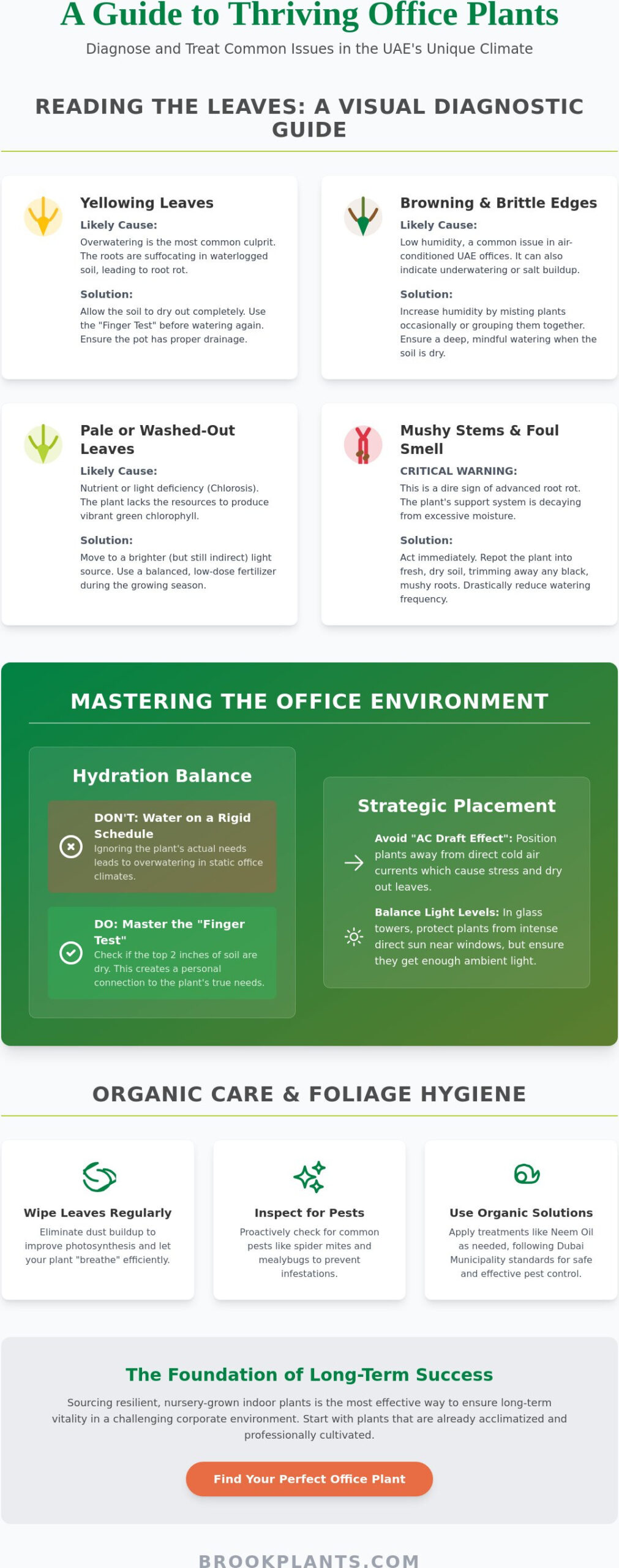
Learning to read the color and texture of your plants is like learning a new dialect. Yellowing leaves are frequently a sign of over-saturation, suggesting the roots are gasping for air in waterlogged soil. In contrast, browning, brittle edges usually point toward the low humidity common in air-conditioned spaces. Always check the texture; mushy stems are a dire warning of rot, while crispy leaves suggest a desperate need for a deep, mindful soak. Chlorosis is a symptom of nutrient or light deficiency where leaves lose their vibrant green and turn pale or yellow. Understanding the common problems with office plants and solutions allows you to act with the precision of a seasoned gardener, ensuring your indoor landscape remains healthy and resilient.
The Hydration and Nutrition Balance: Beyond the Watering Can
Overwatering is the silent giant among common problems with office plants and solutions. In a typical UAE office, where sunlight is filtered and the air is static, moisture evaporates much slower than in an outdoor garden. When roots sit in stagnant water, they begin to rot, effectively suffocating the plant from the bottom up. Detecting root rot early requires a keen eye for yellowing lower leaves and a distinct, sour smell emanating from the soil. While digital moisture meters offer a quick reading, many experienced craftsmen prefer the “Finger Test.” Feeling the soil’s texture and cool dampness two inches below the surface creates a personal connection to the plant’s actual needs rather than following a rigid, arbitrary schedule.
Establishing a watering rhythm also means respecting the natural cycles of growth and rest. Even in a climate-controlled office, plants sense the subtle shifts in light during winter months and enter a period of dormancy where they require significantly less hydration. When it comes to nutrition, a “less is more” philosophy is vital for sustainable health. In low-light settings, plants grow slowly and cannot process fertilizers as quickly as those in bright sun. Applying too much can lead to salt buildup, which eventually burns delicate root tips and stunts growth. For deeper insights into managing these environmental stressors, these indoor plant care tips provide an excellent visual reference for typical symptoms.
Solving the Overwatering Crisis
To rescue a waterlogged plant, first remove it from its pot and carefully inspect the root system. Healthy roots are firm and white, while rotted ones appear brown and feel mushy to the touch. Trim away any decay with sterilized shears and repot the survivor in fresh, well-draining soil. Often, the culprit is a beautiful but impractical container. If your planters lack drainage holes, consider using a functional nursery pot inside the decorative one to allow excess water to escape. Gently aerate the soil with a wooden dowel once a month to encourage oxygen flow, preventing the anaerobic conditions that favor rot.
Underwatering and Soil Hydrophobia
At the other extreme, chronic dehydration manifests as dramatic drooping in Pothos or thin, wrinkled leaves in a Snake Plant. In the UAE’s dry indoor air, soil can become “hydrophobic,” a state where the medium becomes so dry it actually repels water. You’ll notice water simply runs down the sides of the pot without soaking in. Fix this by “bottom watering,” which involves placing the pot in a shallow basin of water for twenty minutes to let the soil wick up moisture. Using high-quality organic matter helps maintain a sponge-like structure that retains moisture. This careful balance is the cornerstone of effective care, turning a struggling office into a thriving green sanctuary.
Navigating the UAE Office Climate: Light, Air, and AC Currents
Living in the Emirates means our indoor environments are governed by sophisticated climate control, yet what keeps us comfortable can be devastating for a tropical plant. One of the most frequent common problems with office plants and solutions in this region involves the “AC Draft” effect. Constant streams of cold air from overhead vents cause rapid desiccation and temperature shock. You might notice a perfectly healthy-looking plant suddenly dropping green leaves; this is a survival reflex to a perceived winter. Strategic placement is your best defense. Position your greenery at least two meters away from direct air currents to maintain a stable micro-climate.
Light in a UAE office is a game of extremes. We often see plants placed directly against floor-to-ceiling glass, only to suffer from “glass heat-traps” where the intense afternoon sun scorches foliage despite the indoor cooling. Conversely, the deep interiors of modern office blocks often fall into a “light desert” where natural photons simply cannot reach. Balancing these extremes requires a craftsman’s eye for placement, ensuring your plants receive the bright, indirect light they crave without the thermal stress of a sun-drenched window.
Optimizing Light in Artificial Environments
Understanding light requires moving beyond “bright” or “dim.” Professionals often measure intensity in Foot Candles or Lux to determine if a space can truly support life. If you notice your plant developing long, weak stems with small leaves, it’s experiencing etiolation, a desperate reach for light. You can correct this by moving the plant closer to a light source or using reflective surfaces. Light-colored walls and mirrors can effectively double the reach of natural light, while choosing the right planters with reflective finishes can bounce vital energy back onto the lower leaves.
The Humidity Struggle in the UAE
The 24/7 HVAC systems in Dubai and Abu Dhabi strip moisture from the air, creating a desert-like environment indoors. While many people believe misting helps, it’s largely a myth that provides only a fleeting boost while risking fungal issues on the foliage. A more sustainable approach involves grouping plants together to trap the moisture they release through transpiration. You can also use pebble trays filled with water to create a localized humidity zone. For areas with particularly aggressive air conditioning, we suggest selecting “desert-hardy” indoor plants like the Snake Plant or ZZ Plant, which have evolved to thrive in low-humidity conditions through their thick, wax-coated leaves.
Organic Solutions for Common Pests and Foliage Fatigue
Maintaining a vibrant office isn’t just about water and light; it’s about protecting the life you’ve cultivated from unseen invaders. Addressing common problems with office plants and solutions often leads us to the microscopic world of pests. In the static air of a UAE workspace, the “Big Three” invaders typically include fungus gnats, spider mites, and mealybugs. Fungus gnats are frequently a secondary symptom of the overwatering issues we discussed earlier, as they thrive in damp, decaying organic matter. Spider mites, conversely, love the parched, dry air generated by 24/7 air conditioning. Mealybugs are perhaps the most deceptive, appearing as tiny tufts of white cotton tucked into the crevices of stems. Identifying these early is a craftsman’s skill that prevents a minor nuisance from becoming a widespread infestation.
Dust is another silent adversary that many professionals overlook. It isn’t just an aesthetic concern; it’s a physical barrier to health. Leaves are the lungs of your plant, covered in tiny pores called stomata that facilitate breathing and photosynthesis. When dust accumulates, it acts like a magnet for spider mites while simultaneously starving the plant of energy. If you’re looking to replace a lost favorite or start fresh with a resilient species, visit our retail ecommerce store to find plants grown with our signature ecological standards.
Natural Remedies for Pest Infestations
We believe in sustainable stewardship, which means avoiding harsh chemicals in your shared workspace. A DIY Neem oil spray is an organic craftsman’s secret weapon. This natural oil, derived from the Neem tree, disrupts the lifecycle of pests without compromising the air quality of your office. For fungus gnats, the solution is often as simple as allowing the top two inches of soil to dry out completely, breaking their breeding cycle. If you spot a heavily infested plant, don’t hesitate to quarantine it in a separate room. This “green social distancing” is vital for preventing a pandemic that could sweep through your entire indoor landscape.
Reviving Dull and Dusty Foliage
A regular leaf-cleaning ritual is the simplest way to boost plant vitality. Use a soft, damp cloth to gently wipe away debris from both the top and underside of the leaves. It’s a startling biological fact that dust layers can reduce light absorption by up to 50%. For plants with broad leaves, a tiny drop of organic coconut oil on your cloth can restore a natural, healthy shine. Pruning is also essential for long-term health. Use sterilized shears to remove dead or yellowing tissue, which allows the plant to redirect its precious energy toward new, vibrant growth. By treating these tasks as a mindful ritual rather than a chore, you ensure your office greenery remains a source of inspiration rather than stress.
Cultivating Long-Term Success with Professional Plant Care
Mastering the daily rituals of plant care is a rewarding journey, yet there comes a point where a professional “green audit” becomes the wisest path for a growing office. While you can certainly manage the common problems with office plants and solutions on your own, an expert eye can identify structural issues like poor soil aeration or systemic imbalances before they lead to leaf drop. We believe that a thriving office is a partnership between the steward and the producer. If you’ve followed the watering and light guides but still find your greenery struggling, it may be time to look closer at the foundation of your indoor ecosystem. Professional sourcing is often the missing link; wholesale indoor plants that are cultivated internally are significantly more resilient than those passed through multiple resellers. These plants are hardened to local conditions from the moment they sprout, ensuring they possess the biological strength to endure the UAE’s unique climate constraints.
Designing for longevity requires more than just picking a beautiful species from a catalog. It involves a technical understanding of your specific office microclimate, from the intensity of the light hitting your corner office to the specific path of the AC currents. We take pride in our role as primary producers, moving away from sterile transactions to provide you with a living legacy. Our commitment to sustainability means we focus on locally-adapted species and ecological production standards that respect the lifecycle of every leaf. When you choose plants that are grown with this level of craftsmanship, you’re reducing the likelihood of the stress responses that so often lead to frustration in the workplace.
The Benefits of Strategic Systems and Sourcing
Investing in the right systems from the start can eliminate the most frequent causes of plant decline. For instance, integrated automatic irrigation removes the guesswork of the “Finger Test” and ensures a steady, rhythmic hydration cycle that mimics nature. Expert monitoring of these systems prevents common problems with office plants and solutions from being reactive; instead, care becomes a proactive practice of health maintenance. This professional approach provides immense peace of mind, allowing you to focus on your work while your green investment pays dividends in employee well-being and air quality. Research shows that a vibrant, well-maintained green space can significantly reduce workplace stress, making the health of your plants a direct contributor to your team’s success.
Creating Your National Green Oasis
Your journey might begin with a few resilient desk plants, but the ultimate goal is often a seamless integration of nature into the workspace. Whether you’re looking to scale up to a lush vertical garden or install a series of custom-designed planters, the Brook Plants approach remains rooted in authenticity. We don’t just supply greenery; we cultivate environments that breathe. By choosing internally cultivated plants and professional indoor landscaping, you ensure that your office remains a vibrant sanctuary for years to come. Transform your office with Brook Plants’ expert indoor landscaping and discover the difference that true craftsmanship makes in your daily professional life.
Nurturing Your Office Sanctuary for the Years Ahead
Transforming a workspace into a thriving ecosystem is a craft that rewards patience and mindful observation. By mastering the balance between air-conditioned currents and natural light, you’ve taken the first step toward resolving the most common problems with office plants and solutions. You now understand that a healthy plant starts with resilient sourcing and a commitment to sustainable stewardship. Since 2004, we’ve dedicated ourselves to this craft, bringing over 20 years of UAE expertise to every project we touch. Our eco-conscious cultivation methods ensure that every leaf we produce is ready to thrive in your professional environment.
We take immense pride in our national coverage, helping businesses across the Emirates realize their vision through expert indoor landscaping and vertical gardens. If you’re ready to move beyond basic care and create a truly remarkable green space, we’re here to guide you. Request a Professional Consultation for Your Office Greenery to benefit from our decades of experience as primary producers. Your office has the potential to be a vibrant, breathing sanctuary that inspires your team every single day. We look forward to being a helpful companion on your journey toward a greener, healthier workspace.
Frequently Asked Questions
Why are the tips of my office plant leaves turning brown and crispy?
Crispy brown tips are usually a sign of low humidity or stress from direct air conditioning drafts. In the UAE’s dry indoor climate, moisture evaporates from leaf edges faster than the roots can replace it. To fix this, move your plant away from vents and consider grouping it with others to create a humid micro-climate. Using a pebble tray with water can also provide a gentle, localized humidity boost without making a mess.
How often should I water my plants in a high-AC office environment?
You should water based on the soil’s moisture level rather than a fixed schedule. Use the “Finger Test” to check the top two inches of soil; if it’s dry, it’s time for a soak. High-AC environments can be deceptive because while the air is dry, the cool temperature slows down the plant’s metabolism. This means they often need less frequent watering than outdoor plants, so always verify the soil moisture first.
Can office plants survive in rooms with no windows or natural light?
Most plants cannot survive long-term in rooms completely devoid of natural light unless you provide full-spectrum grow lights. Photosynthesis is the engine of plant life, and without energy from light, the plant will eventually exhaust its stored reserves and decline. If your office lacks windows, focus on extremely low-light tolerant species like the ZZ Plant or Sansevieria, and consider rotating them into brighter areas every few weeks.
What is the best way to get rid of small flies (gnats) in my office plants?
The most effective way to eliminate fungus gnats is to allow the top few inches of soil to dry out completely between waterings. These small flies breed in damp organic matter, so breaking their moisture cycle is one of the most common problems with office plants and solutions. For a more direct approach, you can apply organic neem oil or use yellow sticky traps to capture adult gnats while the soil dries.
Is it better to water office plants from the top or the bottom?
Bottom watering is often the better choice for ensuring the root ball is thoroughly saturated without compacting the topsoil. This method involves placing the pot in a shallow basin of water for about twenty minutes, allowing the soil to wick up moisture through capillary action. It’s particularly useful for fixing hydrophobic soil that has become too dry to absorb water from the top, ensuring every root receives the hydration it needs.
How do I know if my office plant needs a bigger pot or new soil?
Your plant likely needs a larger pot if you see roots growing through the drainage holes or circling the top of the soil. Another sign is when the plant requires watering much more frequently than before or if its growth has completely stalled despite proper care. When repotting, choose a container only one size larger and use high-quality organic potting soil to provide fresh nutrients for continued health and vitality.
Why is my plant dropping leaves even though the soil is wet?
Dropping leaves while the soil is wet is a classic symptom of root rot, where the roots are suffocating from a lack of oxygen. This is a critical issue in common problems with office plants and solutions because it indicates the plant can no longer drink. Immediately stop watering and check if your planter has proper drainage. You may need to repot the plant in fresh, dry soil and trim away any mushy, brown roots.
What are the most low-maintenance plants for a busy UAE office?
For a busy UAE office, we recommend resilient species like the Snake Plant, ZZ Plant, and Pothos. These varieties are incredibly “desert-hardy” indoors, meaning they tolerate low humidity and infrequent watering cycles with ease. They’re also quite forgiving of the fluctuating light levels found in modern commercial buildings. Starting with these nursery-grown, locally-adapted plants ensures your indoor landscape remains vibrant with minimal daily intervention from your busy team.
Disclaimer
The content on this blog may be automatically generated and is provided “as is” without warranties of any kind, express or implied. No guarantee is made regarding the accuracy, completeness, or suitability of the information. The company expressly disclaims any liability for decisions or actions taken based on this content.
As this blog post was generated using automated content‑creation tools. While our team reviews posts for accuracy and relevance, the information provided may not always reflect the most current developments. The content is intended for general informational purposes only and should not be taken as professional advice. Our company is not liable for any actions taken based on this material.