
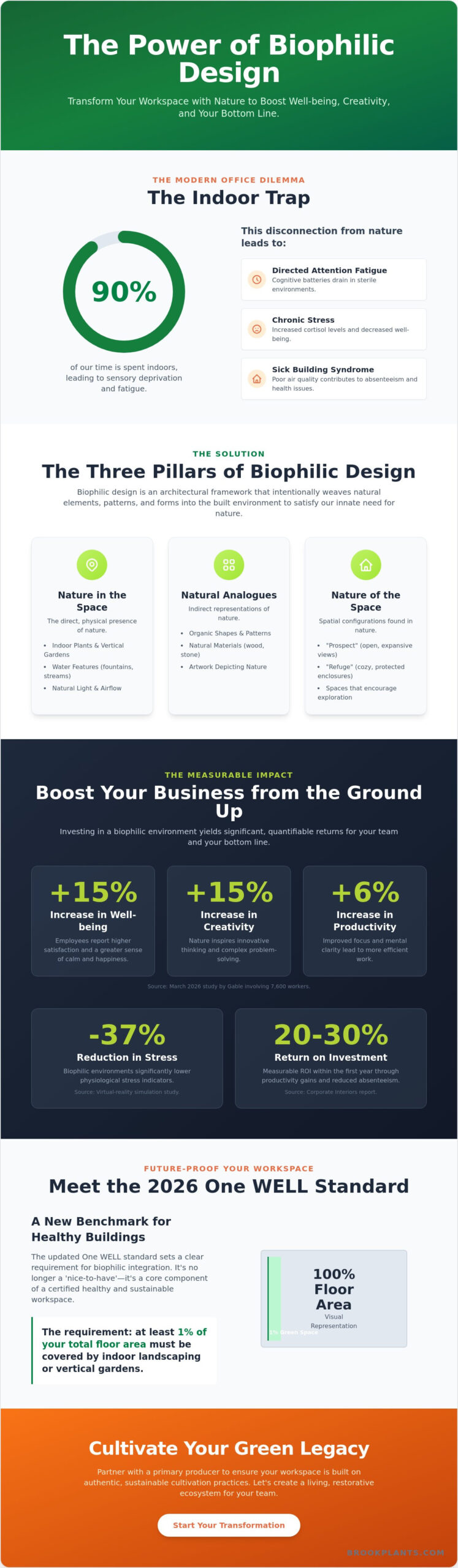
A March 2026 study by Gable involving 7,600 workers found that natural elements in the workplace lead to a 15% increase in well-being and a 15% jump in creativity. These numbers prove that bringing the outdoors in is no longer a luxury but a biological necessity for any thriving business. You’ve likely felt the heavy fatigue that comes from sitting in a sterile, uninspiring environment for hours. It’s a common pain that saps energy and drives up absenteeism, yet it’s entirely avoidable with the right approach to internal cultivation.
Understanding the benefits of biophilic office design is the first step toward creating a workspace that truly breathes. In this guide, we’ll share how strategic nature integration can improve employee focus and provide a measurable 20% to 30% return on investment in the first year, as reported by Corporate Interiors. We’ll also walk you through the updated 2026 One WELL standards and show you how vertical gardens and indoor landscaping can turn your office into a vibrant, sustainable sanctuary that reflects your deep commitment to the natural world.
Key Takeaways
- Reconnect your team with their innate biological need for nature to transform a sterile office into a living, restorative ecosystem.
- Discover the benefits of biophilic office design and how specific natural patterns can recharge the brain’s ability to focus through Attention Restoration Theory.
- Learn how to meet the new 2026 One WELL standards by integrating indoor landscaping that covers at least 1% of your floor area.
- Improve indoor air quality and reduce fatigue by using vertical gardens to filter out common office pollutants and combat Sick Building Syndrome.
- See why choosing a primary producer for your greenery ensures your workspace is built on authentic, sustainable cultivation practices rather than quick fixes.
What is Biophilic Office Design? Reconnecting Biology with Business
For decades, we’ve designed offices as sterile containers of glass and steel, assuming that productivity was purely a matter of discipline and digital tools. This approach ignored a fundamental truth: we are biological beings first and employees second. Biophilic design is a structured architectural framework that weaves natural elements, sunlight, and organic patterns directly into our built environments. It’s much more than a simple aesthetic choice or a trend in “decor.” Instead, it is an intentional effort to reconnect our modern work lives with the natural world we evolved to inhabit.
To see how these principles look in practice, watch this brief overview:
At the heart of this movement is biophilia, our innate biological connection to life and living systems. When we discuss the benefits of biophilic office design, we are looking at a solution that addresses a deep-seated evolutionary hunger. We don’t just “like” plants; our brains are hardwired to thrive when we are surrounded by the textures, sights, and scents of the outdoors. By shifting away from cubicles and toward living, breathing ecosystems, we create spaces that feel supportive rather than draining.
The Three Pillars of Biophilic Design
The first pillar, Nature in the Space, involves the direct presence of elements like indoor plants, water features, and natural light. The second, Natural Analogues, uses organic shapes and sustainable materials like wood or stone to mimic nature’s complexity. Finally, Nature of the Space focuses on spatial configurations. It creates “prospect,” which are open views that provide a sense of safety, and “refuge,” or cozy nooks where a person can feel protected while they focus on deep work.
Why the National Climate Makes Biophilia Essential
In our modern cities, we’ve fallen into an “Indoor Trap.” Statistics show that we spend 90% of our time in air-conditioned interiors, cut off from the rhythms of the sun and the freshness of the air. This isolation leads to sensory deprivation, which often manifests as chronic stress and mental fatigue. Biophilia is a fundamental human requirement for psychological stability. By integrating these elements through thoughtful indoor landscaping, we restore the sensory richness that urban environments often strip away, allowing for a more balanced and healthy lifecycle at work.
Cognitive and Psychological Benefits: Boosting the Bottom Line
The human brain isn’t built for constant, high-intensity focus on digital screens. When we push ourselves too hard in sterile environments, we experience directed attention fatigue. This is where Attention Restoration Theory (ART) comes in. It suggests that looking at nature allows the brain to shift into a state of “soft fascination,” which effectively recharges our cognitive batteries. One of the most immediate benefits of biophilic office design is this mental reset, helping your team stay sharp throughout the day without the usual afternoon slump.
Data from a 2026 study by Gable confirms the psychological benefits of biophilic office design. Employees working in spaces with natural elements reported 15% higher well-being and 15% higher creativity scores. Even more impressive is the 6% increase in productivity. These aren’t just subjective feelings; they’re measurable gains that directly impact your bottom line. By integrating indoor plants from a primary producer who understands the lifecycle of every leaf, you’re investing in the mental clarity of your workforce.
Beyond focus, there’s a profound physical shift in how our bodies react to greenery. Research involving virtual-reality simulations showed a 37% reduction in stress indicators when people moved from standard offices to biophilic ones. This drop in cortisol levels promotes human health and well-being by creating a sense of calm that fosters collaborative problem-solving. It’s much easier for a team to be creative when they aren’t stuck in a “fight or flight” response triggered by harsh lighting and grey walls.
Combating Employee Burnout and Fatigue
Static furniture and whiteboards offer no sensory relief. In contrast, living surroundings provide a dynamic environment that shifts with the light. This constant, subtle change keeps the mind engaged in a healthy way. When employees have visual access to a lush vertical garden, they find psychological comfort that static decor simply can’t provide. It turns the office into a place people actually want to return to, rather than a space they can’t wait to leave.
Attracting and Retaining Top Talent
For today’s eco-conscious professionals, a “Green Office” is a powerful signal. It shows that a company doesn’t just talk about wellness but actively cultivates it. By prioritizing high-quality indoor landscaping, you distinguish your brand from competitors who still rely on uninspiring cubicles. This commitment to a better daily sensory experience helps reduce turnover rates, as people feel a deeper connection to a workplace that honors their biological needs for life and growth.
Physical Health and Air Quality: Breathing Life into the Workspace
Many modern offices suffer from “Sick Building Syndrome,” a condition where poor ventilation and off-gassing from synthetic materials lead to chronic headaches and respiratory issues. One of the most vital benefits of biophilic office design is its ability to turn a stagnant room into a self-cleaning ecosystem. Living plants act as sophisticated bio-filters, actively removing Volatile Organic Compounds (VOCs) released by printers, new carpets, and office furniture. Instead of relying solely on mechanical ventilation, you’re introducing a primary producer—the plant itself—to scrub the air naturally.
In our climate, air conditioning is a necessity, but it often strips the moisture from the air, causing dry eyes and throat irritation. Plants help regulate this through transpiration, a process where they release water vapor into the environment. This natural humidification creates a more comfortable breathing zone, significantly reducing eye strain and skin dryness. By choosing hardy species grown with care in our own nurseries, you ensure these plants are already acclimated to indoor life, ready to support the long-term health of your team.
Natural Light and Circadian Rhythms
Daylighting is crucial for maintaining our internal clocks. When we pair natural light with strategic greenery, we can diffuse harsh sunlight and reduce the glare on computer screens. This balance supports better sleep quality and higher energy levels. In this high-tech world, living plants act as a moral anchor for health, reminding us of our connection to the Earth’s natural cycles even while we work.
Acoustic Comfort and Noise Reduction
Open-plan offices are notorious for distracting echoes. Vertical gardens and large planters serve as organic sound buffers, absorbing high-frequency noises that bounce off hard surfaces. This acoustic dampening helps employees concentrate on complex tasks without the constant hum of background chatter. For a deeper sense of calm, indoor water features provide a gentle “white noise” that masks distractions and lowers stress levels instantly. It’s a simple, elegant way to create a sanctuary of focus amidst the bustle of a busy workday.
Practical Implementation Strategies: Beyond the Potted Plant
Moving from theory to practice requires a shift in mindset from simple decoration to long-term cultivation. To truly unlock the benefits of biophilic office design, you must start with a thorough audit of your site’s light and airflow patterns. Many office environments are notoriously harsh for living things due to high air conditioning and low humidity. This is why we recommend choosing hardy species that have been specifically acclimated to these indoor cycles. As primary producers, we see these plants through their entire lifecycle, ensuring they arrive with the strength to thrive in your specific microclimate.
Once you understand your environment, you can begin the physical transformation. In smaller offices where floor space is at a premium, Vertical Gardens are an ideal solution. They allow you to introduce a high volume of greenery without cluttering walkways. Pair these with natural materials like wood or stone, and use street furniture-style seating to create “refuge” zones where employees can escape the digital hum. Finally, establish a regular professional maintenance cycle to ensure the ongoing vitality of your green investment. If you’re ready to transform your workspace, explore our range of indoor landscaping solutions to find the perfect fit for your office.
Maximizing Impact with Vertical Gardens
Dead wall space represents a missed opportunity for health. By installing a vertical garden, you turn a static surface into a lush, oxygen-producing ecosystem that mimics the forest canopy. This verticality creates a deep biophilic connection, drawing the eye upward and expanding the perceived volume of the room. It also provides an undeniable “wow factor” for visiting partners, signaling that your business prioritizes sustainable growth and team wellness. This is one of the most visible benefits of biophilic office design for modern brands.
Integrating Natural Materials and Textures
A truly biophilic space engages all the senses, not just sight. Tactile biophilia, which is the use of materials that feel good to the touch, is often overlooked in traditional office design. Combine your living plants with organic textiles, stone accents, or timber surfaces to create a balanced, sensory-rich environment. Using large planters as functional room dividers is a clever way to define flexible working zones while keeping the air fresh. This approach ensures your office isn’t just a place to work, but a living sanctuary that supports the lifecycle of your team’s creativity.
Cultivating Your Green Legacy with Brook Plants
Most office design providers act as intermediaries, but we take a different path. We are primary producers, which means we understand the lifecycle of every leaf and stem from the moment it takes root in our nursery. This deep, earthy passion for the craft has been our foundation since 2004. When you choose to partner with us, you aren’t just buying decor; you’re investing in a living legacy. We believe that the true benefits of biophilic office design can only be realized when the plants are healthy, resilient, and perfectly matched to their environment.
Our commitment to sustainability and quality ensures that every installation, from expansive vertical gardens to carefully selected indoor plants, is built to thrive. We take immense pride in our role as cultivators, providing comprehensive solutions that scale with your business. Whether you need custom planters to define flexible work zones or preserved palms to create a sense of grandeur in a lobby, we bring expert knowledge and a nurturing touch to every project. This authentic connection to the natural world is what distinguishes a Brook Plants workspace from a standard office.
Expert Sourcing and Acclimatization
The transition from a nursery to an air-conditioned office can be stressful for any living thing. To ensure long-term vitality, we “harden” our plants, a process of gradual acclimatization that prepares them for the specific cycles of indoor life. Our wholesale network provides access to high-quality international varieties, ensuring we always have the right species for your unique light and airflow conditions. You can learn more about our indoor plant wholesale UAE capabilities to see how we source the best for our clients.
Ongoing Partnership for Vitality
We believe that a green workspace is a journey, not a one-off transaction. Our collaborative approach to design and execution focuses on the long-term health of your ecosystem. By selecting species that are naturally suited to our specific national climate, we help you avoid the common pitfalls of indoor landscaping. We act as a trusted mentor, guiding you through the selection of materials like stone, wood, and organic textiles that complement your greenery. If you’re ready to transform your workspace into a vibrant, restorative sanctuary, Contact Brook Plants & Landscaping for a consultation today. Let’s grow something beautiful together.
Growing a Future Where Business and Nature Thrive
Integrating nature into your office isn’t just about following the latest 2026 design trends. It’s about honoring the deep connection we have with the living world. By focusing on sensory richness and air quality, you create a space that actively supports the people who move through it every day. The long-term benefits of biophilic office design extend far beyond a single season, offering a sustainable way to boost creativity and reduce the stress of modern urban life.
At Brook Plants, we bring over 20 years of expertise in the national green sector to every project. As primary producers of high-quality indoor and outdoor plants, we don’t just supply greenery; we cultivate it with a deep understanding of its lifecycle. Our comprehensive design and execution services ensure your workspace remains a vibrant, healthy sanctuary that reflects your commitment to the planet. Ready to transform your environment? Breathe life into your workspace with Brook Plants today. Let’s work together to grow a workplace that feels as good as it looks.
Frequently Asked Questions
What are the main benefits of biophilic office design?
The core benefits of biophilic office design center on reconnecting our innate biological needs with the modern workspace. This holistic approach fosters a restorative environment that reduces the physiological stress of urban isolation. By weaving living elements into the built environment, you create a space that supports long-term health and psychological stability for every team member.
Is biophilic design expensive to implement in an existing office?
Implementation costs vary based on scale, but biophilic design is a scalable investment rather than a fixed expense. You can begin by introducing high-quality indoor plants in strategic zones or using vertical gardens to maximize impact in smaller areas. Because these elements improve employee focus and air quality, they provide a measurable return on investment through reduced absenteeism and higher engagement.
Which plants are best for low-light office environments?
For low-light areas, we recommend hardy species like Sansevieria, Aglaonema, and the ZZ plant. These varieties are expertly selected for their ability to thrive in the dim, climate-controlled cycles of a typical office. As primary producers, we ensure these plants are properly hardened before they reach you, making them resilient enough to maintain their lush beauty even in corners away from direct sunlight.
How does biophilic design improve employee productivity?
Biophilic design boosts productivity by allowing the brain to recover from the intense focus required by digital work. This process, rooted in Attention Restoration Theory, uses natural patterns to “recharge” cognitive resources. When the mind isn’t constantly fighting the fatigue of a sterile environment, employees can maintain a higher level of creativity and collaborative energy throughout their shift.
Can biophilic design help reduce office noise?
Yes, natural elements like vertical gardens and large planters act as organic sound buffers. These living structures absorb high-frequency background noise and reduce the echo common in open-plan offices. By creating a quieter, more acoustically balanced environment, you allow for deeper concentration and less auditory stress, which is one of the practical benefits of biophilic office design.
Does biophilic design require a lot of maintenance?
While all living things need care, choosing the right species and systems can make the process very manageable. Selecting plants that are already acclimated to indoor air conditioning significantly improves their survival rates. Implementing automatic irrigation systems also ensures that your greenery receives the precise hydration it needs, allowing your green legacy to flourish without becoming a burden on your daily operations.
What is the difference between green decor and biophilic design?
Green decor is simply the superficial addition of plants for aesthetic reasons, whereas biophilic design is a comprehensive architectural strategy. It integrates natural light, organic textures, and spatial layouts that honor our evolutionary need for nature. This deeper approach goes beyond the “look” of a space to fundamentally change how humans interact with their environment and each other.
How do I start implementing biophilic design in a small office?
In a small office, the best way to start is by utilizing vertical space. Vertical gardens provide a high-impact green presence without taking up valuable floor area. You can also replace sterile furniture with pieces made from natural materials like wood or stone. Even small changes, like adding high-quality planters to desks, can begin to restore the sensory connection your team needs to thrive.
Disclaimer
The content on this blog may be automatically generated and is provided “as is” without warranties of any kind, express or implied. No guarantee is made regarding the accuracy, completeness, or suitability of the information. The company expressly disclaims any liability for decisions or actions taken based on this content.
As this blog post was generated using automated content‑creation tools. While our team reviews posts for accuracy and relevance, the information provided may not always reflect the most current developments. The content is intended for general informational purposes only and should not be taken as professional advice. Our company is not liable for any actions taken based on this material.