
In the heart of the Emirates, the sun isn’t just a source of light; it’s a relentless force that can turn a beautiful park bench into a blistering liability in a single afternoon. Selecting the wrong street furniture materials for UAE climate often leads to the frustration of watching vibrant designs fade or realizing too late that a metal seat has become far too hot to touch. We know you want to create urban spaces that invite people to linger, yet the reality of rapid UV degradation and mounting maintenance costs can be a significant hurdle. It’s a challenge we respect deeply as craftsmen who value both beauty and endurance.
We believe your outdoor projects should be sanctuaries of comfort that stand the test of time. This 2026 resilience guide explores how to select high-performance materials like Iroko wood and granite that offer 10 plus year lifespans even in extreme humidity. You’ll learn how to balance modern aesthetics with thermal comfort, ensuring your public spaces remain cool and inviting. We’ll walk through the specific material science that reduces maintenance cycles and honors the long-term health of our environment.
Key Takeaways
- Understand the “triple threat” of UV, humidity, and abrasive dust to ensure your urban installations don’t degrade within their first few seasons.
- Identify why powder-coated aluminium and Grade 316 stainless steel are the professional standards for managing thermal heat and coastal corrosion.
- Compare the enduring charm of Iroko and Teak hardwoods with the functional benefits of modern composites to achieve a perfect balance of beauty and resilience.
- Learn how selecting specific street furniture materials for UAE climate can actively reduce the urban heat island effect and improve the local microclimate.
- Gain insights into our craftsman approach that views every planter and bench as a vital, integrated piece of a thriving outdoor ecosystem.
The UAE Climate Challenge: Why Material Selection Dictates Longevity
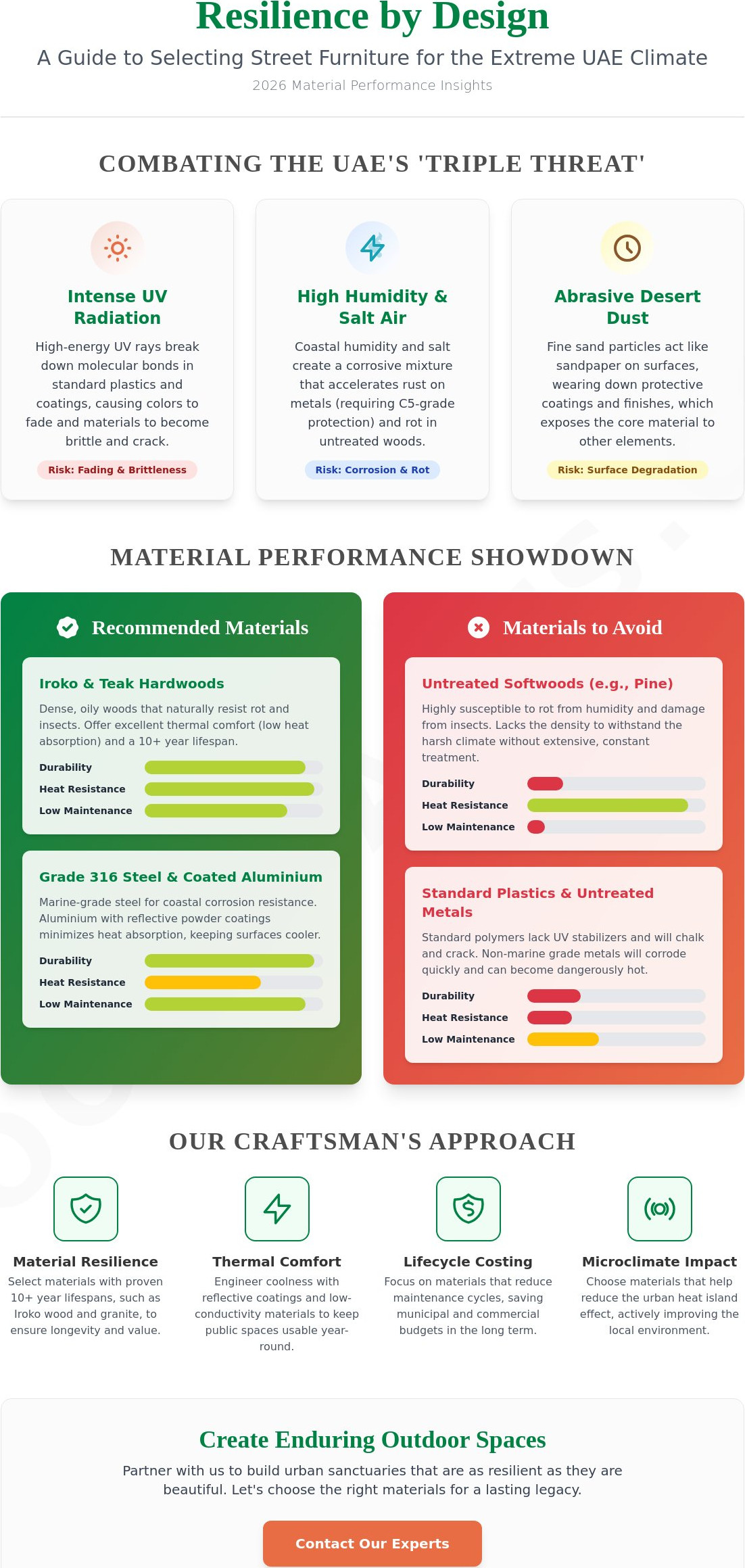
Designing public spaces in the Emirates requires more than an eye for beauty. It demands a deep understanding of how the environment interacts with every surface. While a comprehensive overview of street furniture reveals its vital role in shaping social interaction, the local climate dictates the ultimate success of any installation. We often see standard “outdoor” furniture imported from Europe or Asia that begins to fail within months. These pieces aren’t built for the “Triple Threat”: intense UV radiation, high humidity, and abrasive desert dust. Selecting the right street furniture materials for UAE climate is a financial imperative as much as an aesthetic one.
Poor material choices lead to rapid degradation, which can quickly strain municipal and commercial budgets with high replacement costs. In 2026, urban planners are shifting toward “Material Resilience.” This philosophy moves away from temporary fixes and focuses on the long-term lifecycle of every bench, planter, and shade structure. It’s about choosing elements that grow more distinguished with age rather than succumbing to the elements. By understanding the science of how materials breathe and resist heat, we can create urban landscapes that remain functional and inviting for decades.
To better understand how different materials react to the elements, watch this helpful video:
UV Degradation and Polymer Breakdown
The Arabian sun is a powerful catalyst for chemical change. High-energy UV rays penetrate standard plastics and coatings, breaking down the molecular bonds that provide structural integrity. Without specialized UV stabilizers, polymers undergo a process called chalking. This is where the surface turns into a white, powdery residue. You’ll notice colors fading and materials becoming brittle, eventually cracking under the slightest pressure. We prioritize street furniture materials for UAE climate that have built-in resistance, ensuring the sun’s intensity doesn’t compromise the safety or beauty of the piece.
Humidity and Salt-Air Corrosion
Along the coast, humidity creates a persistent film of moisture that, when mixed with salt and desert dust, becomes a corrosive paste. Standard rust-resistant finishes often fail because they lack C5-grade protection, the industrial benchmark for high-salinity environments. This moisture gets trapped in the fine grains of sand that settle on surfaces, accelerating oxidation in metals and rot in softer woods. It’s why we advocate for marine-grade stainless steel and dense hardwoods that naturally resist these damp, salty cycles. Protecting against corrosion is a matter of choosing materials that can withstand the unique chemical cocktail found in our coastal air.
Metals and Composites: Engineering Coolness in Extreme Heat
We’ve all felt the sharp, unwelcome sting of a metal bench during a peak August afternoon. While metal is often chosen for its structural integrity, it can become a liability if the thermal properties aren’t carefully managed. Choosing the right street furniture materials for UAE climate means looking beyond simple durability; it requires a focus on tactile comfort. Metal surfaces act as heat sinks, absorbing radiation and contributing to the urban heat island effect. To combat this, we look to materials and coatings that reflect energy rather than store it, ensuring a seat remains a place of rest rather than a source of discomfort.
Advanced engineering has introduced reflective pigments into modern powder coatings. These specialized finishes can significantly lower surface temperatures compared to standard paints. When we pair these coatings with materials that have lower thermal conductivity, we create pieces that are safe for public use year-round. It’s a delicate balance of science and care. For those looking to integrate these resilient elements into a wider landscape, exploring thoughtfully curated street furniture can provide a starting point for building a cooler, more inviting urban sanctuary.
The Superiority of Powder-Coated Aluminium
Aluminium has earned its place as the gold standard for thermal performance in our region. Its excellent weight-to-strength ratio makes it ideal for modular designs that need to withstand Abu Dhabi’s 150 km/h wind speed standards without becoming cumbersome. The powder coating process creates a non-porous barrier that is exceptionally resistant to sand abrasion. Unlike liquid paint, this finish doesn’t peel or bubble under the sun. It maintains its vibrant color and structural health, acting as a protective skin that keeps the internal metal cool and shielded from the abrasive desert winds.
Steel Grades and Surface Treatments
When the project demands the unmatched strength of steel, the choice between Grade 316 and 304 is non-negotiable. In our high-humidity coastal environments, SS 316 is the only reliable option. It contains molybdenum, which provides a critical defense against the “pitting” corrosion caused by salt air. While SS 304 might suffice in arid inland regions, it quickly fails near the shore. We often recommend combining these high-grade steels with modern epoxy coatings or hot-dip galvanization. These treatments ensure a lifespan that exceeds a decade, though they do require a simple, regular cleaning cycle to prevent dust from trapping corrosive moisture against the surface.
Natural vs. Synthetic: The Debate Over Timber and Composites
There’s a timeless, grounding quality to the feel of wood under your hands. In our bustling urban centers, natural textures provide a vital connection to the earth, softening the hard edges of glass and steel. However, when we talk about street furniture materials for UAE climate, the choice between organic timber and engineered composites is often a tug-of-war between artisanal beauty and sheer survival. We’ve spent years observing how different species and blends react to the 50°C summer peaks, and we’ve learned that both have a place in a well-crafted landscape if chosen with intention and care.
The tactile benefit of wood-like materials can’t be overstated. Unlike metal, which can store heat until it’s painful to touch, timber and high-quality composites remain relatively cool. This thermal comfort is essential for creating spaces where people actually want to gather. By integrating these materials with shaded structures and greenery, designers can implement effective strategies to reduce urban heat, turning a sun-drenched plaza into a breathable retreat. It’s about more than just a bench; it’s about the health of the urban ecosystem.
Hardwood Selection for the UAE
For those who won’t settle for anything less than the real thing, hardwoods like Teak and Iroko are the only path forward. These species are naturally saturated with high oil content, which acts as an internal shield against the desert’s moisture-wicking air. We take immense pride in sourcing FSC-certified Iroko, a choice that honors both the craftsman’s standards and the planet’s future. It’s a resilient wood that can carry a 10-year warranty when treated with the respect it deserves. Untreated softwoods quickly succumb to the desert’s extreme dryness, leading to deep structural cracks and splintering that make them a significant liability in the UAE.
The Rise of High-Performance Composites
Wood Plastic Composites (WPC) have come a long way from the brittle plastics of the past. Modern, high-performance WPC is engineered specifically to handle thermal expansion. This is a critical detail in our region, as a poorly designed composite bench can warp or buckle when the mercury rises. These materials often incorporate recycled content, helping projects meet stringent green building certifications while offering a nearly maintenance-free life. Keeping them beautiful is a simple matter of regular cleaning to remove fine desert sand from the textured surfaces, ensuring the material’s “grain” remains clear and inviting for years to come.
Sustainability and Microclimates: The Environmental Impact of Materials
We believe that every piece of furniture placed in a public square acts as a silent participant in the local environment. It’s not enough for a bench to simply exist; it must contribute to the thermal health of its surroundings. When we curate street furniture materials for UAE climate, our goal is to mitigate the Urban Heat Island effect, a phenomenon where hard surfaces trap and re-radiate sun energy. By selecting materials with high solar reflectance or low thermal mass, we can lower the ambient temperature of a plaza, making it a more breathable space for everyone. This approach treats the urban landscape as a living, breathing entity rather than a collection of static objects.
Durability is the ultimate expression of sustainability in our craft. A granite bench, for instance, can offer up to 35% cost savings over its lifetime due to minimal upkeep. Some high-quality granite installations even carry a 50-year warranty. This longevity means fewer resources are extracted and less waste is generated over time. It’s a patient, traditional approach to quality that feels more relevant than ever in a world often focused on the temporary. By choosing materials that thrive for decades, we honor the lifecycle of our products and the long-term health of the planet.
Materials and the Urban Heat Island
Choosing low-albedo materials is a simple yet profound way to reduce ambient heat radiation. Light-colored stone or specialized coatings reflect the sun’s rays instead of absorbing them. We’ve found that when benches and planters are strategically grouped, they create “cooling pockets.” These clusters provide a refuge from the heat, especially when paired with native greenery. We also prioritize local assembly whenever possible to reduce the ecological footprint of long-distance shipping, ensuring our commitment to environmental stewardship is as strong as our products.
Synergy with Landscaping
True craftsmanship involves understanding how hardscape elements interact with living plants. Our street furniture is designed to complement automatic irrigation systems, ensuring that moisture levels remain balanced without damaging the furniture’s base. If a material becomes too hot, it can radiate that heat into the soil, stressing the root systems of nearby palms and flowers. We focus on creating a cohesive aesthetic where the material choice supports the long-term health of the entire softscape. If you’re ready to design an urban space that truly thrives, you can discover our resilient street furniture collection here.
From Selection to Installation: The Brook Plants Craftsman Approach
We don’t view a bench or a planter as a solitary object. Instead, we see it as a vital thread in the urban tapestry, a functional piece of a larger, living ecosystem. When we help you select street furniture materials for UAE climate, we’re drawing on a deep, earthy passion for craftsmanship that prioritizes the long-term health of our public spaces. We’re primary producers, not just intermediaries. This means we have a personal connection to the lifecycle of every piece we create, ensuring that the material science we’ve discussed translates into a tangible sanctuary for the community. It’s a journey that moves from the “why” of resilience to the “how” of beautiful, lasting installation.
The integrity of your streetscape depends on more than just the material itself; it relies on how that material is anchored into the environment. Professional installation is the silent guardian of structural health. In regions like Abu Dhabi, where structures must withstand wind speeds of up to 150 km/h, the precision of the fit is non-negotiable. We’re dedicated to ensuring that every element is installed with the patience and expertise required to survive the desert’s shifting cycles. While we don’t offer maintenance services, we act as a trusted mentor, providing the specific instructional highlights you need to keep your assets thriving for decades.
The Art of Custom Street Furniture
Every urban project has a unique pulse. We collaborate closely with architects to ensure that material finishes don’t just survive the heat but also tell a compelling brand story. This might mean tailoring the reflective pigments on an aluminium frame or selecting a specific grain of Iroko wood that complements the surrounding architecture. We’ve seen how durable installations, when thoughtfully customized, become landmarks that stand the test of time. It’s a balance of aesthetic vision and the practical realities of our climate. We help you choose street furniture materials for UAE climate that feel authentic to your site, ensuring the final result is as beautiful as it is resilient.
Your Partner in Urban Excellence
Brook Plants & Landscaping LLC bridges the gap between high-level design and the grit of durability. We’re proud to support national goals for green urban development, creating spaces that feel cool, inviting, and ecologically responsible. Whether you’re looking for resilient street furniture or integrating hardscapes with comprehensive outdoor landscaping, we’re here to guide your choices. Our approach is rooted in traditional values of quality and care, yet we embrace modern sustainable practices to protect our planet. We invite you to reach out for a consultation to see how our craftsman’s perspective can elevate your next streetscape project into a lasting urban legacy.
Shaping the Future of Our Urban Sanctuaries
Creating public spaces that breathe and endure requires a patient, knowledgeable approach to material science. By prioritizing elements that resist UV breakdown and manage thermal heat, you’re doing more than just installing a bench. You’re fostering a healthier microclimate and reducing long-term waste through sheer durability. This guide has shown how the right metals, woods, and composites can transform a sun-drenched plaza into a cool, inviting retreat that respects the natural world. Choosing the right street furniture materials for UAE climate is the first step in building a legacy of comfort and care.
Since 2004, we’ve applied our earthy passion for the craft to national projects across the UAE, ensuring every installation meets the highest standards of resilience. We take immense pride in our expert material selection, treating every project as a vital part of our shared environment. If you’re ready to bring a touch of artisanal care to your next development, explore our range of climate-resilient street furniture and discover the difference that genuine craftsmanship makes. Let’s work together to cultivate urban spaces that thrive for generations to come.
Frequently Asked Questions
What is the most durable street furniture material for the UAE sun?
Granite and powder-coated aluminium are the most resilient choices for withstanding the intense desert sun. Granite is exceptionally tough; some installations for the RTA even carry a 50-year warranty and can offer up to 35% cost savings over their lifetime due to minimal upkeep. Powder-coated aluminium is also a gold standard because it resists UV degradation and doesn’t rust or peel, even when temperatures soar.
Does wood furniture survive in the UAE climate?
Wood survives beautifully if you select high-density hardwoods like Teak or FSC-certified Iroko. These species have a high natural oil content that acts as a shield against the drying desert air, preventing the structural cracking common in cheaper softwoods. When sourced and treated correctly, Iroko wood can provide a reliable lifespan of 10 years or more in our local environment.
How do you prevent metal benches from getting too hot in the summer?
We prevent heat absorption by using advanced powder coatings with reflective pigments that lower surface temperatures. It’s also effective to combine metal frames with seating surfaces made from timber or wood-plastic composites. These materials have lower thermal conductivity, ensuring the bench remains comfortable to touch even during the peak of an August afternoon.
What is the difference between SS 304 and SS 316 for outdoor use?
Grade 316 stainless steel is the essential choice for the UAE because it contains molybdenum, which protects against the pitting corrosion caused by salty, humid coastal air. Grade 304 lacks this protection and will quickly develop tea-staining and rust when used outdoors. For any urban project near the shoreline, the “marine grade” 316 is a non-negotiable standard for longevity.
Are recycled plastic composites good for UAE public spaces?
High-performance Wood Plastic Composites (WPC) are excellent for public areas as they don’t warp or splinter in 50°C temperatures. These materials are engineered to handle thermal expansion and often incorporate recycled content, helping projects meet modern green building certifications. They offer the warm look of wood with a much lower need for regular treatment against the elements.
How often does street furniture need maintenance in a dusty environment?
A simple monthly rinse is usually enough to remove the abrasive desert dust that can trap moisture and accelerate corrosion. While we don’t provide maintenance services, we always advise that keeping surfaces clear of sand buildup is the best way to extend the life of your assets. Granite requires the least frequent attention, while metal surfaces in high-traffic areas benefit from more regular care.
Can street furniture help reduce urban heat in UAE cities?
Selecting the right street furniture materials for UAE climate can actively lower the ambient temperature of a plaza. By choosing low-albedo materials that reflect solar energy rather than storing it, you help mitigate the urban heat island effect. When these benches and planters are grouped together, they create cooling pockets that make the city more breathable for everyone.
Disclaimer
The content on this blog may be automatically generated and is provided “as is” without warranties of any kind, express or implied. No guarantee is made regarding the accuracy, completeness, or suitability of the information. The company expressly disclaims any liability for decisions or actions taken based on this content.
As this blog post was generated using automated content‑creation tools. While our team reviews posts for accuracy and relevance, the information provided may not always reflect the most current developments. The content is intended for general informational purposes only and should not be taken as professional advice. Our company is not liable for any actions taken based on this material.