
What if the most vibrant gardens in Dubai and Abu Dhabi aren’t the ones being constantly drenched, but those that have learned to embrace the desert’s rhythm? It’s a common story for gardeners here. You bring home a beautiful arrangement only to see it scorched by the July sun or lost to root rot from a well-intentioned watering can. We understand that frustration because we’re growers too. Cultivating succulent plants in the UAE requires a shift in perspective, moving away from thirsty tropicals toward architectural beauties that are naturally built for our arid climate.
You can create a stunning, resilient landscape that stays lush without sending your water bill soaring. In this guide, we’ll show you how to transform your balcony or villa garden into a water-wise sanctuary. You’ll discover which varieties, from the striking Haworthia to trailing Sedum, truly flourish in our heat. We’ll share our professional secrets on peat-free soil mixes and smart irrigation techniques that can reduce your water usage by up to 60%. You’ll gain the confidence to design a professional, low-maintenance landscape that thrives all year round.
Key Takeaways
- Identify the specific species, from ground covers to indoor air purifiers, that are naturally adapted to flourish in the unique UAE climate.
- Discover the essential balance of light and drainage, including why a peat-free approach is vital for long-term plant health and sustainability.
- Learn the “soak and dry” watering technique to keep your succulent plants resilient against root rot while maintaining their vibrant, architectural shapes.
- Get inspired by professional landscaping strategies, such as vertical gardens and smart irrigation, to achieve a lush sanctuary that respects our natural resources.
Understanding Succulent Plants: Nature’s Water-Wise Architects
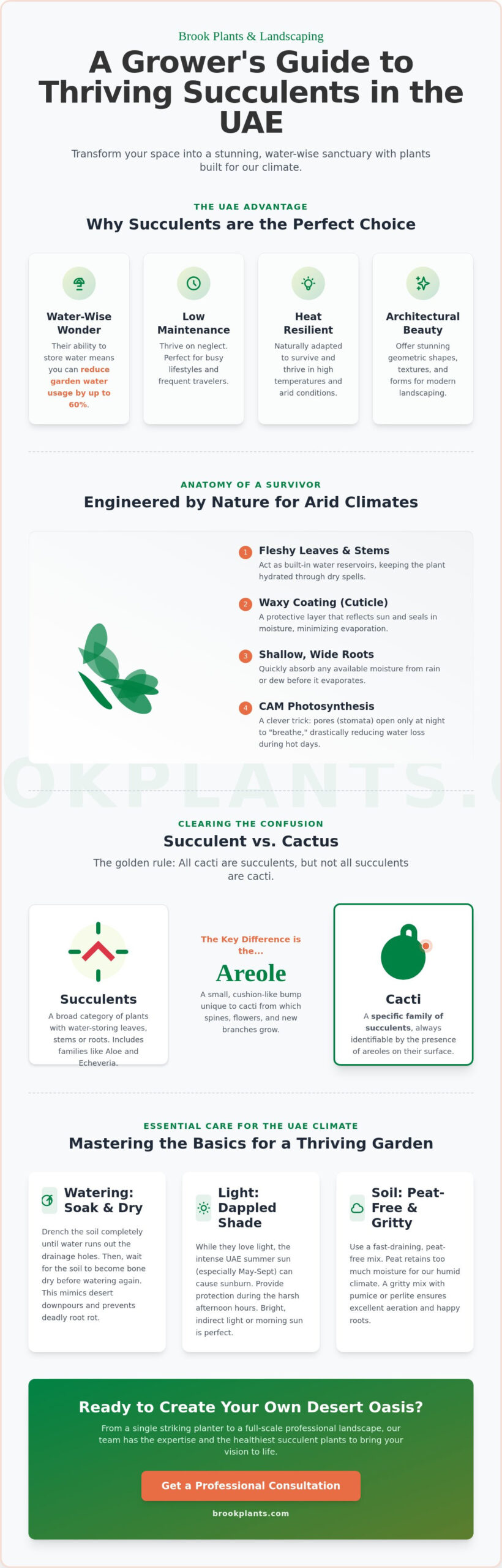
There is a quiet strength in a garden that doesn’t demand constant attention. A succulent plant is a master of economy, defined by its thickened, fleshy organs that act as built-in reservoirs. These botanical architects have spent centuries adapting to arid environments, evolving to store life-giving moisture in their leaves, stems, or roots. This natural ability allows them to remain lush and vibrant even when the UAE summer is at its peak and other plants begin to falter.
Their appeal goes far beyond simple survival. Succulents offer a striking architectural quality, with geometric rosettes and structural forms that feel like living sculptures in your home or garden. You’ll find a sensory feast in their varied textures, from waxy, sun-reflecting coatings to delicate, vibrant floral blooms that surprise you during the cooler months. The diversity is truly breathtaking, ranging from tiny, ground-hugging rosettes that knit together as a living carpet to towering desert trees that provide height and drama to a landscape border.
To see these resilient beauties in action and learn how they handle extreme temperatures, watch this helpful video:
The Anatomy of a Survivor
In the world of succulents, every cell has a purpose. The roots are typically shallow but expansive, ready to drink up the smallest amount of moisture before the desert heat evaporates it. Inside the leaves and stems, specialized tissues hold onto water with incredible efficiency. Many of these plants utilize a unique process called CAM photosynthesis. By keeping their pores closed during the heat of the day and only opening them at night to exchange gases, they minimize moisture loss. Succulent plants are the ultimate drought-tolerant botanical solution for any gardener looking to balance beauty with environmental responsibility.
Succulents vs. Cacti: Clearing the Confusion
It’s a common mix-up we see at the nursery, but the rule is simple: all cacti are succulents, but not all succulents are cacti. The secret lies in a botanical feature called an “areole.” These are small, rounded, cushion-like bumps where spines, hairs, or flowers emerge. If you see an areole, you’re looking at a member of the cactus family. To help you identify what’s growing in your collection, keep this quick visual checklist in mind:
- Crassulaceae: Think of the classic Echeveria; they usually form tight, symmetrical rosettes with thick, waxy leaves.
- Asphodelaceae: This family includes Aloe and Haworthia, known for their pointed, structural leaves and often vibrant, toothy ridges.
- Aizoaceae: These are the “living stones” like Lithops that mimic their rocky surroundings to stay hidden from thirsty animals.
Why Succulents Thrive in the UAE National Climate
The UAE’s climate is a rigorous testing ground for any greenery, but succulent plants have a biological head start that makes them uniquely qualified for our gardens. Their design is a direct answer to high temperatures and sparse rainfall. While traditional garden favorites might wilt within hours of a Shamal wind, these resilient species remain plump and sturdy. They’ve evolved to thrive where others struggle, making them the natural choice for the region’s push toward sustainable development through xeriscaping. By selecting plants that are built for the desert, we create landscapes that are in harmony with our environment rather than in competition with it.
There’s a common myth that every succulent craves the most intense, direct summer sun available. In the reality of a 50°C August day in Dubai, even the hardiest species can suffer from sunburn. Protecting your collection during these peak months isn’t just about plant health; it’s part of a broader commitment to environmental conservation. By choosing plants that belong in an arid landscape, we stop fighting the desert and start working with it. For those just starting their journey, this Succulent Care Guide provides a solid foundation for understanding these unique light and water needs.
Beating the Heat: Summer Adaptation Strategies
Ideal for balconies and villa gardens, dappled shade is the secret weapon of the UAE gardener. During those peak afternoon hours when the sun is at its most punishing, a bit of light filtering through a pergola or a larger canopy makes all the difference. Humidity also plays a massive role in your care routine. If you’re near the coast in Abu Dhabi, your plants might need less frequent watering than those in the drier, inland heat of Al Ain, as they can absorb some moisture from the air.
Gardener’s Note: It’s easy to confuse heat stress with thirst. If your plant looks pale, yellowed, or develops soft brown patches, it’s likely getting too much direct sun and needs a cooler spot. If the leaves are simply wrinkled, thin, and losing their plumpness, it’s a clear sign they’re ready for a deep soak.
Water Conservation and Sustainability
Choosing a water-wise garden design significantly slashes domestic water consumption. Data indicates that integrating drought-resistant species with smart irrigation systems can reduce water usage by 50-60% compared to traditional, turf-heavy gardens. This shift is essential for the long-term health of our planet. At Brook Plants & Landscaping LLC, we take pride in being 100% peat-free. We believe that the beauty you add to your home shouldn’t come at the cost of destroying delicate peatland ecosystems elsewhere. Our plants are grown by us with this eco-conscious philosophy at the heart of everything we do.
If you’re looking to transform your outdoor space into a resilient oasis, our team can help you design outdoor landscaping that balances architectural beauty with genuine environmental care.
Top Succulent Varieties for National Gardens and Interiors
Choosing the right succulent plants involves more than just picking an attractive shape; it’s about matching a plant’s natural strength to the specific microclimate of your home or garden. At Brook Plants & Landscaping LLC, we believe in the philosophy of “right plant, right place.” Because these varieties are grown by us, we’ve seen firsthand how they respond to the shifting UAE seasons. Whether you’re looking to fill a sprawling villa border or a compact office desk, there’s a resilient beauty waiting to take root in your space.
Outdoor Champions: Agave and Aloe
Ideal for adding architectural drama to a landscape, Agave desmettiana (Smooth Agave) is a true standout. Its vibrant, curving leaves create a sense of movement in the garden without the sharp spines found on its cousins. When grouped together, these large-scale succulents create a lush, structural border that remains green through the most intense heatwaves. For a more functional addition, Aloe barbadensis Miller (Aloe Vera) is indispensable. It serves a dual role as both an ornamental focal point and a medicinal resource, thriving in the sandy soils of our region.
Gardener’s Notes: While Agaves are incredibly hardy, they are “monocarpic,” meaning they bloom once at the end of their long life. Don’t be alarmed; they usually leave behind plenty of “pups” or offsets to continue their legacy in your garden.
Indoor Elegance: Sansevieria and Haworthia
Thrives in the dappled light of a living room or even the dimmer corners of an office, Sansevieria trifasciata (Snake Plant) is the undisputed king of indoor air. It’s a delicate-looking but rugged air purifier that works through the night to refresh your space. For those with limited room, Haworthia attenuata (Zebra Plant) offers intricate, white-striped textures in a compact form. These smaller gems are perfect for stylish planters on a coffee table or windowsill. If you’re looking to green a larger commercial project, our guide to indoor plant wholesale uae provides the professional insights needed for large-scale sourcing.
Gardener’s Notes: The biggest threat to indoor succulents isn’t the lack of sun, but the kindness of overwatering. Always use a 100% peat-free potting mix to ensure the roots can breathe and stay healthy in a container environment.
- Agave desmettiana: Best for focal points and structural landscaping.
- Aloe barbadensis Miller: Ideal for sunny borders and medicinal use.
- Sansevieria trifasciata: Perfect for low-light interiors and air purification.
- Haworthia species: Suited for compact indoor displays and desk plants.
Succulent Care: From Peat-Free Soil to Smart Irrigation
Caring for succulent plants isn’t about neglect; it’s about understanding a different botanical rhythm. While many plants thrive on consistent moisture, succulents prefer a cycle of abundance followed by total drought. This “soak and dry” method is the golden rule for UAE gardeners. You should drench the soil until water pours from the drainage holes, then wait until the substrate is bone dry before watering again. This approach mimics natural desert rainfall and is the most effective way to prevent root rot, which is the leading cause of plant loss in our region.
The foundation of this health cycle is the quality of the plant itself. Because our nursery stock is grown by us, each specimen is already acclimated to the local light and humidity levels. Brook Plants & Landscaping LLC doesn’t just sell plants; we nurture them from the start to ensure they have the resilience to thrive in your home. To keep them looking their best, seasonal feeding is essential. During the cooler growing months from October to April, a balanced, diluted fertilizer provides the nutrients needed for those vibrant blooms and architectural growth we all love.
The Peat-Free Revolution
At Brook Plants & Landscaping LLC, we take a firm stand on environmental responsibility by being 100% peat-free. Traditional potting mixes often rely on peat harvested from delicate bog ecosystems, a process that releases massive amounts of stored carbon into the atmosphere. We’ve developed gritty, sustainable alternatives that better suit the needs of succulents in the UAE. The ideal soil composition here should be a mix of coarse sand, perlite, and fine gravel to ensure maximum aeration. These peat-free alternatives significantly improve drainage and root oxygenation, preventing the heavy, water-logged conditions that succulents despise.
Smart Irrigation and Drainage
For larger residential landscapes or villa gardens, manual watering can become inconsistent. Integrating automatic irrigation ensures that your water-wise sanctuary receives the precise amount of hydration it needs without waste. This is particularly important for plants in large planter boxes, which can dry out faster than those in the ground. Always ensure your containers have adequate drainage holes; without them, even the most advanced irrigation system will eventually lead to stagnant water and unhealthy roots. Before you reach for the hose, use this quick moisture checklist:
- The Finger Test: Insert your finger two inches into the soil. If you feel any coolness or moisture, wait a few more days.
- The Weight Test: Pick up your pot. If it feels surprisingly light, the root ball is likely dry.
- Leaf Texture: If the lower leaves feel slightly soft or look wrinkled, the plant is using its stored reserves and is ready for a soak.
Ready to start your sustainable garden journey? Explore our full range of resilient, locally grown species at brookplants.com and find the perfect fit for your space.
Professional Landscaping with Succulent Plants
Many people think of succulent plants as solitary residents of a ceramic pot. While they look lovely on a windowsill, their true potential is realized when they’re used as the architectural foundation of a professional landscape. Designing a desert garden doesn’t mean settling for a barren, sandy lot. By layering different heights, textures, and colors, we can create a space that feels incredibly lush and inviting while remaining strictly water-wise. It’s about using the bold, structural shapes of larger species like Agave to anchor the view, then filling the gaps with vibrant, ground-hugging rosettes that knit the design together. This layering technique prevents the “empty” look often associated with desert gardening, replacing it with a dense, tapestry-like effect that stays green throughout the year.
Vertical Gardens and Urban Greenery
Urban villas in cities like Dubai often face the challenge of limited horizontal space. This is where vertical gardens become a game-changer. Succulents are ideal candidates for these living walls because their low water requirements mean less weight and complexity in the support structures. We often frame these displays with custom planters or integrate them alongside street furniture to create cohesive, green pockets in otherwise concrete environments. This approach enhances the aesthetic beauty of a property and provides a cooling effect that makes outdoor spaces more usable during the warmer months. When you choose plants that are grown by us, you’re ensuring that your vertical display is built with specimens already acclimated to the local humidity and light.
Wholesale and Commercial Solutions
Beyond private gardens, we play a significant role in the national greening effort by distributing high-quality imported plants to retailers across the UAE. For commercial projects, the benefits of professional landscape execution are clear. Large-scale developments require plants that can handle the “urban heat island” effect found in our city centers. We take pride in being more than just resellers; our expertise ensures that the aesthetic beauty of a public park or hotel entrance doesn’t fade after the first summer. While these plants are famous for their independence, commercial green spaces thrive best when a professional care schedule is established to monitor irrigation and soil health. This long-term perspective is what separates a temporary display from a permanent, sustainable sanctuary.
If you’re ready to move beyond the occasional pot and transform your entire property into a resilient masterpiece, we’re here to guide you. Contact Brook Plants for your professional landscape design and execution to see how we can bring a water-wise sanctuary to your home or business.
Cultivate Your Own Desert Oasis
Creating a vibrant, resilient garden in the heart of the UAE is entirely within your reach when you work with nature’s own water-wise architects. By selecting the right varieties and respecting the seasonal rhythms of our climate, you can enjoy a lush landscape that requires minimal resources. Remember that the secret to thriving succulent plants lies in the foundation: using gritty, peat-free soil and perfecting the soak and dry watering technique to keep roots healthy and strong.
At Brookplants, we’ve been dedicated horticulturalists since 2004. We take immense pride in our sustainable, 100% peat-free growing methods, ensuring that every plant is grown by us to be as hardy as it is beautiful. Whether you’re looking for a single architectural focal point or a complete vertical garden, we offer national delivery to bring our expertise directly to your door. Our team is ready to help you move from inspiration to execution, making your vision of a low-maintenance sanctuary a reality.
Transform your space with Brook Plants & Landscaping and discover the joy of a garden that truly belongs in the desert. We can’t wait to see what you grow.
Frequently Asked Questions
How often should I water succulent plants in the UAE summer?
You should water your succulent plants approximately once every 7 to 10 days during the peak UAE summer, depending on their specific location. It’s vital to let the soil dry out completely between sessions to prevent root rot. If your plants are in a very exposed, windy spot on a high balcony, they might need a drink sooner. Always check the first two inches of substrate before reaching for the watering can.
Can succulents grow in full sun in the desert?
Most succulents prefer bright, indirect light or dappled shade during the punishing afternoon hours of a desert summer. While species like Agave can handle intense exposure, many others will suffer from scorched leaves if left in the midday sun. Providing a bit of protection from the 12 PM to 4 PM rays ensures your garden stays vibrant and healthy throughout the year. It’s all about finding that perfect balance of light.
What is the best soil for succulents in the UAE?
The best soil is a gritty, well-draining mix that is 100% peat-free to support both your plants and the planet. We recommend a blend of coarse sand, perlite, and volcanic rock to ensure maximum aeration. This specific composition prevents the roots from sitting in stagnant water, which is essential for health in our humid coastal regions. Our “grown by us” specimens are always started in this high-quality, sustainable substrate.
Why are the leaves on my succulent turning yellow or mushy?
Yellow or mushy leaves are almost always a sign of overwatering and the beginning of root rot. If the foliage feels soft and translucent, the plant has taken in too much moisture. Stop watering immediately and check if the drainage holes in your planter are blocked. In many cases, you’ll need to repot the plant into fresh, dry soil and trim away any dark, decaying roots to save it.
Which succulents are safe for homes with pets?
Several beautiful varieties like Haworthia and Echeveria are non-toxic and perfectly safe for homes with curious cats or dogs. However, you should be cautious with popular succulent plants like Aloe Vera or Kalanchoe, which can cause digestive upset if ingested. We always suggest placing any questionable species on high shelves or in hanging planters to keep them out of reach of your furry friends while still enjoying their beauty.
Do succulents need a special type of planter?
The most important feature of any planter is a set of functional drainage holes to let excess water escape freely. While breathable materials like terracotta are excellent for helping soil dry out, you can use ceramic or plastic pots as long as they aren’t solid-bottomed. If you’ve found a decorative pot without holes, it’s best to use it as a “cachepot” by placing a standard nursery pot inside it for easy removal.
Can I grow succulents indoors without direct sunlight?
You can absolutely grow succulents indoors without direct sunlight by choosing low-light champions like Sansevieria or Haworthia. These hardy species thrive in the bright, ambient light found in most UAE apartments and offices. If your space is particularly dark, consider rotating your plants to a brighter window for a few days each month or using a small grow light to maintain their compact, architectural shapes and prevent stretching.
What happens if I use normal potting soil for my succulents?
Normal potting soil is designed to retain moisture, which is the opposite of what these plants need to survive. Using standard soil often leads to a compact, soggy environment that suffocates the roots and encourages fungal growth. For the long-term health of your garden, it’s worth investing in a specialized gritty mix that allows for quick drainage and provides the oxygen levels these desert-dwellers require to build a strong root system.
Disclaimer
The content on this blog may be automatically generated and is provided “as is” without warranties of any kind, express or implied. No guarantee is made regarding the accuracy, completeness, or suitability of the information. The company expressly disclaims any liability for decisions or actions taken based on this content.
As this blog post was generated using automated content‑creation tools. While our team reviews posts for accuracy and relevance, the information provided may not always reflect the most current developments. The content is intended for general informational purposes only and should not be taken as professional advice. Our company is not liable for any actions taken based on this material.