
The cheapest bench on your procurement list is often the most expensive item in your budget when you account for the relentless wear of our national weather. At Brook Plants & Landscaping LLC, we’ve seen it happen too often; a vibrant public space loses its soul because low-quality materials couldn’t stand the test of time. Mastering a lifecycle cost analysis for urban furniture is the only way to ensure your project takes root and stays healthy for decades. It’s about moving past the initial price tag to see the true value of a piece, much like choosing a hardy perennial that thrives season after season rather than a delicate plant that fades at the first sign of frost.
You’re likely feeling the pressure of rising costs for aluminum and timber, especially with the 25% import tariff on wooden furniture that took effect in October 2025. It’s difficult to justify sustainable choices when stakeholders focus only on the bottom line, but we’ll show you how to turn those conversations around. This guide provides a clear framework for calculating Total Cost of Ownership and explores why recycled materials are projected for a 7.68% growth rate through 2031. You’ll gain the evidence needed to select furniture that survives the climate while securing long-term value for your community.
Key Takeaways
- Learn how to shift focus from initial procurement prices to long-term economic value, ensuring your public spaces remain vibrant and well-tended for years.
- Discover the four essential pillars of ownership, including the often-overlooked expenses of site preparation, maintenance, and responsible disposal.
- Master a professional lifecycle cost analysis for urban furniture to protect your project budget against climate-driven material failure and the harsh effects of the Urban Heat Island.
- Follow a clear, step-by-step framework to establish a 25-year analysis period that provides the evidence needed to justify high-quality, sustainable choices to stakeholders.
- Find out how integrating hardy, architectural planters with sustainable landscaping creates a resilient urban environment that thrives through every season.
What is Lifecycle Cost Analysis for Urban Furniture?
Much like choosing a hardy shrub for a public border, selecting street furniture requires looking far beyond the first bloom. A lifecycle cost analysis for urban furniture is a practical tool used to calculate the total cost of owning an asset from the moment it’s designed until it’s finally retired. In 2026, this analysis isn’t just a financial exercise; it’s a commitment to the health of our shared spaces. It shifts our gaze from the initial invoice to the long-term economic value, ensuring that every bench or planter remains a vibrant part of the landscape rather than a decaying eyesore. While a Life Cycle Assessment (LCA) focuses on the environmental footprint, a Life-cycle cost analysis focuses on the wallet, helping you understand the real-world investment required to keep a space functional.
To better understand how these costs are composed throughout the life of an asset, watch this helpful video:
Current procurement standards in 2026 demand a holistic view of urban assets. With the global urban furniture market expected to grow to USD 12.17 billion this year, stakeholders are looking for furniture that doesn’t just fill a space but survives it. It’s a shift from “fast furniture” to architectural pieces that stand up to the elements and the public alike.
The Core Objectives of Urban LCCA
Ideal for creating a lasting community hub, LCCA aims to optimize your budget allocation across the entire lifespan of the furniture. By choosing materials that are “grown” for durability, you’re effectively reducing the frequency of replacement and the heavy labor costs that come with it. This approach improves the quality of public spaces by prioritizing architectural integrity. When you invest in high-quality materials, like the “Green Steel” currently transitioning through the industry, you ensure that the lush aesthetic of your project isn’t marred by rust or rot within a few seasons.
Why Sticker Price is Deceptive
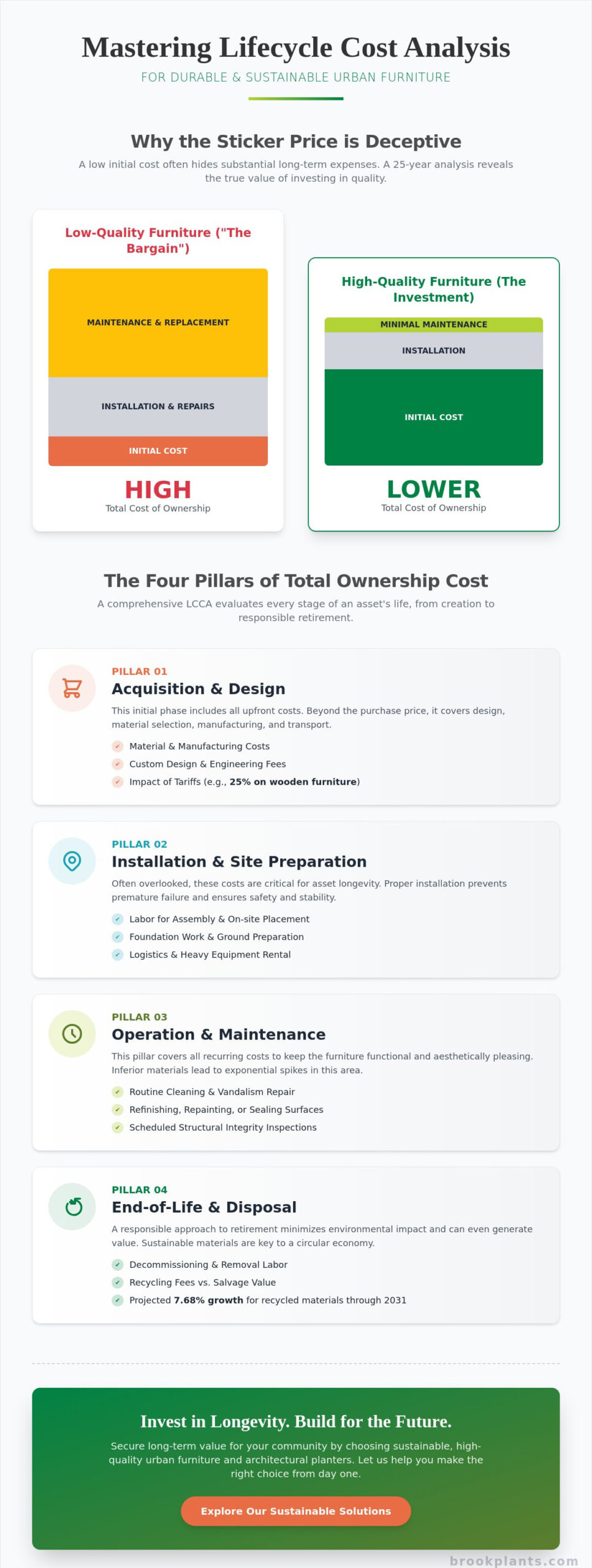
Low-cost materials often lead to exponential maintenance spikes that can drain a municipal budget faster than a summer drought dries out a delicate seedling. Since the 25% import tariff on wooden furniture took effect in October 2025, the “bargain” imported bench has become a financial liability. You have to consider the hidden costs of logistics, repeated installation, and the specialized cleaning required for inferior finishes. Total Cost of Ownership for a public bench is the sum of the purchase price, the labor for installation, the routine cleaning and repairs, and the final cost of recycling the material at its end of life.
Gardener’s notes: Think of a bench like a structural tree; if the roots, meaning the material quality and foundation, are weak, the whole thing will eventually topple under the pressure of the national climate.
The Four Pillars of Urban Furniture Lifecycle Costs
Just as a garden requires a strong skeleton of herbaceous perennials to thrive through the seasons, a successful urban space relies on four structural pillars of cost. Performing a lifecycle cost analysis for urban furniture means looking beyond the first day of planting. It’s a journey that begins with acquisition and ends with a responsible return to the circular economy. By understanding these pillars, you can ensure your project remains as vibrant and hardy as a well-tended border, avoiding the “fast furniture” traps that lead to early decay and wasted budgets.
Initial Investment vs. Installation Complexity
The first pillar covers the seeds of your project: design, manufacturing, and transport. Since the 25% import tariff on wooden furniture took effect in October 2025, the landscape of acquisition has changed. We’ve seen a shift toward domestic, high-quality craftsmanship that avoids these heavy levies. Custom design fees might seem like an added expense, but they ensure the furniture fits the unique architectural needs of your site. Modularity is another key factor here. Choosing modular pieces can significantly reduce installation time and labor costs, much like a pre-potted arrangement saves a gardener hours of work in the sun. If you’re looking for durable options that simplify this process, our sustainable street furniture and custom planters are designed to integrate seamlessly into any national project.
Recurring Maintenance and Repair Schedules
Maintenance is the second pillar, often representing the ongoing “watering and weeding” of the urban environment. Some industry reports suggest that maintenance can account for nearly 40% of the total cost of ownership. Using a formal Life-Cycle Cost Analysis (LCCA) allows you to predict the cost of vandalism and general wear before they become a burden. We recommend budgeting for annual structural integrity checks and routine cleaning. Materials like high-grade recycled polymers or “Green Steel” are often described as maintenance-free, as they resist the rust and rot that plague cheaper alternatives. This proactive approach keeps the space lush and welcoming for everyone.
Residual Value and the Circular Economy
The final pillars are operational care and end-of-life transition. In 2026, we must think about what happens when a piece finally reaches its limit. Metal remains a dominant choice, holding a 37.74% share of the market in 2025, largely because of its high salvage value. Aluminium and steel can be recycled indefinitely, providing a financial return at the end of their lifecycle. Choosing 100% recyclable urban assets isn’t just a moral choice; it’s a savvy financial move. With recycled and upcycled materials projected to grow at a CAGR of 7.68% through 2031, the residual value of your furniture is a critical component of your long-term lifecycle cost analysis for urban furniture. This ensures that even at the end of its life, your furniture contributes to a sustainable, healthy planet.
Environmental Impact and Material Durability
Just as a delicate fern scorched by the midday sun loses its luster, urban furniture faces a relentless battle against extreme heat and UV radiation. In 2026, we’re seeing material failure happen faster than ever before due to shifting climate patterns. A thorough lifecycle cost analysis for urban furniture must account for these environmental stressors to avoid the heartbreak of a crumbling public square. Choosing materials that can withstand the national climate is much like selecting “hardy” plants; it requires an expert understanding of how nature interacts with the structures we build. When we select architectural pieces that are built to last, we’re not just buying a bench; we’re protecting the long-term health of our community spaces.
The relationship between material choice and the Urban Heat Island effect is a critical factor in modern procurement. Darker, dense materials can absorb and radiate heat, driving up local temperatures and making public spaces uncomfortable. By following a Life-Cycle Cost Analysis Primer, planners can quantify the economic value of choosing materials that stay cool. Integrating sustainably sourced, peat-free landscaping elements alongside furniture creates a cooling effect that protects your investment and the comfort of the public. Mastering a lifecycle cost analysis for urban furniture allows you to see the financial benefit of these eco-conscious choices, ensuring your project remains vibrant through every heatwave.
Combatting UV Degradation and Salinity
Coastal environments are particularly demanding, where salt spray and intense sun act like a persistent pest in a garden. To ensure your assets remain vibrant, powder coatings and galvanization are essential for protecting metal components from corrosion. High-performance concrete (HPC) has also emerged as a favorite for its architectural strength and resistance to the elements. While untreated timber may splinter and gray within three years under intense UV exposure, sustainable composites can maintain their structural integrity and vibrant appearance for over two decades. With the recycled materials segment projected to grow at a CAGR of 7.68% through 2031, investing in these durable composites is a savvy way to future-proof your project against degradation.
Thermal Comfort and Public Usage
The “functional life” of a bench is directly tied to its temperature. If a seat is too hot to touch, the space is effectively dead, regardless of the material’s durability. We’ve seen projects where underutilized space leads to a significant drop in community engagement, simply because of poorly chosen, heat-absorbing materials. Integrating architectural shade structures or choosing low-thermal-mass materials can extend the usable hours of your furniture. This approach mirrors the way we use taller shrubs to provide dappled shade for delicate borders, creating a welcoming environment that thrives even in the height of summer.
Gardener’s notes: Always check the thermal properties of your seating surfaces; a cool seat in July is worth more than a dozen “bargain” benches that no one can use.
Steps to Conducting a Professional LCCA
Mapping out the future of a public square feels much like sketching a new garden border; you have to anticipate how each element will grow and age through the seasons. Conducting a lifecycle cost analysis for urban furniture is the roadmap for this journey. It allows you to peer into the next two decades to see which investments will blossom and which will wither. By following a structured approach, you can move beyond guesswork and provide stakeholders with the hard evidence they need to support sustainable, high-quality procurement. We recommend establishing an analysis period of 15 to 25 years, as this timeframe captures the full reality of maintenance cycles and the eventual need for renewal.
To begin, you must identify every cost category from the initial design phase to the final disposal or recycling. In 2026, this must include a sensitivity analysis to account for fluctuating material costs. With the price of aluminum and high-grade timber remaining volatile, your lifecycle cost analysis for urban furniture should test different scenarios. If raw material costs rise by another 5%, how does that affect your long-term budget? Comparing multiple design alternatives side-by-side is the only way to find the lowest Total Cost of Ownership (TCO) while maintaining the architectural integrity of your site.
Defining the Functional Life of an Asset
Ideal for maintaining a vibrant atmosphere, you must distinguish between structural failure and aesthetic failure. A bench might still be standing, but if the finish has peeled and the surface is stained, it has failed its primary purpose of welcoming the public. We’ve found that matching the furniture lifespan to the broader landscape design cycle ensures a harmonious environment. For instance, high-quality planters often outlast cheaper alternatives by a decade or more, preventing the need for disruptive and costly replacements that can damage surrounding peat-free plantings. When the furniture and the greenery age gracefully together, the entire space feels more established and cared for.
Calculating Net Present Value (NPV)
Public infrastructure projects often use a discount rate to account for the “time value of money.” This mathematical step helps you understand that a dollar saved on maintenance in 2040 is worth less than a dollar spent on high-quality steel today. It’s a way to weigh future maintenance savings against higher current capital expenditure. Using professional LCCA software can simplify these calculations, but the core principle remains the same: investing in “hardy” materials now reduces the financial burden on future generations. This long-term view is what separates a dedicated craftsman from a mere reseller.
Gardener’s notes: Think of NPV as the “root health” of your budget; if you feed the project well at the start with quality materials, you’ll spend far less on “fertilizer” and repairs later on.
If you are ready to build a resilient space that stands the test of time, you can explore our range of expertly grown urban solutions to find the perfect fit for your project.
Sustainable Urban Solutions with Brook Plants & Landscaping LLC
Choosing the right partner for your urban project is much like selecting a master gardener to oversee a community orchard. You need someone who understands the soil, the sun, and the long-term health of every element. At Brook Plants & Landscaping LLC, we believe that a successful lifecycle cost analysis for urban furniture shouldn’t just be a spreadsheet; it’s a promise of enduring quality. We’re dedicated to crafting vibrant, architectural spaces where furniture and flora thrive together. By integrating our deep horticultural expertise with robust street furniture design, we ensure that your national projects remain lush and functional for decades, not just for the first season.
Our commitment to sustainability is rooted in traditional values of care and modern environmental responsibility. We’ve seen how shifting economic factors have forced many to reconsider their sourcing. It’s a shift we welcome, as it highlights the value of domestic craftsmanship and durable material selection. When you work with us, you’re partnering with an eco-conscious craftsman who understands how to protect your investment against the relentless national climate. We don’t just provide a bench; we provide a piece of infrastructure designed to survive the toughest conditions while maintaining its aesthetic soul.
The Brook Plants & Landscaping LLC Quality Guarantee
From our professional roots in indoor plant wholesale uae to our expansive outdoor street furniture collections, we take a holistic approach to urban design. Our “grown by us” philosophy isn’t just for our plants; it extends to the way we source and assemble our custom planters and seating. Every softscaping element we provide is 100% peat-free, acting as a moral anchor for our sustainable practices. This ensures that the greenery surrounding your urban furniture has the best possible start in life, reducing the need for frequent replacements. We tailor our solutions to your specific site, ensuring that every architectural detail is hardy enough to withstand high UV and salinity.
Partnering for Long-Term Urban Success
We’re here to act as a trusted mentor for municipal and commercial developers across the country. Our design and execution fees are built on transparency, providing you with the clear, data-driven insights needed for an accurate lifecycle cost analysis for urban furniture. We understand that your success depends on furniture that remains vibrant and safe long after the initial installation. By choosing architectural pieces that are built to last, you’re securing the long-term success of your community spaces and the health of the planet. It’s a steady, seasonal approach that builds trust and ensures your garden or public square flourishes for the next 25 years.
Gardener’s notes: A well-chosen planter is the foundation of a healthy urban ecosystem; it protects the roots of your plants while providing a durable, architectural focal point for the public to enjoy.
Ready to see how we can bring your vision to life? You can explore our street furniture and landscaping portfolio to see our commitment to quality and sustainability in action.
Cultivating Resilient Public Spaces for the Future
Designing a vibrant urban landscape is a long-term commitment that requires more than just a quick fix. You’ve seen how shifting your focus from the initial sticker price to a 25-year horizon ensures your budget remains healthy and your community spaces stay lush. Implementing a robust lifecycle cost analysis for urban furniture is the most reliable way to protect your projects from the harsh effects of UV degradation and the rising material costs we’ve faced since late 2025. It’s about choosing architectural pieces that age as gracefully as a well-tended garden, providing both economic value and environmental pride.
With 20+ years of national landscaping expertise, Brook Plants & Landscaping LLC is here to help you nurture your vision from the first sketch to final maintenance. We take pride in our sustainable, climate-resilient material sourcing and our comprehensive service model. If you’re ready to create a public space that thrives through every season, consult with our urban furniture experts today. We’ll help you select hardy, beautiful solutions that stand the test of time, ensuring our shared world remains vibrant for generations to come.
Frequently Asked Questions
What is the most durable material for street furniture in high-heat climates?
High-performance concrete and powder-coated aluminum are the hardiest choices for intense sun. Metal held a 37.74% share of the 2025 market because it resists warping and structural failure in extreme heat. These materials act like architectural perennials, maintaining their strength while cheaper plastics might fade or become brittle under constant UV stress.
How long should the analysis period be for urban furniture LCCA?
We recommend an analysis period of 15 to 25 years to capture the full story of your investment. This window allows you to see the true impact of maintenance cycles and the eventual cost of responsible recycling. It’s the best way to conduct a thorough lifecycle cost analysis for urban furniture without losing sight of long-term value.
Is it always better to choose the most expensive option for lower maintenance?
Not always, but the “cheapest” option often becomes a financial burden through frequent repairs and early replacement. You’re looking for the “sweet spot” where material durability meets a reasonable initial price. A bench that lasts 20 years with minimal care is a much better investment than a bargain piece that needs replacing every five seasons.
How does LCCA support national sustainability and Net Zero goals?
It prioritizes durable assets that stay out of landfills and favors materials with high residual value. With upcycled materials projected for a 7.68% growth rate through 2031, LCCA helps you choose circular options. This approach ensures your project supports Net Zero goals by reducing the carbon cost of frequent manufacturing and transport cycles.
Can LCCA be applied to existing urban furniture for renovation decisions?
It’s a vital tool for deciding whether to prune or replant your urban space. By analyzing the remaining functional life of existing pieces, you can determine if a specialized coating will extend its life or if a full replacement is more cost-effective. It helps you avoid spending good money after bad on decaying infrastructure that no longer serves the public.
What are the most common hidden costs in urban furniture procurement?
Logistics and specialized labor are the most frequent surprises in a project budget. Since the October 2025 tariff of 25% on imported wooden furniture, shipping and taxes have become major factors. You must also account for site preparation and the specific cleaning products required to maintain architectural finishes over the years.
How do I justify a higher upfront cost to my finance department?
Use Net Present Value to demonstrate that spending more today saves significant labor and repair costs tomorrow. Show them that a high-quality, peat-free landscaping integration protects the furniture and reduces the local heat island effect. It’s about proving that a hardy investment yields a better harvest for the municipal budget over two decades.
What role does modularity play in reducing lifecycle costs?
Modularity allows for targeted pruning instead of clear-cutting your public space. If one slat on a bench is damaged, you only replace that component rather than the whole unit. This flexibility reduces labor time and material waste, making your lifecycle cost analysis for urban furniture look much healthier in the long run.
Disclaimer
The content on this blog may be automatically generated and is provided “as is” without warranties of any kind, express or implied. No guarantee is made regarding the accuracy, completeness, or suitability of the information. The company expressly disclaims any liability for decisions or actions taken based on this content.
As this blog post was generated using automated content‑creation tools. While our team reviews posts for accuracy and relevance, the information provided may not always reflect the most current developments. The content is intended for general informational purposes only and should not be taken as professional advice. Our company is not liable for any actions taken based on this material.