
Could the very furniture meant to welcome people into your landscape actually be pushing them away? It’s a common heartache for those of us who pour our souls into public spaces, only to find that a seat has become a branding iron in the summer sun or is flaking away under the salt air. We believe a park should feel like an extension of a well-tended garden, where every element is chosen with the same care we give our peat-free saplings. Finding the right durable public seating solutions is no longer just about structural strength; it’s about navigating a 2026 market where aluminum prices have climbed 33% since January 2025 and sustainability standards like ANSI/BIFMA e3-2024 are the new benchmark for quality.
You deserve street furniture that offers low-maintenance longevity and genuine thermal comfort for every visitor. This guide will show you how to select high-performance pieces that withstand extreme climates while fostering deep community connection through expert material and landscape integration. We’ll explore the shift toward E-coated steel, the resilience of modern HDPE that mimics natural wood, and our gardener’s notes on blending these structures into a lush, living environment that grows more beautiful with every passing season.
Key Takeaways
- Learn why selecting durable public seating solutions in 2026 requires a “resilience-first” mindset that balances structural integrity with long-term aesthetic beauty.
- Identify which materials act as “heat sinks” in direct sun and why high-performance, sustainable timber remains a top choice for maintaining thermal comfort.
- Master the ergonomics of social design to encourage longer dwell times and ensure your public spaces are accessible and welcoming to all.
- Protect your landscape investment by shifting from a “set and forget” approach to a lifecycle maintenance strategy tailored for high-humidity environments.
- Discover the synergy between seating and green infrastructure, using botanical shade to naturally lower ambient temperatures and create a vibrant community hub.
Defining Durability in High-Exposure Urban Environments
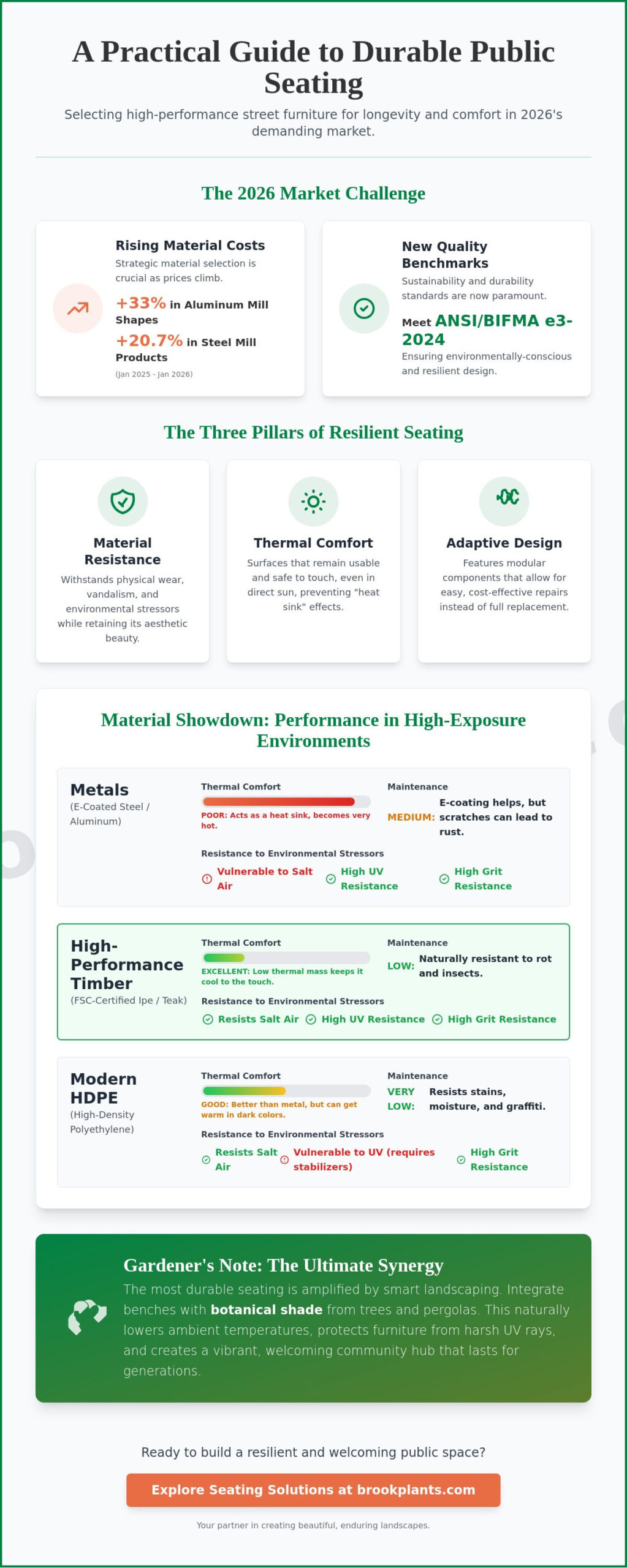
Just as we choose a hardy herbaceous perennial to survive a sudden frost, selecting durable public seating solutions requires a deep understanding of the local climate and its unique challenges. In 2026, urban planning has shifted toward a resilience-first approach that mirrors the way we tend our own gardens. It isn’t just about avoiding a broken bench; it’s about ensuring every piece of furniture stays vibrant and welcoming for its entire lifecycle. With steel mill product prices rising 20.7% between January 2025 and January 2026, the initial investment must be protected by choosing pieces that won’t need replacing in just a few short years.
Choosing a “cheap” option often leads to a cycle of waste that contradicts our sustainable values. When we look at common materials for public benches, we see that while cast iron or concrete offer weight, they each have unique thermal and maintenance needs. A seat that becomes a branding iron in July is a failed design, no matter how sturdy it is. We believe that true durability is the synergy of structural integrity, aesthetic retention, and thermal usability.
To better understand how these designs come to life, watch this helpful video showcasing modern resilience:
The Three Pillars of Resilient Seating
Material resistance is our first defense. It must withstand the daily bustle and the occasional vandal. We look for E-coated steel or high-density polymers that resist physical scars and maintain their architectural beauty. Thermal comfort is equally vital. Surfaces shouldn’t act as heat sinks; in 2026, thermal usability is a primary safety metric for any public space. Finally, adaptive design allows for modular repairs. If one slat is damaged, you shouldn’t have to scrap the whole unit. This approach mirrors our own “grown by us” philosophy, where we value the long-term health of the plant over a quick, fragile bloom.
Environmental Stressors Beyond Physical Wear
High ambient temperatures and intense UV radiation can make some plastics brittle within months. We recommend durable public seating solutions that utilize advanced UV stabilizers to prevent polymer degradation and color fading. For coastal regions, saline air is the silent enemy. Marine-grade finishes are essential to prevent the creeping rust that eats through standard metals. In dry, windy regions, wind-borne grit can act like sandpaper. Smooth, non-porous finishes ensure that dust doesn’t pit the surface or trap moisture. Gardener’s note: just as we avoid peat-free mixes that dry out too quickly, we avoid seating finishes that trap grit and lead to premature wear.
Material Science: Choosing Seating That Stays Cool and Intact
A seat shouldn’t just look good in a catalog; it must feel welcoming when a neighbor sits down on a July afternoon. We often see beautiful public spaces abandoned because the furniture has become a heat sink, absorbing solar radiation until the surfaces are too hot for skin contact. In 2026, selecting durable public seating solutions requires us to look beyond structural strength and into the thermal conductivity of our materials. Just as we choose hardy plants for a south-facing border, we must choose seating materials that thrive under the sun’s gaze without punishing the user.
Thermal conductivity is the silent factor in public comfort. While metals like aluminum are lightweight, they transfer heat with startling efficiency. With the price of aluminum mill shapes increasing by 33% between January 2025 and January 2026, many designers are returning to the earthy reliability of high-performance timber. FSC-certified hardwoods like Ipe or Teak don’t just offer a lush, organic aesthetic; they possess a low thermal mass that keeps them comfortably cool even when ambient temperatures climb. These woods are the “herbaceous perennials” of the furniture world, offering a life cycle that is both sustainable and deeply resilient.
Timber vs. Metal vs. Concrete
Sustainably sourced timber remains the gold standard for tactile comfort in high-exposure areas. It doesn’t corrode in saline air and offers a warmth that metal simply cannot replicate. However, for coastal durability where salt spray is constant, Ultra-High-Performance Concrete (UHPC) provides a non-porous alternative that resists the pitting often seen in standard mixes. If your project demands metal, consider the NYC street furniture design and siting guidelines which emphasize material resiliency in dense urban heat islands. While stainless steel offers superior corrosion resistance, it can become quite reflective, so matte finishes are often preferred to reduce glare for pedestrians.
Advanced Coatings and Surface Treatments
Modern science has given us tools to make even the most stubborn materials more hospitable. Cool-touch technology now utilizes specialized pigments designed to reflect infrared radiation, keeping dark-colored benches significantly cooler than traditional powder coatings. We also look for UV-stabilized recycled plastics, which have improved vastly by 2026 to prevent the brittleness and color fading that plagued early composites. These materials are excellent for high-traffic zones where maintenance budgets are tight. If you’re looking to pair your seating with vibrant, architectural plants, consider how the material’s heat radiation might affect nearby foliage. Gardener’s note: high-heat radiation from dark metal can actually scorch the delicate leaves of nearby plantings, so choosing reflective or low-conductivity materials helps your entire landscape flourish.
Hygiene and clarity are the final pieces of the puzzle. Anti-graffiti coatings that don’t degrade the underlying substrate allow for quick cleaning without harsh chemicals. Non-porous surfaces ensure that dust and sand abrasion don’t create “pockets” where moisture and bacteria can settle. By prioritizing these advanced finishes, you ensure your durable public seating solutions remain as clean and inviting as the day they were installed.
Ergonomics and Social Design: Making Seats Usable
A public space is much like a garden path; it’s the rhythm of the journey and the places we pause that matter most. When we design durable public seating solutions, we must think beyond the simple utility of a place to sit. We’re creating the stage for community life. Linear benches often feel sterile, like a row of seedlings that never quite branch out. By moving toward more thoughtful geometries, we can influence dwell time and how people interact with the landscape and each other. We’ve found that the most successful spaces utilize the “prospect and refuge” principle, where users feel protected from behind while having a clear view of their surroundings.
Designing for the human element means acknowledging that a seat is only as good as its accessibility. In 2026, inclusivity isn’t a luxury; it’s a fundamental requirement of resilient urban planning. Modular systems allow us to be as creative as we are with a mixed herbaceous border. These systems can be reconfigured as the needs of a neighborhood evolve, ensuring the furniture remains useful for decades rather than becoming an architectural relic. It’s about building a space that feels as welcoming and “grown by us” as a community garden.
Circular and Curved Seating Dynamics
Curved forms are inherently social. By arranging seats in a curve, you create a natural focal point that encourages neighbors to linger and share stories, much like a conversation over a garden gate. Circular benches are particularly effective for protecting and highlighting existing landscape features like mature, hardy trees. They create a protective barrier for the root zone while providing deep shade for the user. In high-traffic pedestrian zones, modular curved units offer a spatial efficiency that linear benches simply can’t match, guiding the flow of movement without creating bottlenecks.
Ergonomics for All Ages
True comfort requires adherence to precise standards. As of May 2026, Americans with Disabilities Act (ADA) requirements remain a critical benchmark for outdoor seating. For a space to be truly inclusive, you must provide accessible seating options with table heights between 28 and 34 inches. Knee clearance should be a minimum of 27 inches, with a clear floor area of 30 by 48 inches to accommodate mobility devices. Gardener’s notes: strategic armrest placement is essential. They provide vital support for the elderly when sitting or standing, yet they also subtly discourage anti-social behavior without making the design feel cold or restrictive. Incorporating “perch” seating in transitionary corridors allows for quick rests, making the entire urban journey more manageable for everyone.
The Maintenance Reality: A Lifecycle Approach to Urban Furniture
Just as a prize-winning border needs more than just planting, durable public seating solutions require a rhythmic, seasonal touch to truly thrive. We’ve seen too many beautiful spaces fall into disrepair because of a “set and forget” mindset. In 2026, with steel mill products having seen a 20.7% price increase between January 2025 and January 2026, protecting your initial investment through a lifecycle approach is a financial necessity. We treat our street furniture like our hardiest plants; it needs the right environment and occasional care to stay vibrant. With U.S. hot-rolled coil steel trading in the $900 to $960 range per short ton in early 2026, the cost of premature replacement is simply too high to ignore.
Choosing furniture with replaceable slats or modular components is a mark of quality and foresight. If a single section is damaged by heavy use or an accidental impact, you can repair it rather than discarding the whole unit. This aligns with the ANSI/BIFMA e3-2024 sustainability standard, which prioritizes repairability to extend service life. This “grown by us” philosophy of care ensures that your landscape remains a welcoming community hub for decades.
Predictive vs. Reactive Maintenance
Predictive maintenance is the secret to longevity. Conduct annual inspections every spring, checking structural fasteners and surface integrity before the high-traffic summer season begins. Early intervention, such as a quick timber oiling or a small metal touch-up, prevents minor wear from becoming a costly replacement. Gardener’s notes: documenting wear patterns is a top tip from our team. This history informs your next procurement, ensuring you choose even hardier designs that match the specific stresses of your site.
Cleaning and Preservation Techniques
For coastal regions or dusty corridors, maintenance is a different beast. Salt air is a relentless corrosive. Wind-blown sand acts like an abrasive. We recommend a quarterly rinse with fresh water to remove these residues before they pit the finish. When cleaning, choose safe biological cleaners that don’t leach toxins into your soil or harm your peat-free plantings. Be mindful of irrigation overspray too. Hard water minerals from sprinklers can create stubborn white deposits on dark metal finishes over time. If you’re looking to pair your seating with resilient greenery, explore our range of sustainable plantings that thrive alongside low-maintenance furniture.
Balancing these cleaning requirements with water-wise sustainability goals is essential. Use pressurized sprayers that maximize cleaning power while minimizing total water volume. By establishing these simple, seasonal habits, you ensure your durable public seating solutions remain as architectural and lush as the day they were first installed.
Integrating Seating with Landscaping for Maximum Comfort
The most inviting landscapes are those where the boundary between the built environment and the living world begins to blur. We believe a bench shouldn’t just sit on the land; it should be part of it. When we select durable public seating solutions, we look for ways to nestle them into the greenery to create a true sanctuary for the community. By 2026, the urban heat island effect has made traditional, exposed seating almost unusable during peak summer months. Integrating green infrastructure isn’t just an aesthetic choice. It’s a functional necessity that can lower ambient surface temperatures by several degrees through natural transpiration and shade, making a space feel as cool as a woodland glade.
Creating these microclimates requires a synergy between the furniture craftsman and the grower. At Brookplants, we treat every installation like a living ecosystem. We select drought-tolerant species that offer architectural beauty while standing up to the rigors of city life. This holistic approach ensures that the furniture isn’t just a place to sit, but a destination that fosters a deep connection with nature. It’s about building a space that feels grown by us and cared for by everyone who passes through.
The Cooling Power of Softscaping
Strategic tree placement provides a natural canopy that shields furniture from the harsh 2026 UV radiation we’ve discussed. This shade extends the life of metal and timber finishes while ensuring the seat remains at a comfortable temperature for every visitor. We often use vertical gardens as living backrests because they provide constant evaporative cooling for the user. It’s a gentle, natural alternative to sterile, heat-reflective walls. To keep these systems vibrant, we integrate hidden irrigation that maintains both the lush foliage and the hygiene of the furniture by periodically rinsing away urban dust. Gardener’s notes: we always recommend hardy, herbaceous perennials that offer sensory appeal without demanding excessive water in high-exposure zones.
Custom Planter-Seating Solutions
The marriage of custom planters and integrated seating units is where our passion for horticulture meets practical design. These unified pieces allow us to bring a touch of the nursery into the heart of a concrete corridor. We carefully manage drainage and root systems within these integrated units to ensure the plants thrive in their 100% peat-free soil without compromising the structural integrity of the seat. This design philosophy creates a self-contained oasis that is easy to maintain and beautiful to look at. If you’re ready to transform your next project into a resilient, living landscape, explore our bespoke street furniture and landscaping solutions today.
Cultivating Resilient Spaces for the Years Ahead
Creating a vibrant public space is a journey that requires both patience and precision. We’ve explored how selecting durable public seating solutions involves more than just structural strength; it’s a careful balance of material science, thermal comfort, and botanical integration. From navigating the 2026 price shifts in the steel market to creating cooling microclimates with vertical gardens, every choice you make today ensures a more welcoming landscape tomorrow. It’s about building a community hub that feels as natural and well-tended as a lush, private garden.
With over 20 years of experience in UAE landscaping and urban design, we’re specialists in high-quality imported plants and custom street furniture. We’ve spent decades perfecting the art of creating sustainable, heat-resilient outdoor environments that thrive in extreme conditions. If you’re ready to bring a touch of expert craftsmanship to your next development, view our portfolio of durable street furniture and landscaping projects. Let’s work together to grow a space that stays vibrant, cool, and inviting for decades to come.
Frequently Asked Questions
What is the most durable material for public seating in extreme heat?
Sustainably sourced hardwoods like Ipe or Teak are the most resilient choices because they don’t absorb heat like dark metals. These durable public seating solutions maintain a comfortable surface temperature even when ambient heat exceeds 40 degrees Celsius. For metal options, we recommend E-coated steel treated with infrared-reflective pigments. These specialized coatings reflect solar radiation to keep the seating usable throughout the peak of a summer afternoon.
How often should public benches be maintained in high-dust environments?
We recommend a quarterly maintenance schedule for furniture in high-dust or desert climates. A simple rinse with fresh water every three months prevents grit from acting like sandpaper on delicate finishes. It’s a top tip from our team to perform a deep structural inspection every spring. This ensures all fasteners meet the ANSI/BIFMA X5.4-2020 safety standards before the heavy traffic of the summer season begins.
Can street furniture be integrated with irrigation systems?
Street furniture can and should be integrated with irrigation systems to create living, breathing community hubs. Modern planter-seating units often feature hidden drip lines that nourish architectural plants while providing a natural cooling effect for the user. This synergy keeps both the greenery and the furniture surfaces clean. It’s a sustainable way to manage hygiene without the need for frequent manual power washing or harsh chemical cleaners.
What are the benefits of modular public seating over fixed benches?
Modular systems offer superior longevity because they allow for the replacement of individual components rather than the entire unit. Under the ANSI/BIFMA e3-2024 sustainability standard, repairability is a key metric for evaluating high-quality furniture. These durable public seating solutions allow you to reconfigure your space as the neighborhood’s social needs change. It’s a cost-effective alternative to fixed benches, especially as steel prices have fluctuated significantly through 2025 and 2026.
How do you prevent metal seating from becoming too hot for users?
You can prevent metal surfaces from overheating by using “cool-touch” powder coatings that reflect infrared light. These pigments significantly reduce the surface temperature compared to standard dark finishes. We also advocate for the use of green infrastructure, such as strategic canopy shading. Placing seating under the dappled shade of a hardy tree can lower ambient surface temperatures by several degrees, ensuring the furniture remains a welcoming refuge.
Is sustainably sourced timber suitable for high-traffic urban areas?
High-performance, FSC-certified hardwoods are perfectly suited for high-traffic zones due to their natural density and resistance to physical wear. Unlike softer woods, species like Teak or Ipe don’t splinter easily and age gracefully into a beautiful silver patina. They offer a warmth and tactile comfort that metal lacks. Our gardener’s notes suggest that timber’s natural resilience makes it a prime choice for spaces where community connection and sustainability are the top priorities.
What is the average lifespan of high-quality street furniture?
High-quality street furniture typically has an average service life of 15 to 20 years when supported by a consistent maintenance plan. Adhering to the ANSI/BIFMA X5.4-2020 standard ensures that the structural integrity remains sound through decades of public use. While initial costs for resilient materials might be higher, the total lifecycle cost is lower. You won’t face the expense of frequent replacements caused by UV degradation or salt-air corrosion.
How does landscape design improve the usability of public seating?
Thoughtful landscape design creates the microclimates necessary for year-round seating usability. By incorporating vertical gardens or “living backrests,” you provide evaporative cooling that makes the air around the bench feel fresher. Using the “prospect and refuge” principle in your layout helps users feel secure and relaxed. This holistic approach turns a simple piece of furniture into a thriving destination that feels as nurtured as a peat-free garden border.
Disclaimer
The content on this blog may be automatically generated and is provided “as is” without warranties of any kind, express or implied. No guarantee is made regarding the accuracy, completeness, or suitability of the information. The company expressly disclaims any liability for decisions or actions taken based on this content.
As this blog post was generated using automated content‑creation tools. While our team reviews posts for accuracy and relevance, the information provided may not always reflect the most current developments. The content is intended for general informational purposes only and should not be taken as professional advice. Our company is not liable for any actions taken based on this material.