
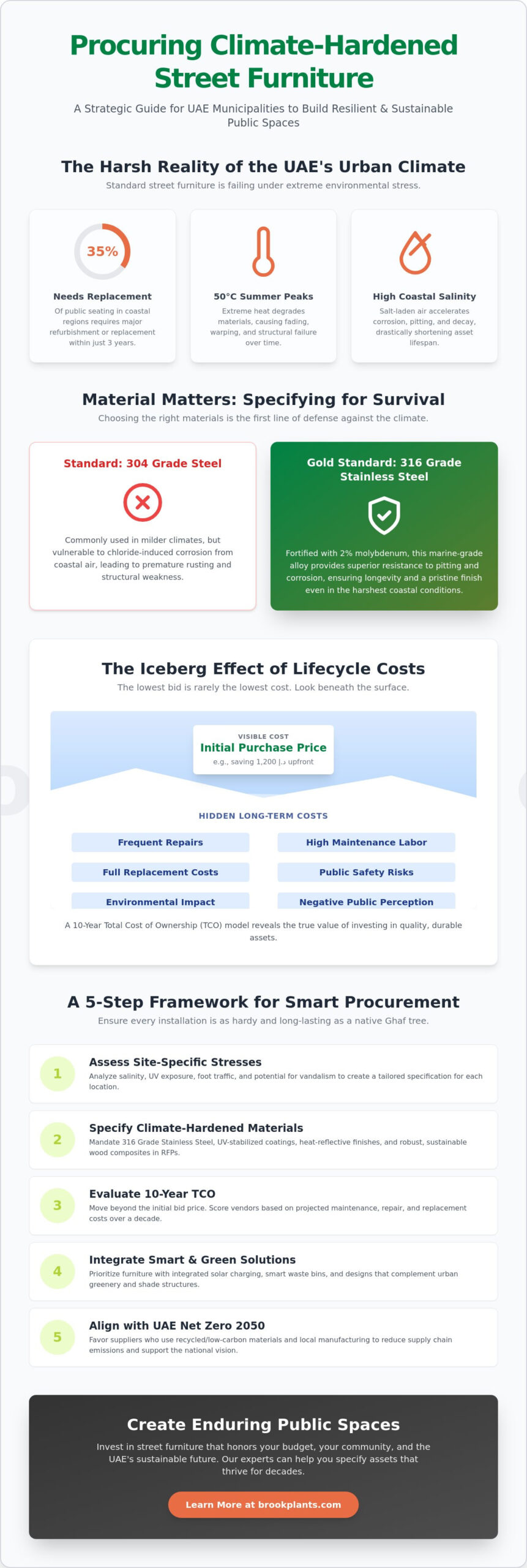
According to recent industry data on Middle Eastern urban degradation, nearly 35% of public seating in coastal regions requires major refurbishment or replacement within just three years due to high salinity and 50°C summer peaks. We understand the weight of this challenge, especially when you’re tasked with creating inviting spaces that don’t drain the municipal budget through constant repairs. It’s a delicate balance to strike between meeting rigid procurement laws and selecting pieces that actually enhance our vibrant urban landscape. This street furniture procurement guide for municipalities offers a clear, expert framework to help you source durable, architectural assets that stand firm against the elements while supporting the UAE Net Zero 2050 initiative. We’ll walk through the essential steps to lower your lifecycle costs and select materials that feel as natural and enduring as the desert landscape itself. You’ll learn how to specify for resilience without sacrificing the lush, welcoming aesthetic that defines our modern cities.
Key Takeaways
- Learn how to cultivate vibrant public spaces that honor the UAE’s Net Zero 2050 vision, moving beyond simple utility toward sustainable urban placemaking.
- Understand the botanical-like resilience required for the desert, focusing on why 316 Grade Stainless Steel is essential for furniture to withstand our unique coastal and heat-stressed climates.
- Navigate the “Iceberg Effect” of maintenance costs with our street furniture procurement guide for municipalities, helping you protect your budget with a clear 10-year TCO model in AED.
- Implement a nurturing five-step framework that starts with site-specific stress assessments, ensuring every installation is as hardy and long-lasting as a native Ghaf tree.
- Discover the beauty of integrated landscapes where smart furniture meets lush greenery, featuring solar-powered solutions that keep our urban gardens thriving and connected.
The Evolution of UAE Urban Landscapes: Why Procurement Matters
The streets of the UAE are evolving. They aren’t just paths for transit anymore; they’re the living rooms of our cities. This street furniture procurement guide for municipalities highlights how urban placemaking transforms functional spaces into lush, inviting environments. Selecting the right street furniture is as critical as choosing the right plant for a shaded corner; it requires an eye for both beauty and resilience. High-quality public realm assets are the backbone of community well-being, fostering a sense of belonging in our rapidly growing urban centers. When we design for people rather than just vehicles, we create cities that breathe and thrive.
To better understand the complexities of sourcing these essential assets, watch this helpful video on cooperative purchasing best practices:
Aligning with National Sustainability Goals
Aligning with the UAE Net Zero 2050 strategic initiative isn’t just a policy requirement; it’s a moral anchor for modern procurement. Specifying recycled and low-carbon materials in municipal RFPs reduces the environmental footprint of our urban centers significantly. Street furniture also plays a vital role in mitigating the Urban Heat Island effect. By integrating shade structures and heat-reflective materials, municipalities can lower local surface temperatures by up to 7°C during peak summer months. We believe in the power of local manufacturing to shorten supply chains, ensuring every bench or planter is as sustainably sourced as our 100% peat-free compost. This commitment to the planet ensures our cities remain vibrant for generations.
The Psychology of Public Spaces
Design influences how we move and interact. A well-placed cluster of seating can increase social dwell time by 40%, turning a transit corridor into a social destination. It’s about balancing modern architectural aesthetics with traditional cultural motifs that honor Emirati heritage. Every procurement choice must prioritize inclusivity, meeting universal design and ADA-equivalent standards to ensure every resident feels welcome. Our gardener’s notes for procurement suggest that furniture should be as hardy as a native Ghaf tree, standing up to the elements while providing a sense of calm. A successful street furniture procurement guide for municipalities must treat the public realm as a living ecosystem where every element serves a purpose.
Choosing the lowest bid often leads to a cycle of frequent repairs and replacements. In the harsh UAE climate, where salt air and extreme heat test every surface, durability is paramount. A cheaper bench might save 1,200 د.إ today, but if it corrodes within two years, the long-term cost to the municipality is far higher. Quality assets, much like a plant that is grown by us with expert care, offer a lifecycle of beauty and function that far outweighs the initial investment.
Technical Specifications: Material Science for Extreme Climates
In the heart of the Emirates, “climate-hardened” furniture isn’t just a label; it’s a necessity for survival. When we talk about a street furniture procurement guide for municipalities, we’re looking at assets that must endure 50°C summer peaks and relentless UV levels that often exceed 2,000 kWh/m² annually. Every piece we recommend is vetted with the same care as a plant grown by us in our own nurseries. It’s about choosing materials that won’t just survive but will thrive and remain beautiful under the desert sun. Our approach focuses on the lifecycle of the product, ensuring that every bench and planter contributes to a sustainable, lush urban environment.
Metal and Alloy Selection for Longevity
316 Grade Stainless Steel stands as the undisputed national gold standard for UAE projects. Unlike the 304 Grade often used in milder climates, 316 contains 2% molybdenum to fight off chloride-induced pitting. This is vital in coastal cities like Dubai or Abu Dhabi where humidity stays above 80% for months. We avoid galvanic corrosion by ensuring all fixings and hardware are marine-grade. Aluminium is another favorite of ours for its natural corrosion resistance and its ability to dissipate heat much faster than steel. This thermal performance means a seat stays touchable even at midday. It’s much like how we select hardy architectural plants that provide shade and structure without wilting under pressure.
Concrete and GRC: Mass and Thermal Performance
Traditional pre-cast concrete is sturdy, but Glass Reinforced Concrete (GRC) is the modern choice for forward-thinking municipalities. GRC offers high strength-to-weight ratios, allowing for more intricate, delicate designs that don’t sacrifice durability. We focus on high thermal mass materials that absorb heat slowly to prevent the “heat island” effect in urban squares. To keep these assets looking vibrant, we specify anti-graffiti and salt-resistant sealants. These barriers prevent salt from penetrating the surface and causing internal rebar expansion. Selecting light-colored finishes is a simple but effective way to reduce surface temperatures by up to 15°C compared to darker alternatives.
- WPC vs. Natural Wood: Natural timber often cracks under intense radiation. Wood-Plastic Composites (WPC) offer the warmth of wood without the splintering, making them safer for public use.
- Advanced Coatings: While powder coating is common, anodizing is often superior for coastal regions as it creates an oxide layer that’s part of the metal itself.
- Sustainability: We prioritize recycled alloys and FSC-certified composites to ensure the long-term health of the planet is as protected as the furniture itself.
A well-researched street furniture procurement guide for municipalities must prioritize these technical nuances to avoid the high costs of premature replacement. By selecting materials that respect the local environment, we create public spaces that remain welcoming and functional for decades.
Evaluating Lifecycle Costs vs. Initial Capital Investment
Choosing a bench or a planter based solely on the sticker price is like planting a delicate seedling in a sandstorm without a plan for its care. We often refer to this as the “Iceberg Effect” in our street furniture procurement guide for municipalities. While the initial capital investment represents the visible tip, the hidden costs of maintenance, cleaning, and premature replacement lurk beneath the surface. In the intense UAE climate, these secondary expenses can quickly eclipse the original purchase price if the materials aren’t chosen with a grower’s eye for long-term health.
A reliable 10-year Total Cost of Ownership (TCO) model is the most honest way to view your budget. This model shouldn’t just look at the AED spent today; it must account for the labor costs of monthly cleaning and the price of specialized coatings needed to fight salt-air corrosion. For example, investing AED 8,000 in a high-grade, modular seating system often proves cheaper over a decade than spending AED 3,500 on a unit that requires a complete overhaul after just three summers of UV exposure. Modular designs are particularly helpful here. They allow your maintenance teams to replace a single damaged slat or a dented panel rather than discarding the entire piece, which keeps your public spaces looking vibrant and cared for with minimal waste.
Vandal-proofing is another essential factor for the UAE’s bustling urban centers. Impact-resistant materials and anti-graffiti coatings might add 15% to your initial cost, but they save thousands in restorative labor. We view these features as a protective layer, much like the mulch that shields a plant’s roots from the midday sun.
Maintenance Requirements by Material
- Stainless Steel vs. Timber: Grade 316 stainless steel requires a simple monthly rinse to prevent “tea-staining” in coastal areas like Abu Dhabi’s Corniche. In contrast, sustainable hardwoods need a nourishing oil treatment every 12 to 18 months to prevent silvering and cracks.
- High-Quality Finishes: Opting for architectural-grade powder coatings ensures the color stays lush and saturated for years. These finishes pay for themselves by eliminating the need for frequent repainting.
- Replaceable Parts: Always source furniture with accessible, bolt-on components. It’s the difference between a quick 20-minute repair and a logistical headache.
Durability Testing and Warranties
Don’t just take a supplier’s word for it; look for standardized proof of resilience. Ensure all items have passed ASTM G154 testing for UV degradation and ASTM B117 salt spray tests to confirm they can handle the unique stresses of the Arabian Peninsula. A true “Municipal Grade” warranty shouldn’t just cover manufacturing defects; it needs to guarantee structural integrity and color fastness for at least 10 years under local environmental conditions.
The 5-Step Municipal Procurement Framework
Creating a resilient urban landscape requires more than just selecting attractive designs. It demands a rigorous process that accounts for the UAE’s unique environmental pressures. This street furniture procurement guide for municipalities outlines a structured path to ensure every dirham spent contributes to a lasting, sustainable community space.
A park in Al Ain faces different challenges than a promenade in Dubai Marina. We recommend measuring salt-spray levels for coastal projects and recording peak surface temperatures. Data from 2024 urban heat island studies shows that unshaded metal surfaces can exceed 65°C, making site-specific data vital before choosing materials.
Don’t just specify “wood” or “metal.” Require marine-grade 316 stainless steel or FSC-certified hardwoods that have been pre-treated for high-UV environments. Specifications should demand a minimum of 1,000 hours of salt-spray testing for any powder-coated finishes.
Priority should be given to vendors who align with the UAE’s Net Zero 2050 pathway. Look for ISO 14001 certification and a clear policy on recycled content. Vendors who provide Estidama-compliant documentation offer a significant advantage in the scoring process.
Paper specs can be deceiving. We always suggest a “heat-touch” test. Place the sample in direct sunlight for four hours during peak heat and measure the surface temperature. If it’s too hot for a resident to sit on comfortably, the material isn’t fit for purpose.
Longevity is grown through care. Securing a maintenance agreement at the start can reduce long-term replacement costs by up to 25% over a five-year period. This ensures that minor abrasions or UV fading are addressed before they become structural failures.
Drafting Effective RFP Documents
Effective procurement begins with clarity. Shift your RFP language from descriptive terms to performance-based requirements. Instead of asking for a “sturdy bench,” specify that the unit must withstand a load of 400kg without deflection. It’s also essential to integrate a weighted scoring matrix. We suggest a 30% weighting for environmental impact and social value. Ensure all products comply with UAE Civil Defense fire safety codes, particularly for items placed near building entrances or in enclosed transport hubs.
Vendor Selection and Vetting
A vendor’s history is a window into their reliability. Audit the supply chain to see where raw materials are sourced. We believe in transparency; knowing that your timber comes from a sustainable forest or your steel is recycled adds a layer of integrity to the project. Evaluate the vendor’s local portfolio. Have their installations survived three UAE summers without significant degradation? For those looking to integrate greenery alongside their furniture, understanding the indoor plant wholesale uae market can provide valuable context on how local suppliers manage biological assets in the same climate. This holistic view ensures your hardscape and softscape work in harmony.
Ready to enhance your public spaces with expert guidance? Contact our municipal consulting team today for a detailed consultation on your next project.
Integrated Solutions: Furniture and Urban Greenery
Furniture-only projects often feel disconnected from the soul of a city. A lone bench on a bare concrete slab doesn’t invite residents to linger or connect. By blending hardscape elements with lush, living greenery, municipalities create “cool spots” that actively combat the urban heat island effect. This integrated approach is a core pillar of any modern street furniture procurement guide for municipalities. It transforms a simple seating area into a vibrant micro-ecosystem that improves air quality and mental well-being.
2026 marks a significant shift toward self-sustaining “Smart Furniture” units. We’re seeing a 40% increase in demand for benches that incorporate solar panels to power both USB charging ports and hidden, automated irrigation systems. These systems ensure that attached planters remain lush without requiring daily manual watering. This technology is particularly vital for the UAE climate, where water efficiency is a top priority for sustainable urban growth.
Custom planters serve as the essential bridge between rigid architecture and the soft, flowing lines of nature. They allow for the introduction of shade and color in areas where traditional ground planting isn’t possible due to underground utilities or high foot traffic. Brook Plants & Landscaping supports municipal visions across the Emirates by providing hardy, nursery-grown specimens that are acclimatized to our specific environment.
Designing with Planters and Seating
Integrated irrigation systems for municipal planter boxes are a game-changer for maintenance budgets. By using pressure-compensated drippers, we ensure every plant receives exactly what it needs, even during the peak summer heat. When selecting species, we recommend architectural plants like Pennisetum setaceum or the vibrant Bougainvillea; they handle the heat beautifully while providing year-round visual interest.
The Gardener’s Note: Drainage is the most overlooked detail in municipal procurement. Without a dedicated drainage layer and overflow outlets, water sits at the bottom of the planter. This leads to root rot and soil souring, which can kill a healthy plant in weeks. We always ensure our custom designs include a “weep hole” system to keep roots breathing and healthy.
Partnering for Sustainable Urban Development
Brook Plants provides end-to-end design, execution, and maintenance, ensuring your vision doesn’t fade after the initial installation. We take pride in our ability to customize furniture for specific national heritage projects, using materials and plant palettes that honor local traditions. Our team acts as a trusted mentor, guiding you through the lifecycle of your urban landscape from the first sprout to long-term maturity. You can Explore our Street Furniture Portfolio to see how we blend functionality with horticultural expertise.
Cultivating Resilient Urban Spaces for 2026
Building vibrant, resilient urban environments requires a shift in how we approach public assets. As UAE temperatures frequently climb above 50°C, selecting materials that withstand extreme UV exposure while integrating lush greenery isn’t just a design choice; it’s a necessity. This street furniture procurement guide for municipalities demonstrates that long-term durability and lifecycle savings far outweigh the initial AED investment of cheaper, less hardy alternatives. By focusing on integrated solutions, cities can create cooling islands that serve residents year-round.
Brook Plants has been rooted in the UAE since 2004, bringing over two decades of national experience to every project. We’re dedicated craftsmen with a proven track record of supporting major commercial and retail distributors through our expertise in both softscape and high-durability hardscape. We don’t just sell products; we grow sustainable landscapes that stand the test of time. Partner with Brook Plants for your next municipal project to ensure your urban vision is backed by local knowledge and architectural quality. Let’s work together to make the Emirates even more beautiful.
Frequently Asked Questions
What are the best materials for street furniture in the UAE climate?
Marine-grade 316 stainless steel and Glass Reinforced Concrete (GRC) are the most resilient choices for the UAE’s 50°C summer heat. These materials resist salt-air corrosion in coastal cities like Dubai and Abu Dhabi. We’ve found that powder-coated aluminum also performs exceptionally well because it doesn’t absorb heat as quickly as iron. It’s about choosing hardy materials that survive the intense sun while staying comfortable for public use.
How does street furniture contribute to municipal sustainability targets?
Street furniture helps meet the UAE Net Zero 2050 charter by utilizing recycled polymers and solar-integrated lighting. This street furniture procurement guide for municipalities highlights how choosing modular designs reduces waste by 30% compared to fixed structures. Our gardener’s notes for urban planners suggest that selecting items with a high recycled content percentage directly lowers the embodied carbon of a public park or plaza.
What is the average lifespan of public street furniture in high-UV areas?
Public furniture in high-UV areas typically lasts between 10 and 15 years if it’s treated with specialized UV-stabilizers. The UAE’s UV index frequently exceeds 11, which can cause standard plastics to become brittle within just 24 months. By investing in architectural-grade finishes, municipalities ensure their assets remain vibrant and structurally sound for the long haul. It’s a commitment to quality that mirrors our own grown by us philosophy.
How can municipalities reduce the maintenance costs of public seating?
Municipalities can cut maintenance costs by 25% by specifying anti-graffiti coatings and modular parts during the tender process. It’s much cheaper to replace a single wooden slat than an entire bench. Scheduling quarterly deep cleans prevents the buildup of fine desert sand, which acts as an abrasive. Simple, proactive care ensures the furniture stays lush and inviting for residents without requiring expensive emergency repairs.
Are there specific safety standards for street furniture in the UAE?
Yes, all urban installations must comply with the Abu Dhabi Quality and Conformity Council (QCC) standards and the UAE Fire and Life Safety Code. These regulations ensure that materials are non-combustible and have no sharp edges that could cause injury. Every piece of furniture we recommend is vetted for structural stability under high wind loads, which can reach 160km/h during seasonal storms. Safety is the anchor of good design.
Can street furniture be integrated with smart city technology like Wi-Fi?
Modern street furniture often doubles as a tech hub, featuring solar panels, Wi-Fi hotspots, and environmental sensors. These smart benches are essential for Dubai’s 2030 Smart City vision, providing residents with 5G connectivity and phone charging while they rest. It’s a beautiful way to pair architectural elegance with digital necessity. We love seeing how technology can flourish in the garden of the city.
What should be included in a street furniture maintenance contract?
A robust contract should include four scheduled inspections per year and a 48-hour response time for structural damage. It must specify the use of non-toxic cleaning agents and regular UV-protection refreshes. We recommend including a top tip for contractors: always check the anchor bolts for thermal expansion every six months. This level of detail ensures the long-term health of the municipality’s investment and keeps the environment safe.
Why is GRC preferred over standard concrete for urban planters?
GRC is preferred because it’s 80% lighter than traditional concrete while offering superior tensile strength. This allows for delicate, architectural shapes that are impossible to achieve with heavy pre-cast stone. Since GRC planters are thinner, usually only 20mm thick, they provide more room for soil and root growth. This is vital for the health of the plants, ensuring they stay vibrant and healthy in a challenging urban landscape.
Disclaimer
The content on this blog may be automatically generated and is provided “as is” without warranties of any kind, express or implied. No guarantee is made regarding the accuracy, completeness, or suitability of the information. The company expressly disclaims any liability for decisions or actions taken based on this content.
As this blog post was generated using automated content‑creation tools. While our team reviews posts for accuracy and relevance, the information provided may not always reflect the most current developments. The content is intended for general informational purposes only and should not be taken as professional advice. Our company is not liable for any actions taken based on this material.